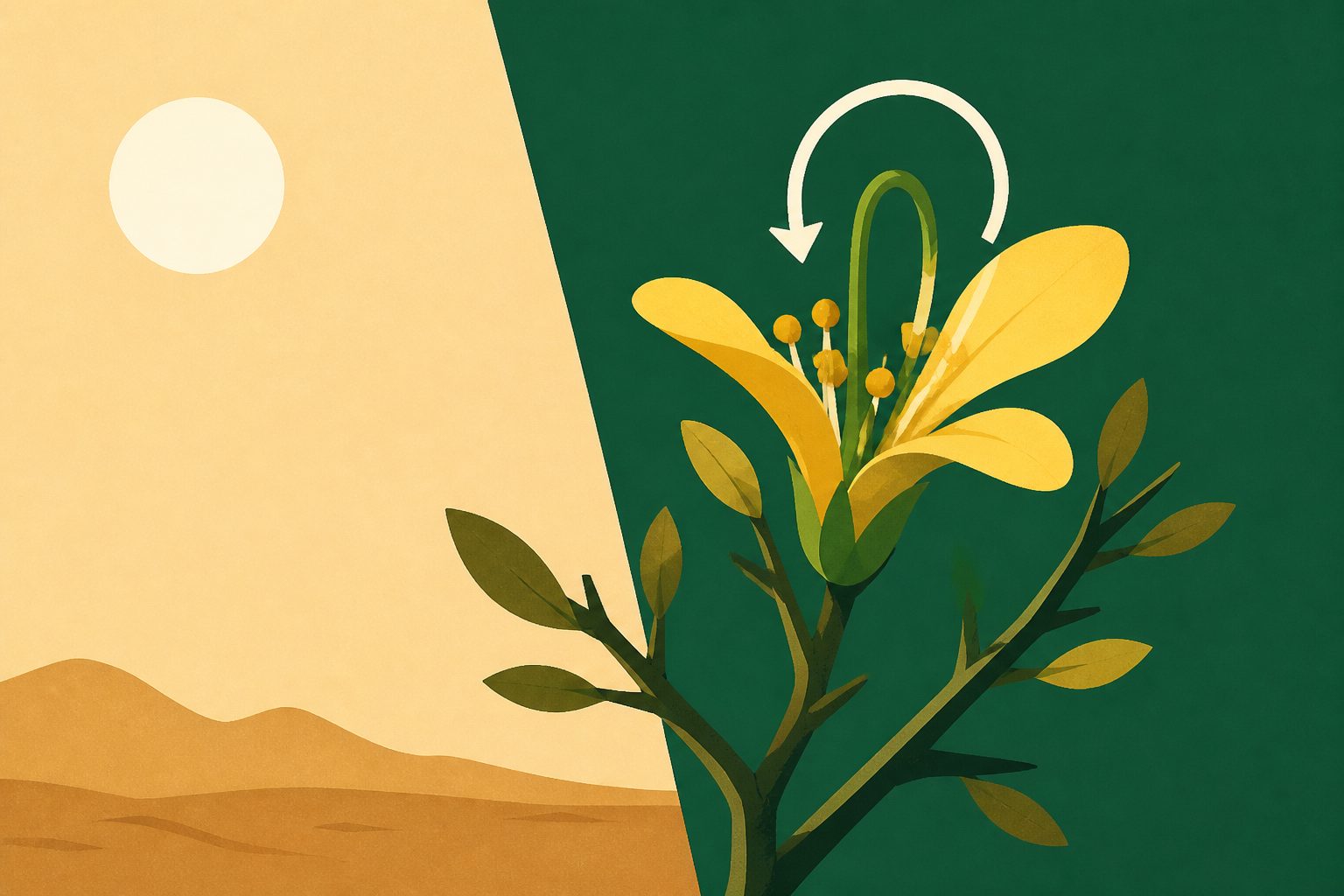
Wigandia urens mainly self-pollinates but still accepts pollen brought by visiting animals, preserving a route to genetic exchange.
Researchers studied Wigandia urens, a shrub common in central Mexico that flowers during the dry season, when pollinator activity is reduced. In a controlled pollination experiment, they compared eight treatments with 15 replicates and monitored flower visits across the flowering period.
The plant showed a mixed mating system that relied mainly on self-pollination. Animal pollinators contributed 46.5% of total seed set, but visits fell as the dry season intensified. The researchers found little evidence that self-pollination was limited, and field observations pointed to gravity or pollen presentation within the flower—not wind—as likely contributors to the small amount of seed production seen when pollinators were excluded.
How the shrub makes seeds
Wigandia urens had high ability to fertilize itself, with an auto-fertility value of 0.699, and showed reproductive assurance of 0.372. These results indicate that autonomous self-pollination can produce seeds when pollinators are unavailable.
Biotic pollinators contributed 46.5% of total seed set, so self-pollination did not replace animal-mediated pollination entirely. Flower visitation declined from 0.016 to 0.009 visits per flower per minute as the dry season peaked. The study detected no significant limitation of self-pollination, with a reported value of -0.020. Exclusion treatments produced marginal seed set; the observations suggest that gravity-mediated selfing or secondary pollen presentation, rather than effective wind pollination, may explain it.
Evidence and caveats
The evidence comes from a controlled pollination experiment with eight treatments and 15 replicates, together with field monitoring of flower visits during the flowering season. The study directly measured seed set under different pollination conditions and recorded a decline in visitation as the dry season progressed.
The abstract describes one shrub species in central Mexico, so the results may not apply to other plants, places or seasons. The likely roles of gravity and secondary pollen presentation were inferred from field observations rather than demonstrated as separate mechanisms, and the study does not establish how the plant's strategy changes over longer periods or under all forms of pollinator loss.