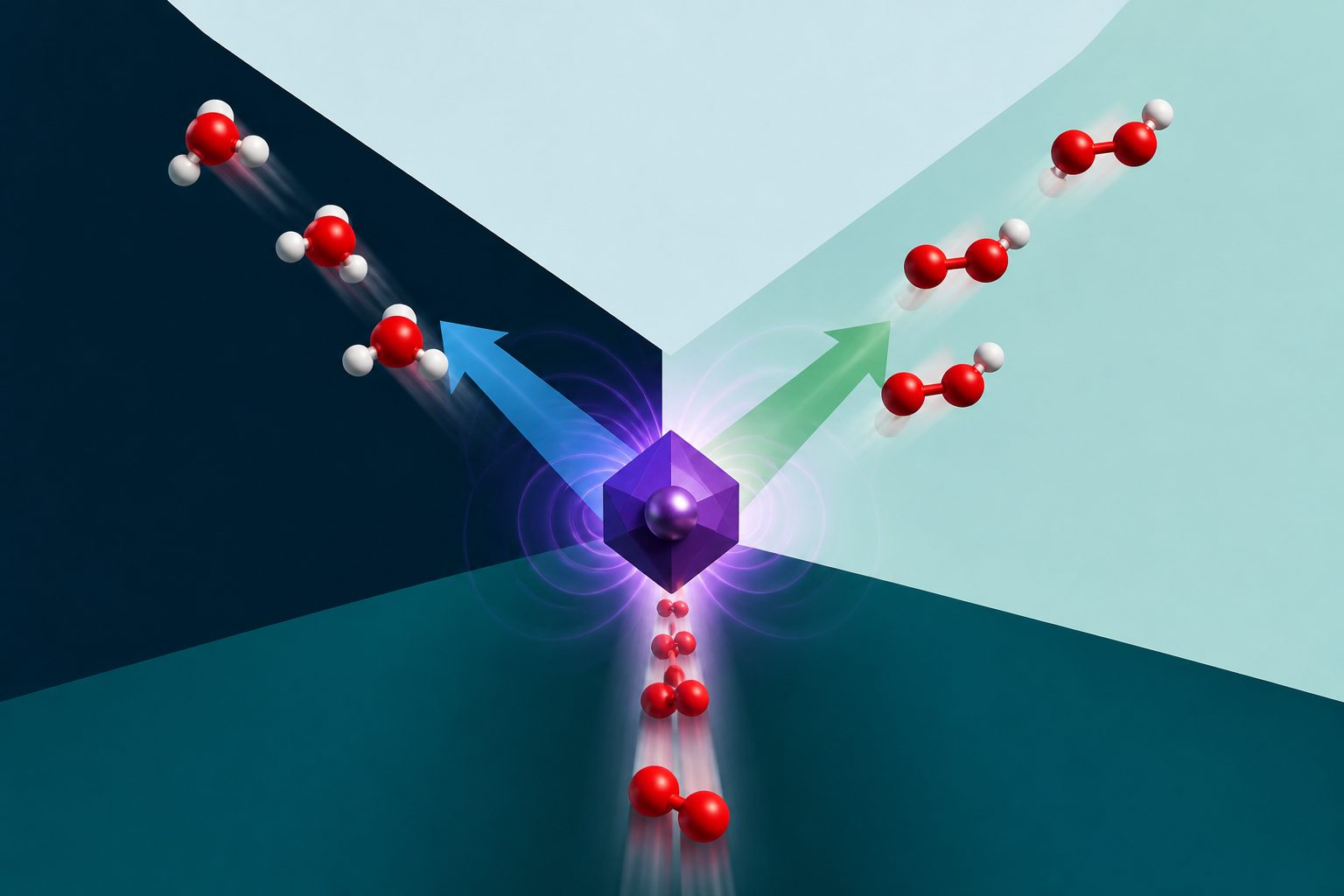
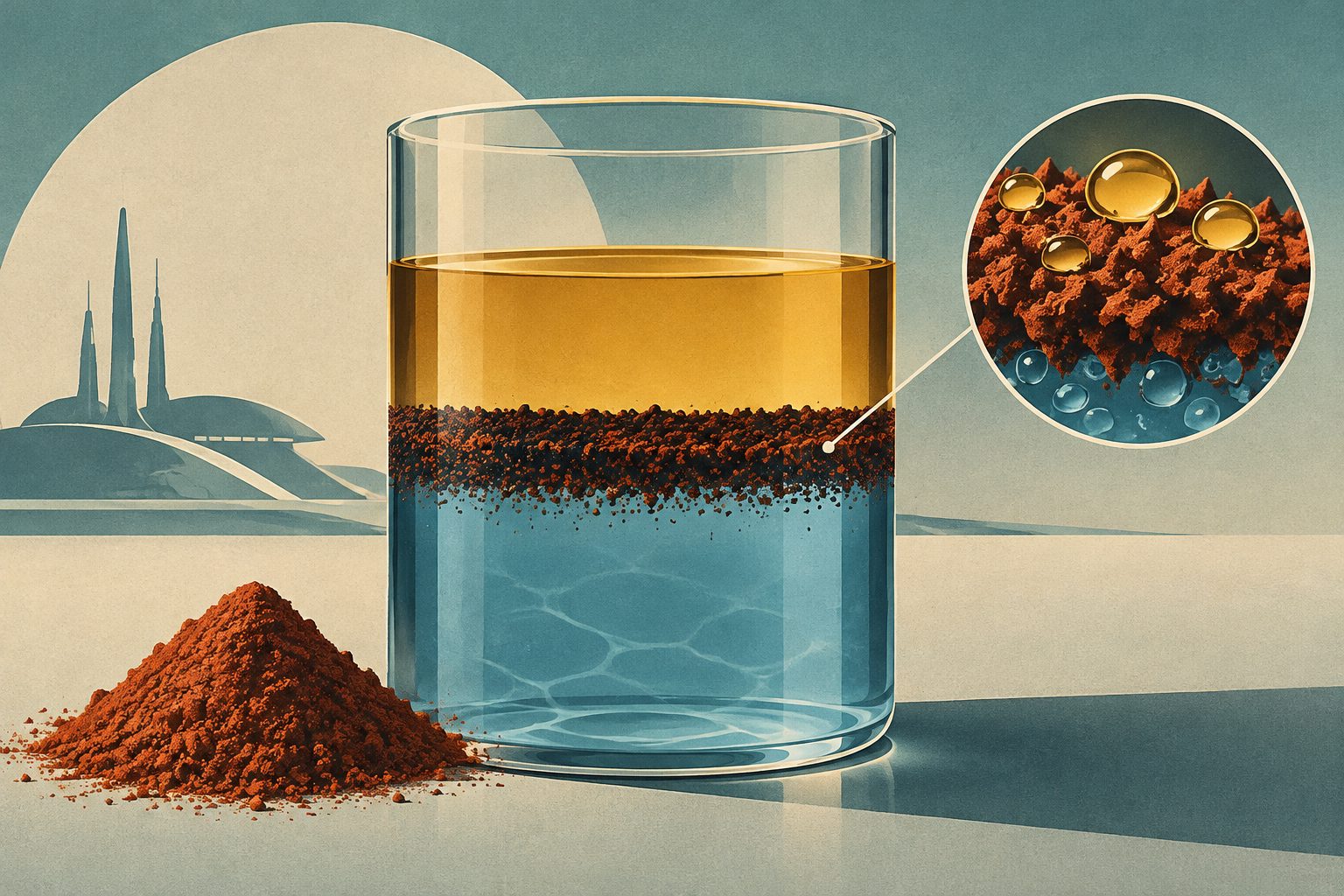
Changing the structure of iron oxide particles shifted the catalyst between making hydrogen peroxide and completing oxygen’s reduction to water.
Researchers designed a catalyst that uses magnetic iron oxide particles to influence how oxygen is reduced. In tests, changing the magnetic particle structure shifted the reaction toward either hydrogen peroxide, made through a two-electron route, or water, made through a four-electron route.
The catalyst combines a molecular framework modeled on features of cytochrome c oxidase with magnetic particles. The researchers propose that the particles alter the electronic and magnetic properties of the catalyst’s oxygen-binding sites, changing how oxygen-related intermediates react.
How the catalyst switched paths
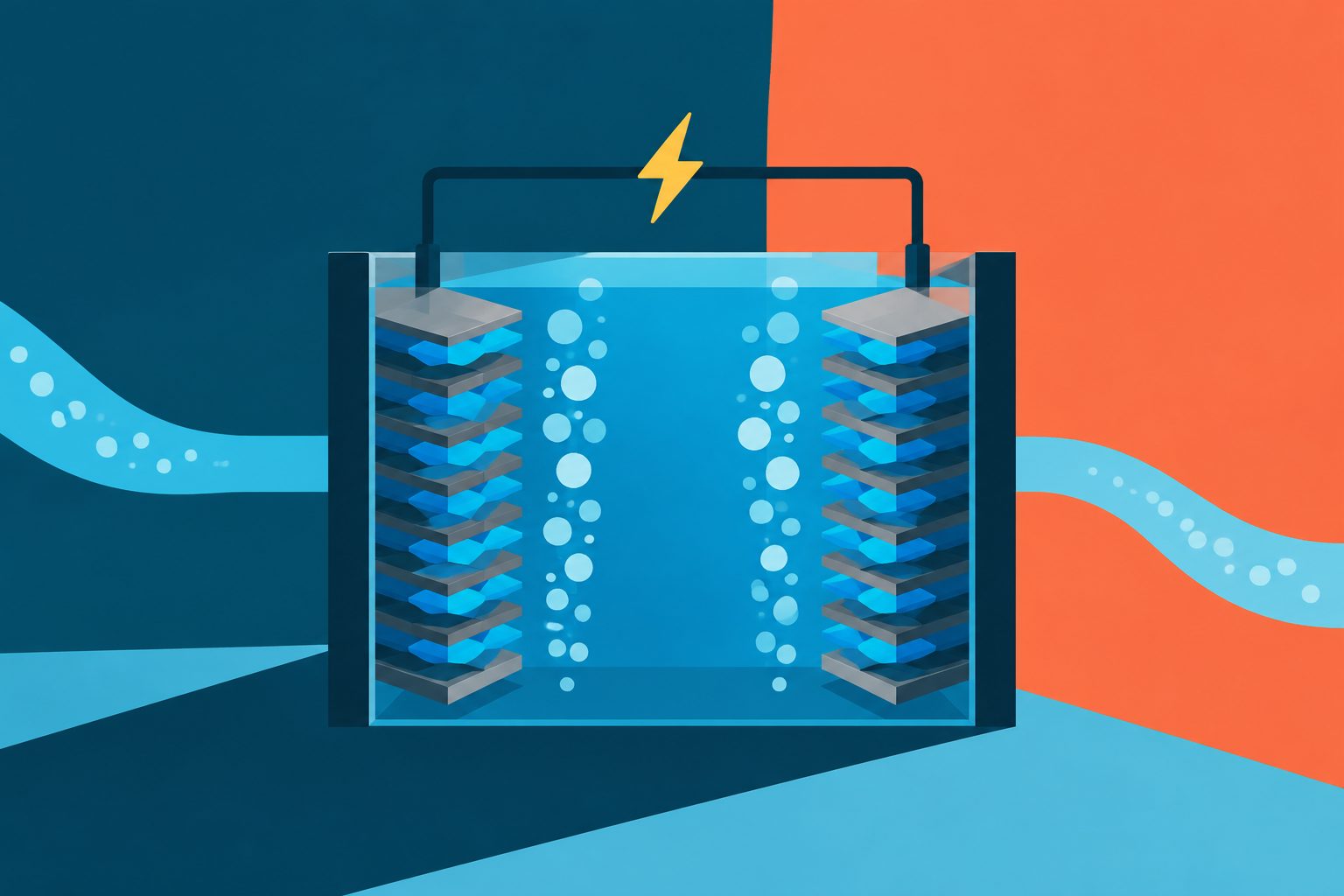
The researchers built a bioinspired molecular magnetic field-responsive catalyst from Salen-based covalent organic frameworks containing single metal atoms, anchored onto magnetic iron oxide nanoparticles. The framework was designed to provide proton-transfer channels and oxygen-activation sites, while the iron oxide supplied a built-in magnetic field.
Compared with the unmodified cobalt-based framework, which had 26% hydrogen peroxide selectivity and an average electron number of 3.48, the catalyst containing single-domain iron oxide reached 63.9% hydrogen peroxide selectivity, with an average electron number of 2.72. The catalyst containing multi-domain iron oxide instead favored the four-electron route, with an average electron number of 3.67.
The researchers attribute the difference to changes at the active sites. They propose that the uniform magnetic field from single-domain iron oxide promotes interaction with the *OOH intermediate and limits oxygen–oxygen bond breaking, favoring hydrogen peroxide. The stronger specific magnetism of multi-domain iron oxide is proposed to change the active sites’ electronic structure, stabilize oxygen adsorption and lower barriers to oxygen–oxygen bond cleavage, favoring water.