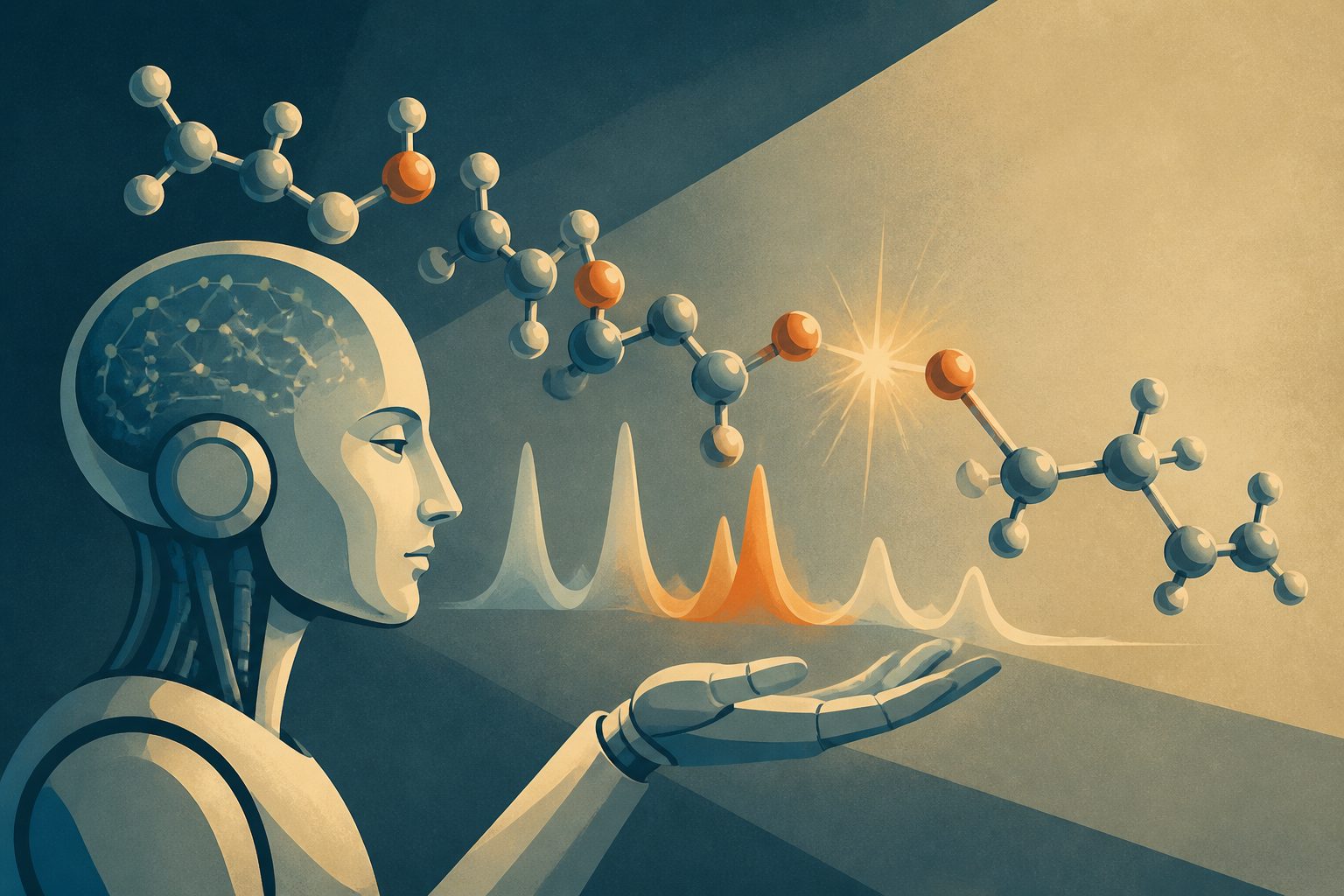
A model trained on 22,000 molecular structures was fine-tuned to describe unfamiliar molecules with near multireference accuracy at lower repeated computational cost.
Describing a chemical bond as it breaks is difficult because the molecule’s electronic structure can require methods that account for several competing arrangements at once. Those methods are computationally expensive and normally repeat much of the calculation for every molecule.
In a Nature Communications study, researchers introduced Orbformer, a model pretrained on 22,000 equilibrium and dissociating molecular structures. They report that fine-tuning it on previously unseen molecules produced an accuracy–cost balance comparable to traditional methods for these difficult electronic structures, including bond dissociations and Diels–Alder reactions.
How the model handles breaking bonds
Orbformer was pretrained on 22,000 molecular structures, covering both stable molecules and molecules undergoing bond dissociation. When fine-tuned on unfamiliar molecules, it reached an accuracy–cost ratio comparable to classical multireference methods. On established benchmarks, more challenging bond-breaking tests and Diels–Alder reactions, the researchers report that Orbformer was the only method tested to consistently reach chemical accuracy, defined here as 1 kilocalorie per mole.
Tests and remaining questions
This is a computational study reported in a Nature Communications research article. The evidence comes from pretraining, fine-tuning and comparisons on established benchmarks, bond-dissociation problems and Diels–Alder reactions. The abstract does not give the detailed errors, computational costs, training procedure or range of molecules tested, so it does not establish how the approach will perform outside these evaluations or how much cost it saves in specific use cases.
// Source
Nature Communications · 2026 · DOI: 10.1038/s41467-026-76604-2
Authors: Adam Foster, Zeno Schätzle, P. Bernát Szabó, Lixue Cheng, Jonas Köhler, Gino Cassella, Nicholas Gao, Jiawei Li, Frank Noé, Jan Hermann
Institutions: Freie Universität Berlin, Microsoft Research (United Kingdom)