Researchers used a water-based hydrothermal process to produce black phosphorus nanoflakes and built a hydrogen-sensing device from them.
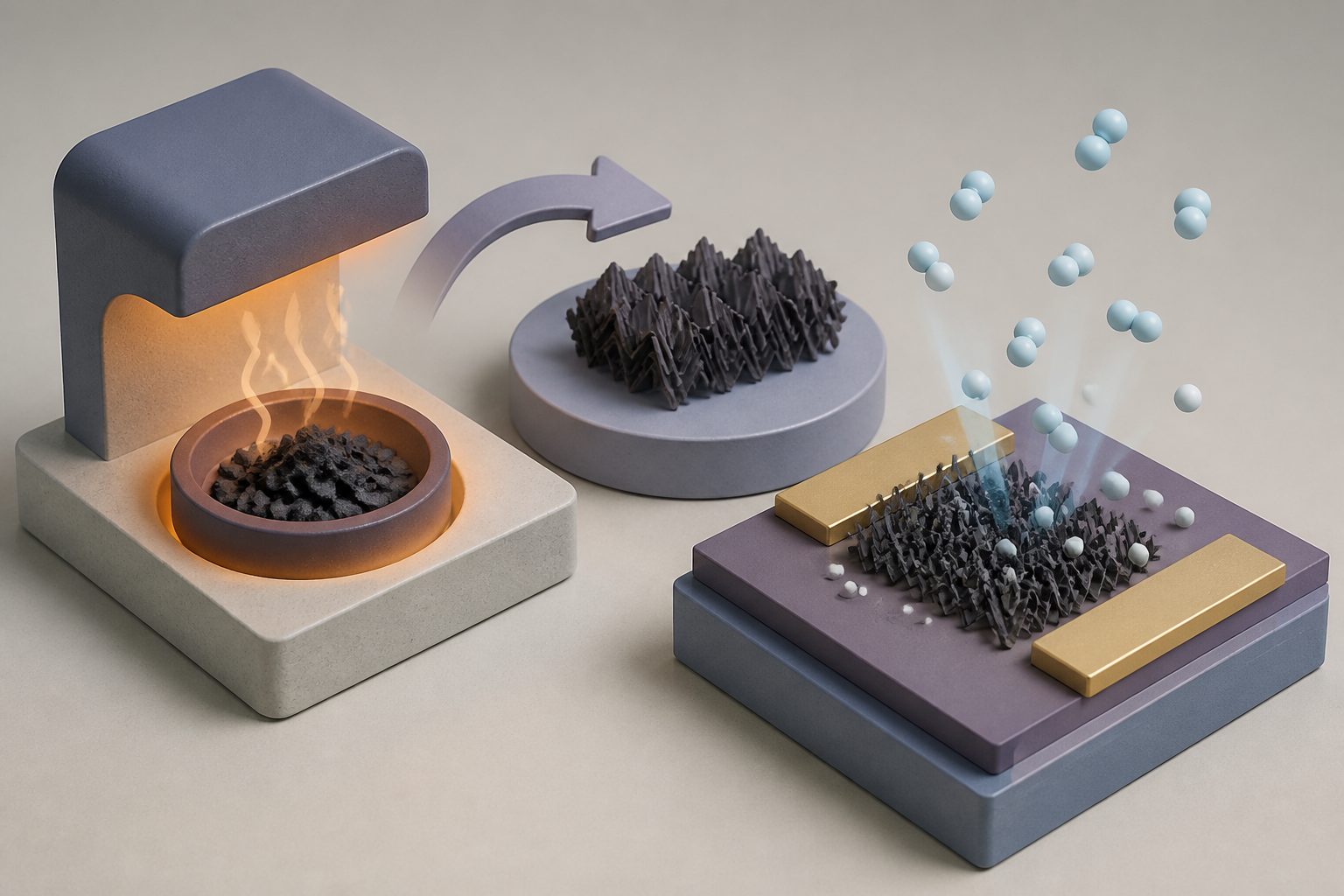
The researchers converted red phosphorus into black phosphorus inside an autoclave using pressure and heat, followed by ultrasonic treatment to break up particles and increase contact with the liquid. They examined the material with several techniques, including X-ray diffraction, microscopy, light absorption and infrared spectroscopy, and studied the separate effects of water and ethylene diamine on the process.
They then made a thin-film sensor by spin-coating the black phosphorus and measured its current–voltage behavior in 1% hydrogen at temperatures from 50 to 300 °C. The device showed Schottky-type behavior and detectable sensitivity under the tested hydrogen conditions.
What the sensor showed
The hydrothermal process produced black phosphorus, generally as nanoflakes, from red phosphorus using deionized water and ethylene diamine. The material was characterized by X-ray diffraction, field-emission scanning electron microscopy, ultraviolet-visible spectroscopy, Fourier-transform infrared spectroscopy and a Tauc-plot analysis. A spin-coated thin-film device showed Schottky-type electrical behavior and detectable sensitivity when tested in 1% hydrogen over temperatures from 50 to 300 °C.
Evidence and caveats
This is an experimental materials and device study. The evidence includes laboratory material characterization and current–voltage measurements from a fabricated thin-film sensor. The abstract does not report the sensor’s response time, recovery time, selectivity against other gases, long-term stability, power consumption or a quantified detection limit. The reported gas tests used 1% hydrogen and temperatures from 50 to 300 °C, so the results do not by themselves establish performance across other concentrations or operating conditions.