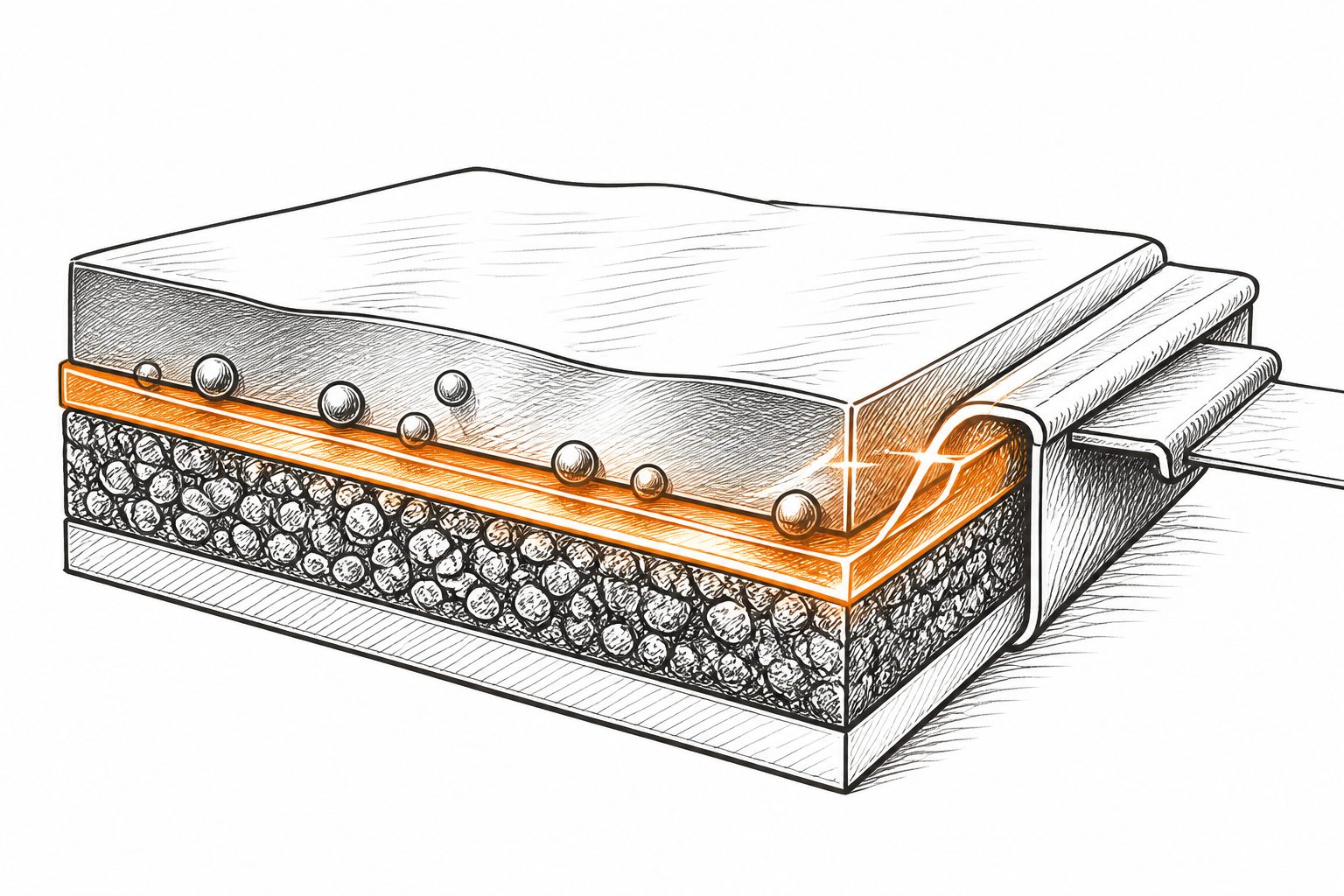
Researchers used a laser-treated layer to spread lithium flow more evenly and limit damage inside solid-state batteries.
The researchers found that grain boundaries—interfaces between crystals in ceramic electrolytes—can act as local current hotspots. These hotspots may encourage lithium dendrites, allow electrons to leak through the electrolyte and create uneven chemical changes near the positive electrode.
They used a laser to turn the boundary region into an amorphous, or non-crystalline, interlayer. In a lithium-conducting ceramic, the layer spread lithium-ion flow more evenly and blocked electron movement. The approach increased the critical current density in lithium symmetric cells from 1.4 to 2.4 mA per square centimeter, with stable cycling for more than 2,000 hours.
Evidence and open questions
This is a journal research article reporting laboratory tests in lithium symmetric cells and lithium-cobalt-oxide full cells. The abstract gives specific results for cycling time, current density, voltage and capacity, and says the method was also validated in two other ceramic electrolyte types. It does not provide the full testing conditions, cell sizes, comparisons with all existing interface treatments or evidence of performance in commercial-scale batteries, so the results do not by themselves establish long-term real-world battery performance.
// Source
Nano-Micro Letters · 2026 · DOI: 10.1007/s40820-026-02347-w
Authors: Cuiyun Yang, Xupeng Lu, Yexin Pan, Qimeng Zhang, Ruohan Yu, Rongliang Yang, Huan Liu, Molong Duan, Mitch Guijun Li, Ziyi Zhu, Chenghao Yang
Institutions: Kunming University of Science and Technology, University of Hong Kong, South China University of Technology, City University of Hong Kong, Hong Kong University of Science and Technology, Sanya University