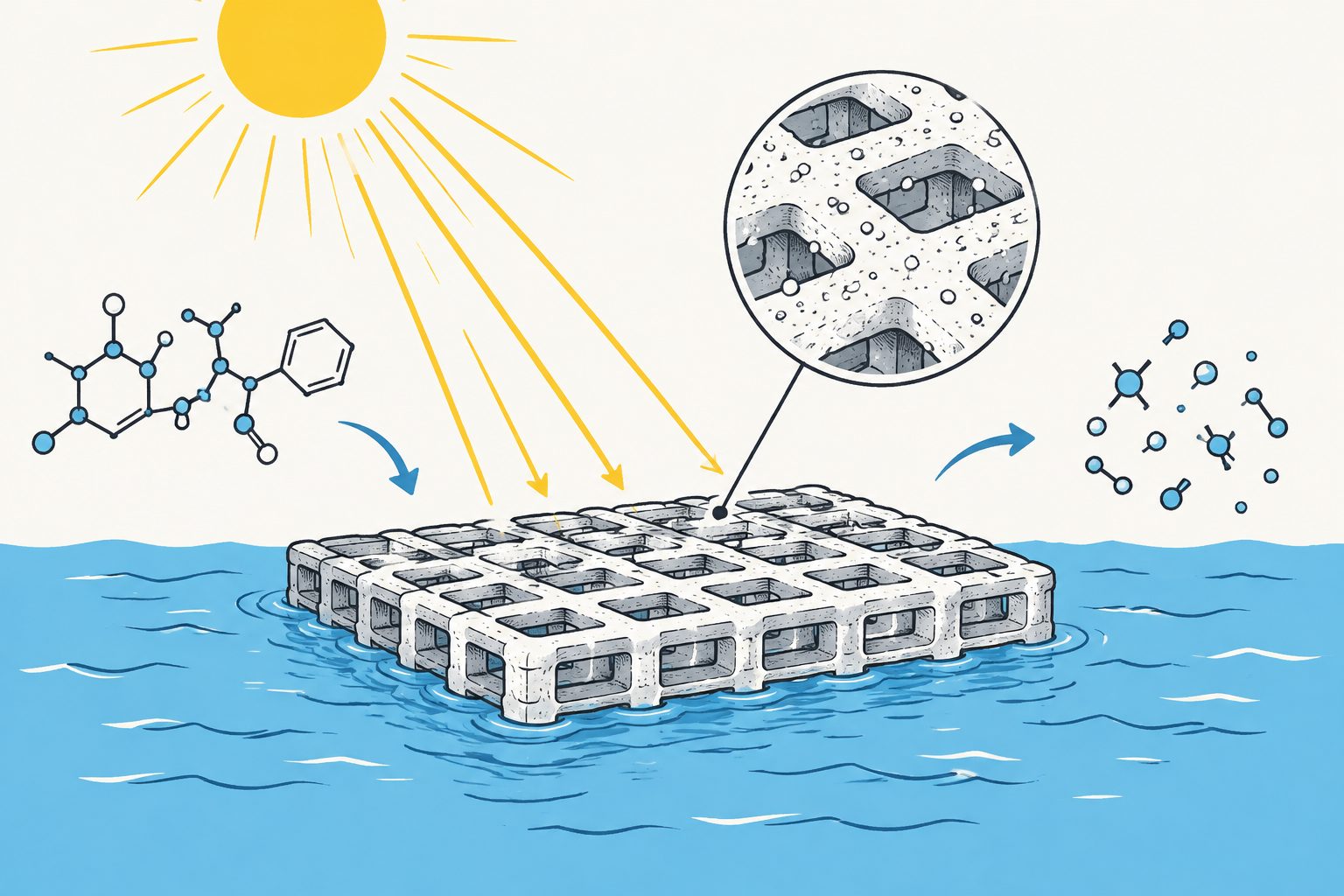
The reusable plastic-and-titanium dioxide grids completely degraded ciprofloxacin in about two hours of natural sunlight.
The team made grids from a fluorinated plastic called PVDF-HFP and titanium dioxide using 3D printing and salt leaching. This produced interconnected pores while allowing the grid’s shape and porosity to be controlled, and the finished material remained mechanically stable in water.
In tests, the grids degraded 60% of ciprofloxacin in 540 minutes under UV-A radiation. Under natural sunlight, they completely degraded the antibiotic in about 120 minutes, and their photocatalytic activity remained across multiple reuse cycles.
// Source
Advanced Materials Technologies · 2026 · DOI: 10.1002/admt.71433
Authors: Dinis C. Alves, Joana M. Queirós, Fangyuan Zheng, Carmen Rial Tubio, Inês Catarina Gomes Espada, Senentxu Lanceros-Méndez, Pedro M. Martins
Institutions: University of Minho, Ikerbasque, Basque Center for Materials, Applications and Nanostructures, Centro de Física das Universidades do Minho e do Porto, Instituto de Ciência e Inovação para a Bio-Sustentabilidade