The system also monitored alcohol levels and sent alerts within milliseconds during testing.
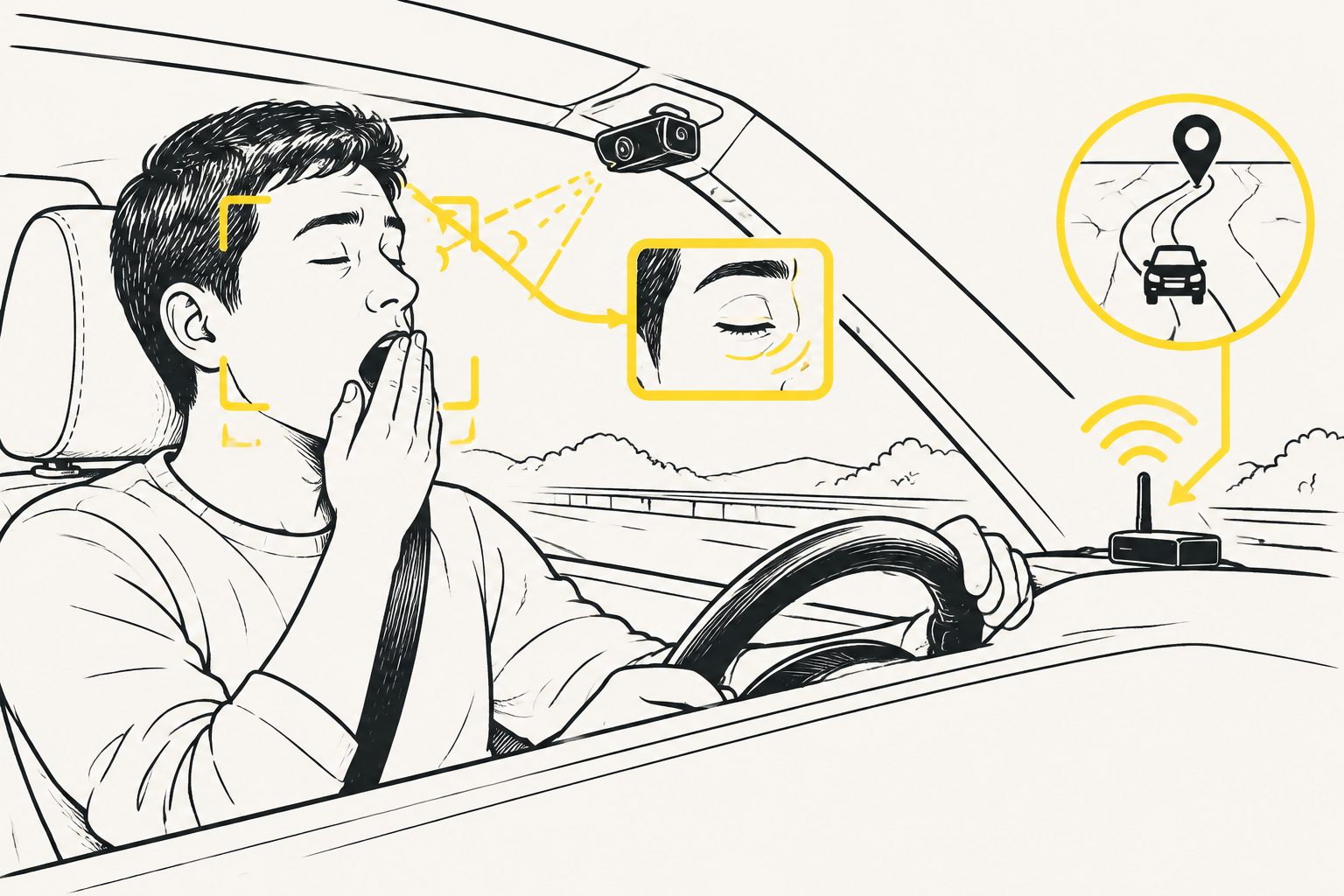
The system uses sensors and a microcontroller to monitor alcohol-related readings against set blood alcohol content thresholds. It also analyzes eye movements and facial expressions to identify signs of fatigue, then triggers alerts when alcohol or drowsiness limits are reached.
In testing, the researchers reported an average detection response time of 16.242 milliseconds and an average alert response time of 12.93 milliseconds. Sleepiness detection accuracy was 98.66%; the paper also says the system is intended to create a traceable record of driver behavior.
Evidence and open questions
This is a journal article describing the development and testing of an IoT-based prototype. The abstract reports response times and sleep-detection accuracy, but it does not give the test sample size, testing conditions, alcohol-detection accuracy, or details of how the system was compared with other systems. It also does not provide measured crash reductions, so the claimed effect on road accidents remains unquantified from the information available.
// Source
Journal of Engineering and Sustainable Development · 2026 · DOI: 10.31272/jeasd.2950
Authors: Mohamed Khudhair Al-Gburi, Ameer Sameer Hamood Mohammed Ali
Institutions: University of Babylon