A common pig-feed toxin disrupts gut fungi and fermentation in piglets
In four piglet experiments, deoxynivalenol changed the gut fungal community and reduced microbial compounds linked to intestinal health.
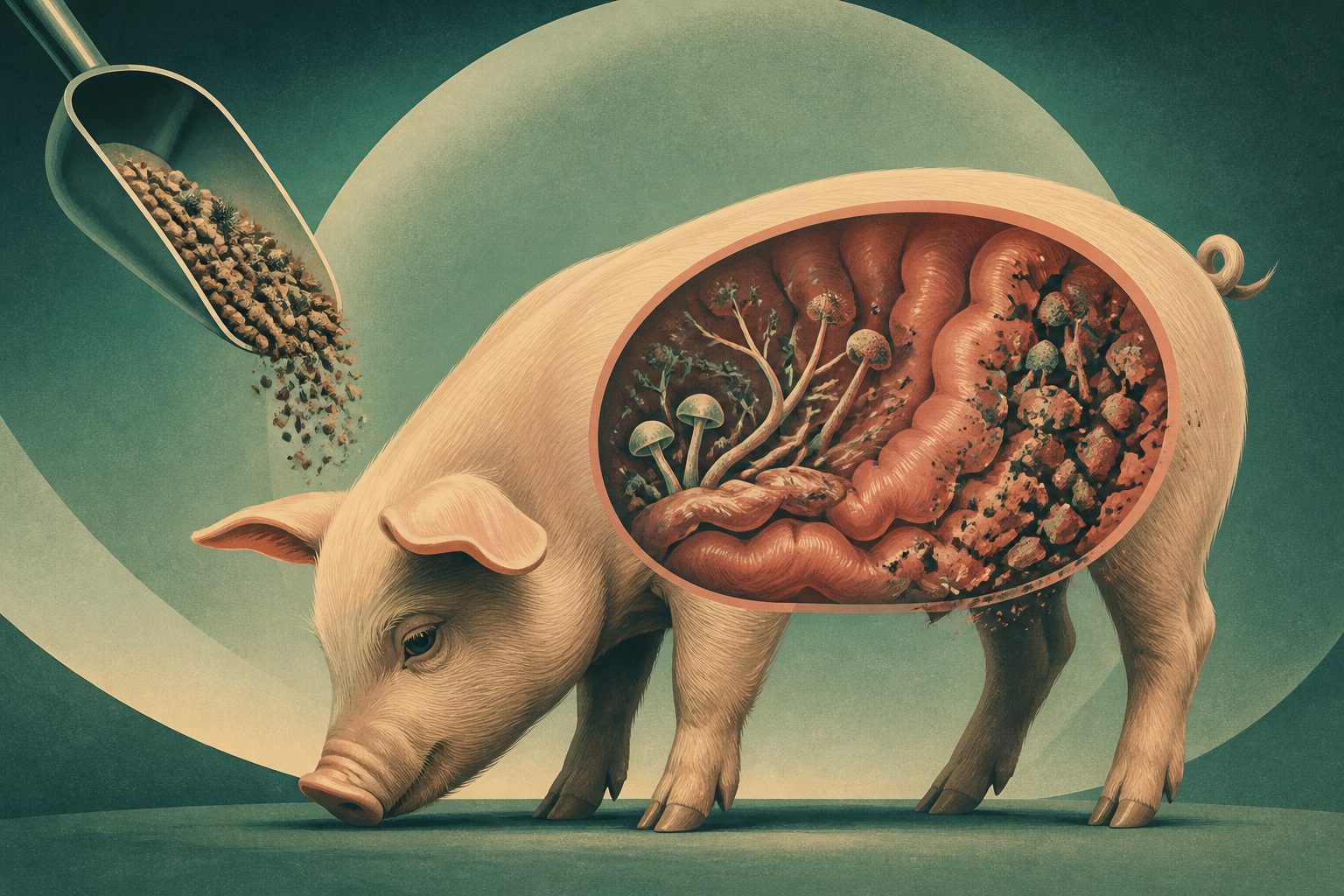
Editorial illustration — not from the study.
Across four piglet experiments, the researchers combined measurements of microbes, microbial genes and interactions between species. DON depleted the dominant yeast Kazachstania slooffiae and shifted the gut community toward a more competitive network involving fungi and bacteria, even though bacterial diversity did not change.
The toxin also changed microbial activity. Genes and pathways involved in anaerobic metabolism, butanoate production and methanogenesis were suppressed, while activity related to virulence and detoxification increased. These changes coincided with lower levels of colonic butyrate and total short-chain fatty acids.
What DON changed in the gut
DON selectively altered the piglets’ gut mycobiota, the community of fungi living in the gut, and depleted the dominant yeast Kazachstania slooffiae. It induced a modular, competitive network involving fungi and bacteria, while bacterial diversity remained intact.
Metatranscriptomic analysis, which measures microbial gene activity, indicated that DON reprogrammed the community toward virulence and detoxification and away from anaerobic metabolism. The researchers observed coordinated reductions in the porA transcript, a gene involved in energy metabolism, in Clostridium polysaccharolyticum and Methanobrevibacter. They also found suppression of butanoate metabolism and methanogenesis, along with reduced colonic butyrate and total short-chain fatty acids.
For comparison, aflatoxin B1 did not alter fungal composition in the suckling piglets, while antibiotic-associated diarrhea caused a collapse in bacterial diversity and a highly connected fungal network.
Why the gut changes matter
The findings identify gut fungi, as well as bacteria, as part of the microbial response to DON in piglets. They also point to Kazachstania slooffiae and porA-related activity as possible ecological and molecular links between the toxin, changes in the gut community and reduced production of compounds such as butyrate.
Understanding these links could inform efforts to reduce DON-related losses in livestock and address food-safety concerns, although the study does not test a treatment or mitigation strategy.
Evidence and caveats
The study is based on four piglet experiments that integrated multi-omics measurements and network analyses. The reported links between DON, microbial community changes, gene activity and lower fatty-acid levels are supported by these combined measurements.
The abstract does not report the experiments’ sample sizes or duration. The proposed direct interaction between DON and the PFOR enzyme was supported by in silico predictions, rather than a direct biochemical test described in the abstract. The work also identifies candidate microbial nodes but does not show that restoring Kazachstania slooffiae, porA activity or short-chain fatty acids prevents intestinal toxicity. The findings were obtained in piglets, so their relevance to other animals or people is not established here.
// Source
npj Biofilms and Microbiomes · 2026 · DOI: 10.1038/s41522-026-01135-z
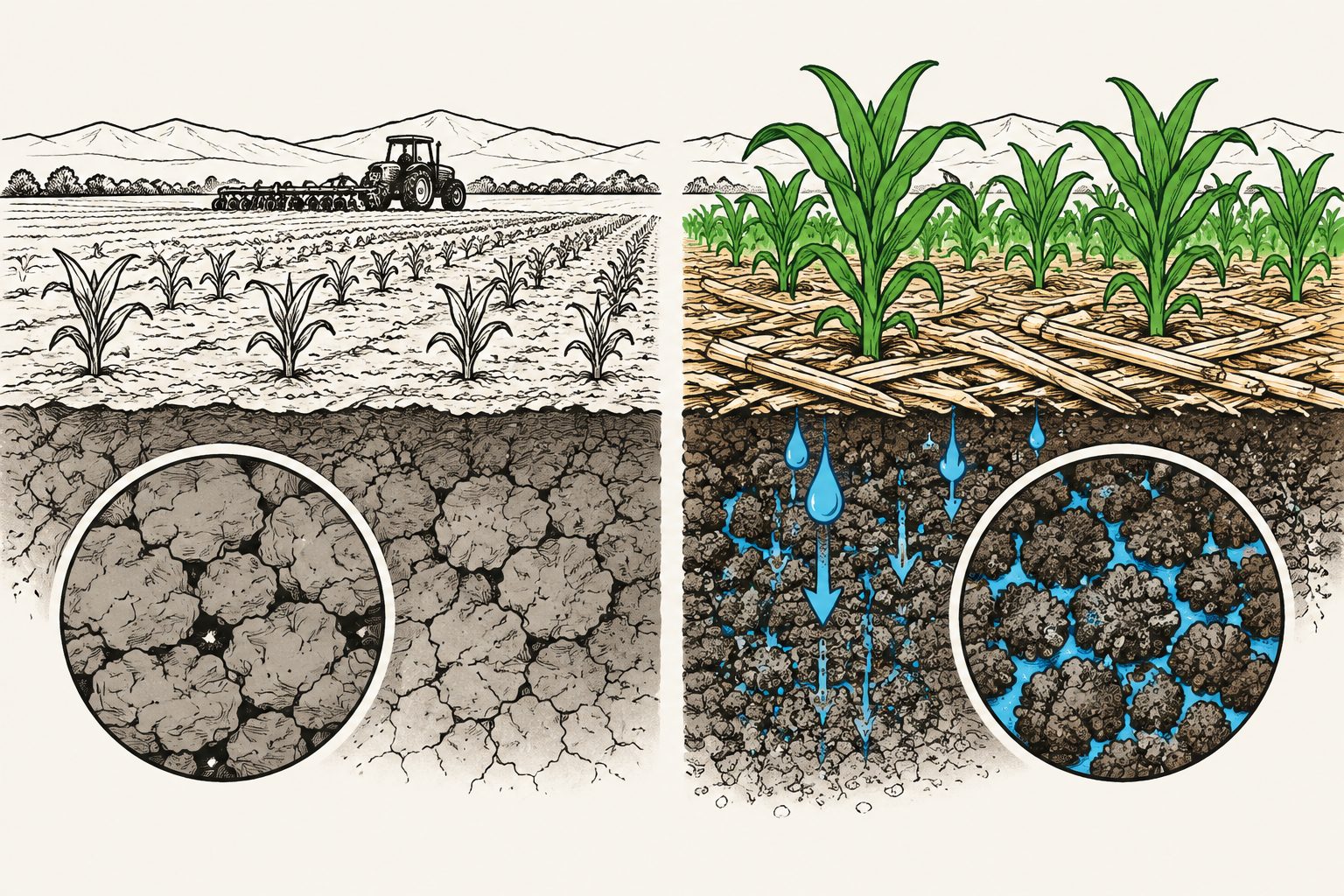
A 20-year comparison in California’s Central Valley found that reduced tillage with cover crops produced more stable soil aggregates, greater water retention and different forms of carbon protection than standard tillage without cover crops. The conservation system also retained room for additional carbon storage, although the study measured potential rather than future gains.
Human forebrain organoids classified artificial tactile Braille signals after a sensor converted the touch data into electrical stimulation. Accuracy averaged 61% with one organoid and rose to 83% when responses from three organoids were combined.
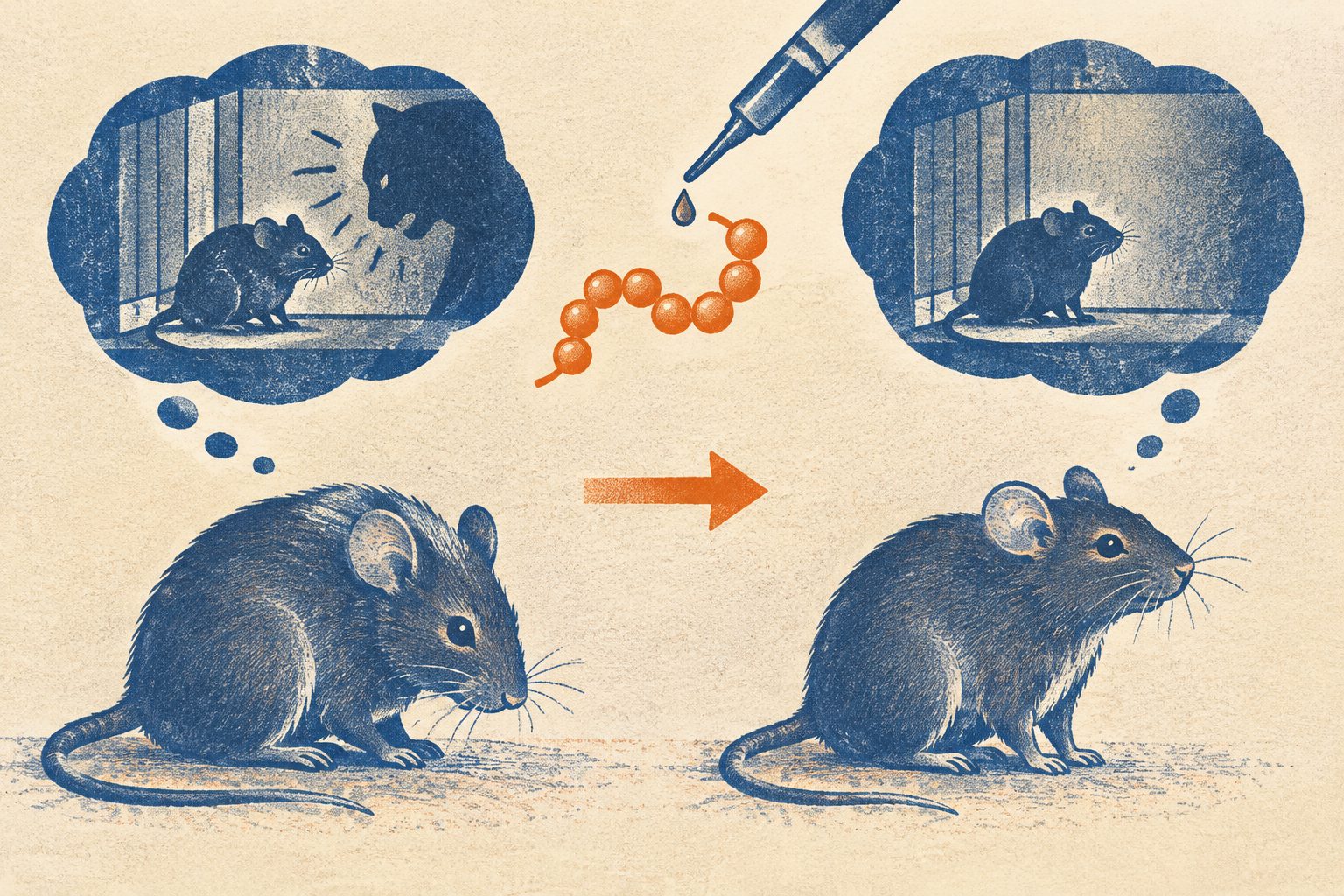
A study in mice found that a peptide targeting the memory-related protein CPEB3 reduced the persistence of traumatic memories and anhedonia, a loss of pleasure. The findings are an early genetic preclinical test of a possible approach for PTSD, not evidence of a treatment in people.