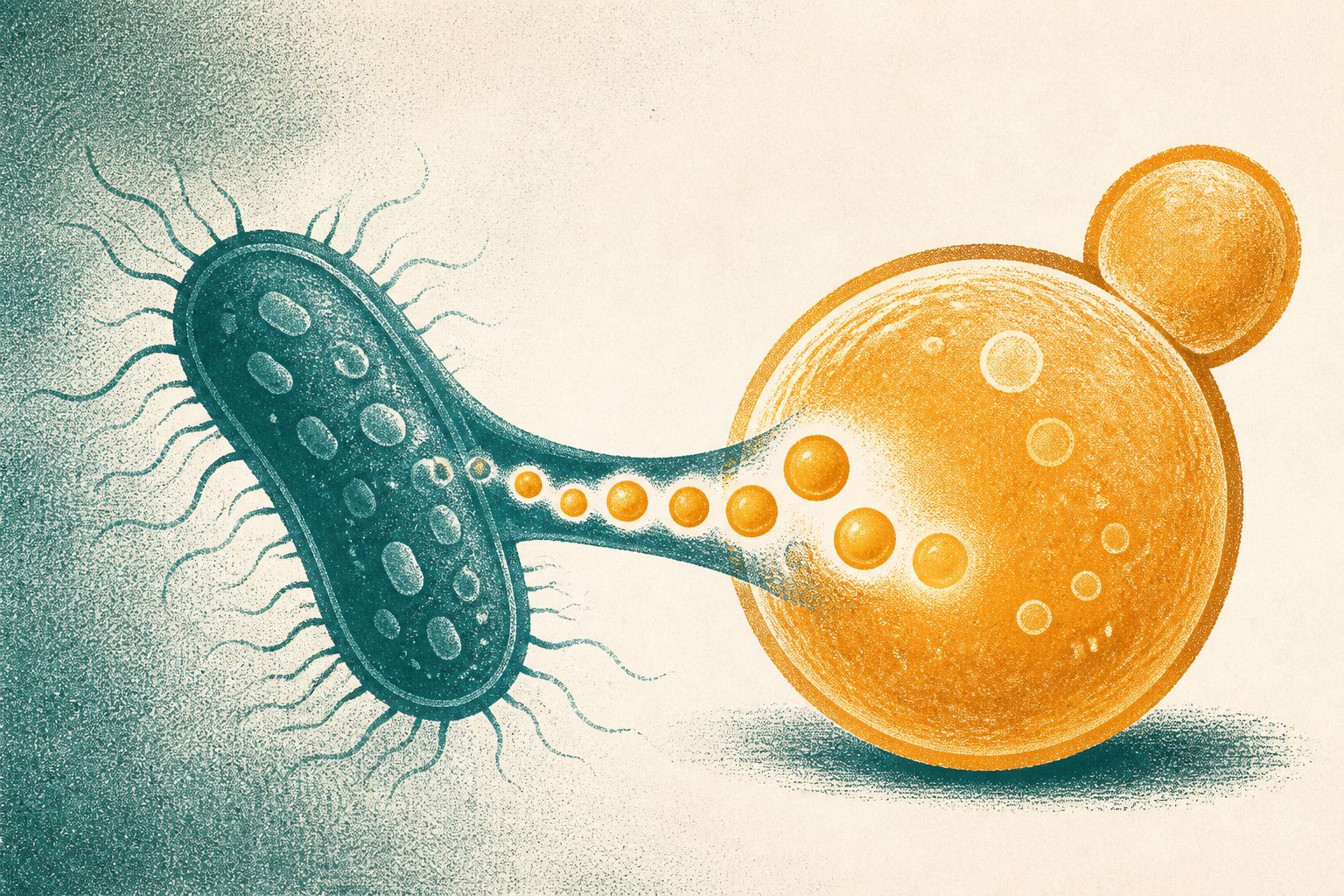
Researchers tested two Saccharomyces cerevisiae strains with deletions in RIB1 or RIB4, genes involved in making riboflavin. Without added riboflavin, both strains failed to grow, making them riboflavin-dependent strains.
After infection with the Wolbachia strain wStr, both yeast strains no longer showed this dependency. The infection also produced a mild increase in survival after exposure to 1 M sodium chloride or 10 mM hydrogen peroxide. The researchers propose this artificial yeast–bacterium system as a way to study harmful, optional and beneficial relationships between hosts and internal symbionts.