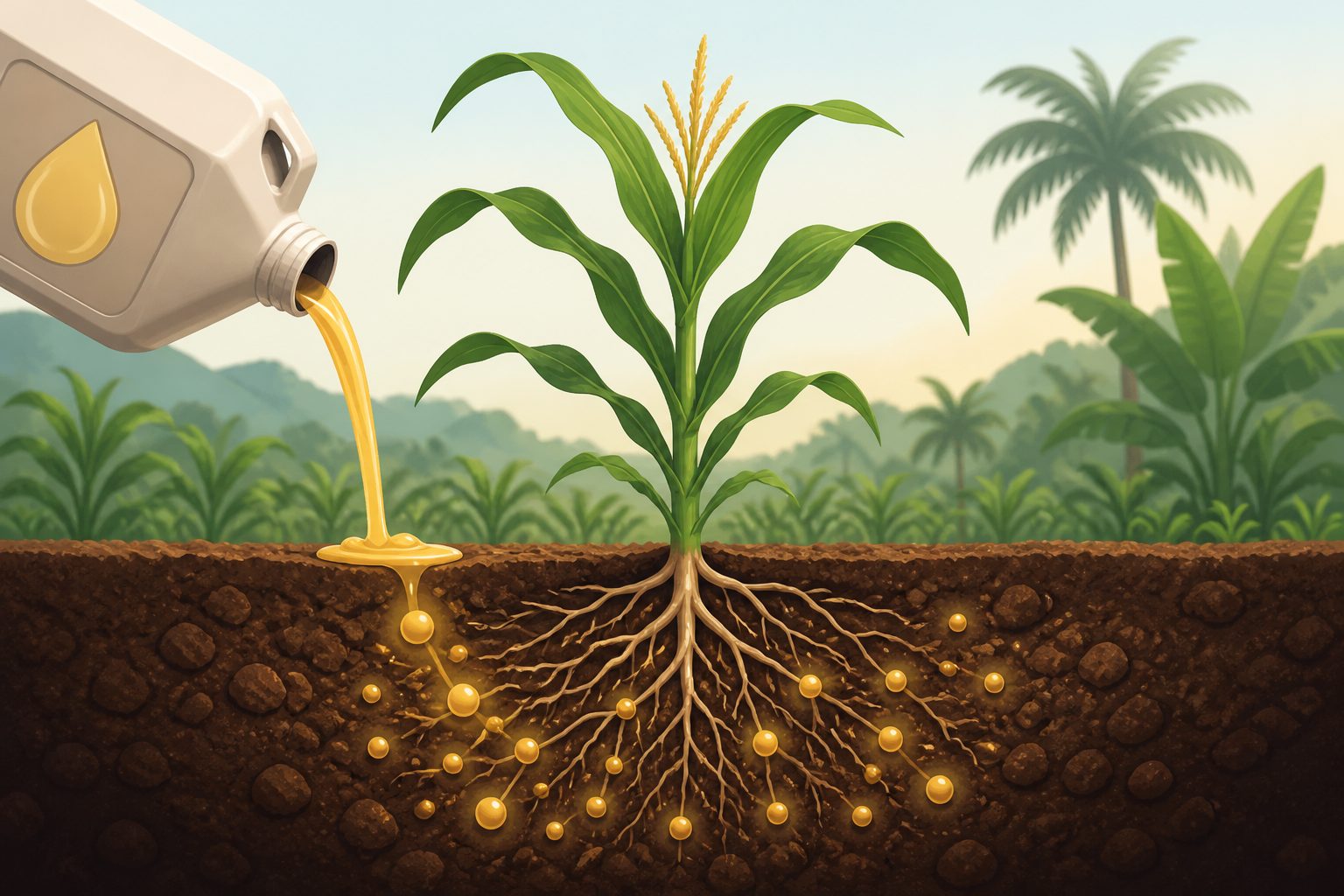
Researchers evaluated human urine-derived struvite (a phosphorus mineral) in a tropical Oxisol under maize cultivation. They found that the urine-derived struvite achieved substantial shoot biomass under tropical soil conditions, though a common mineral fertilizer (monoammonium phosphate) generally produced higher shoot dry mass at the highest phosphorus application rates.
The key difference was what remained in the soil after the crop grew: plants grown with urine-derived struvite left substantially higher residual phosphorus that could be extracted with Mehlich-1, an indicator of labile or readily available phosphorus. The authors link this to struvite’s controlled-release behavior and reduced phosphorus immobilization in a highly weathered tropical soil.