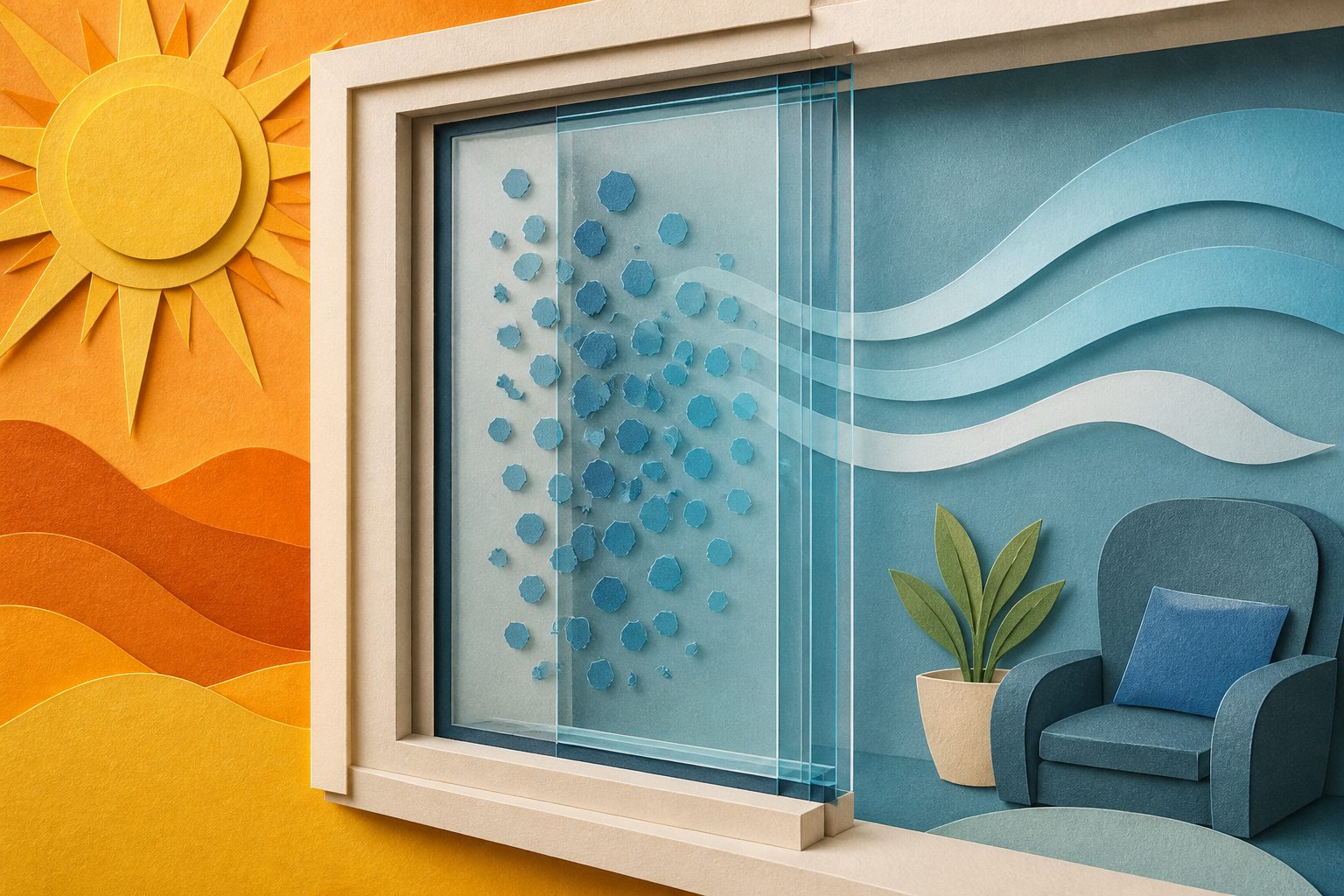
An all-solid-state design remained effective during repeated switching and showed strong near-infrared light control in outdoor tests.
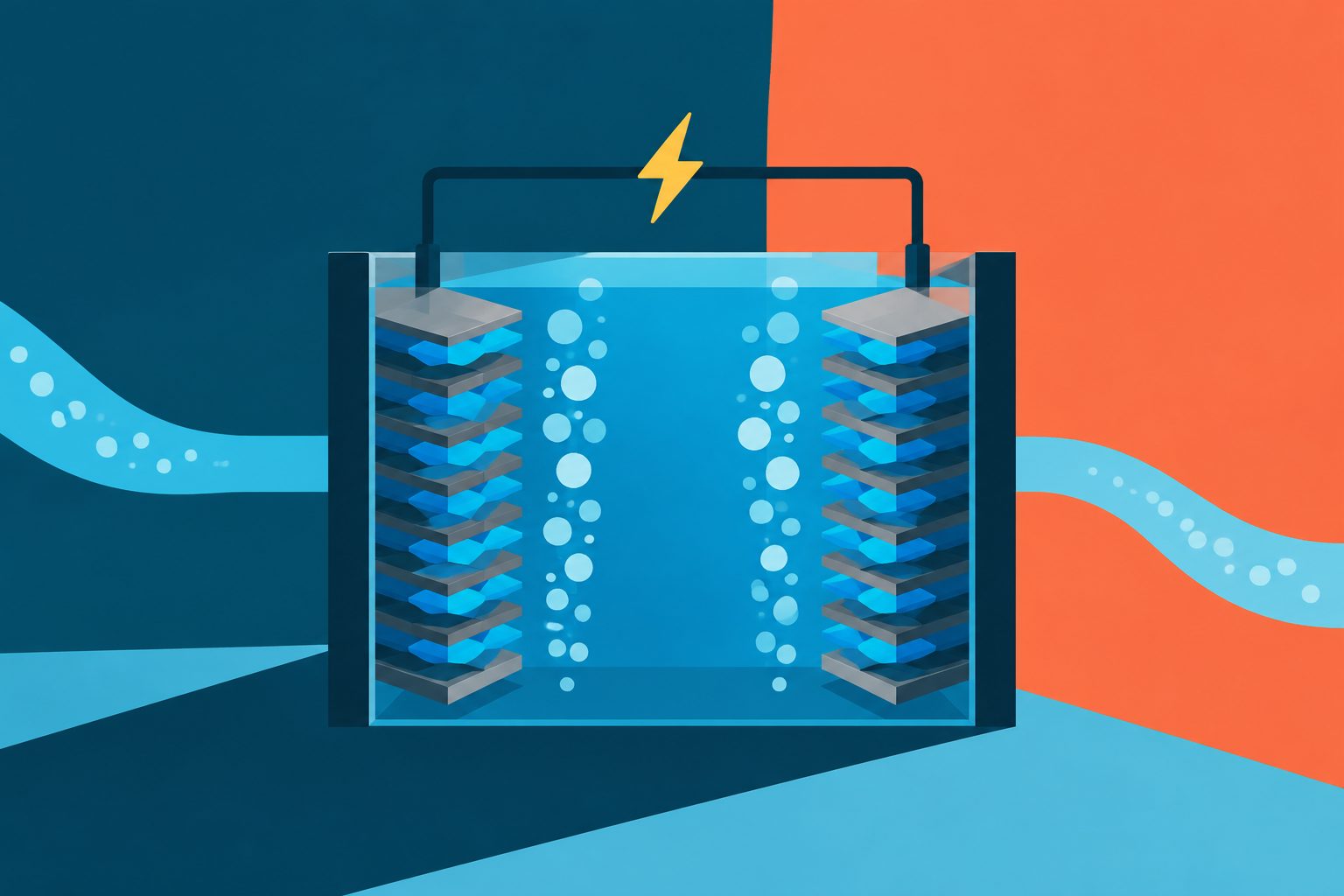
Researchers built the window with a thin transition layer at the boundary between tungsten oxide and the solid electrolyte. The layer contains a gradient of oxygen vacancies—missing oxygen atoms—that helps ions and electrical charge cross the interface more readily.
The modified device switched about three times faster than the comparison design and controlled 91.2% of near-infrared transmittance at 1100 nanometres. A wet-chemical process also produced uniformly colored devices measuring 10 × 10 centimetres. Outdoor tests recorded a peak indoor cooling capacity of about 9.5°C, while computer simulations projected annual energy savings of about 140 megajoules per square metre in tropical regions across 40 cities.
How the window performed
The researchers created a 3–8 nanometre oxygen-vacancy gradient at the tungsten oxide/solid-electrolyte interface through an in situ reaction involving silver nanowires. Measurements and calculations indicated that this reduced the interfacial activation energy by about 47%, from approximately 0.72 electronvolts to 0.38 electronvolts.
The change accelerated coloring from 42.3 to 12.4 seconds and bleaching from 31.8 to 8.7 seconds. The optimized window achieved 91.2% near-infrared transmittance modulation at 1100 nanometres and retained more than 85% of its initial modulation after 10,000 consecutive switching cycles. After cycling, microscopy found an intact interface without visible delamination. The devices were also tested outdoors, where the peak indoor cooling capacity was about 9.5°C.
Why the design matters
All-solid-state electrochromic windows avoid liquid electrolytes but can develop a fragile interface between the electrode and solid electrolyte. The oxygen-vacancy layer was designed to improve charge and ion transfer while helping the interface withstand repeated operation.
The reported switching speed, cycle stability and outdoor cooling result indicate that this design could address both performance and durability concerns for adaptive building windows. The simulations further estimate substantial annual energy savings in tropical regions, although those estimates depend on the conditions used in the model.
Evidence and limits
The study combines electrochemical impedance measurements, density functional theory and energy-barrier calculations with switching tests, microscopy after cycling, tests of 10 × 10 centimetre devices and outdoor field measurements. The abstract reports a peak outdoor cooling result and modeled energy savings, but it does not provide the outdoor test duration, weather conditions, number of test sites or comparison-window details. The energy savings are projections from EnergyPlus simulations rather than measured annual savings, and the abstract does not establish performance over longer periods or across different climates.
// Source
Solar Energy Materials and Solar Cells · 2026 · DOI: 10.1016/j.solmat.2026.114695
Authors: Zhongqing Chen, Yue Lyu
Institutions: Shaoxing University