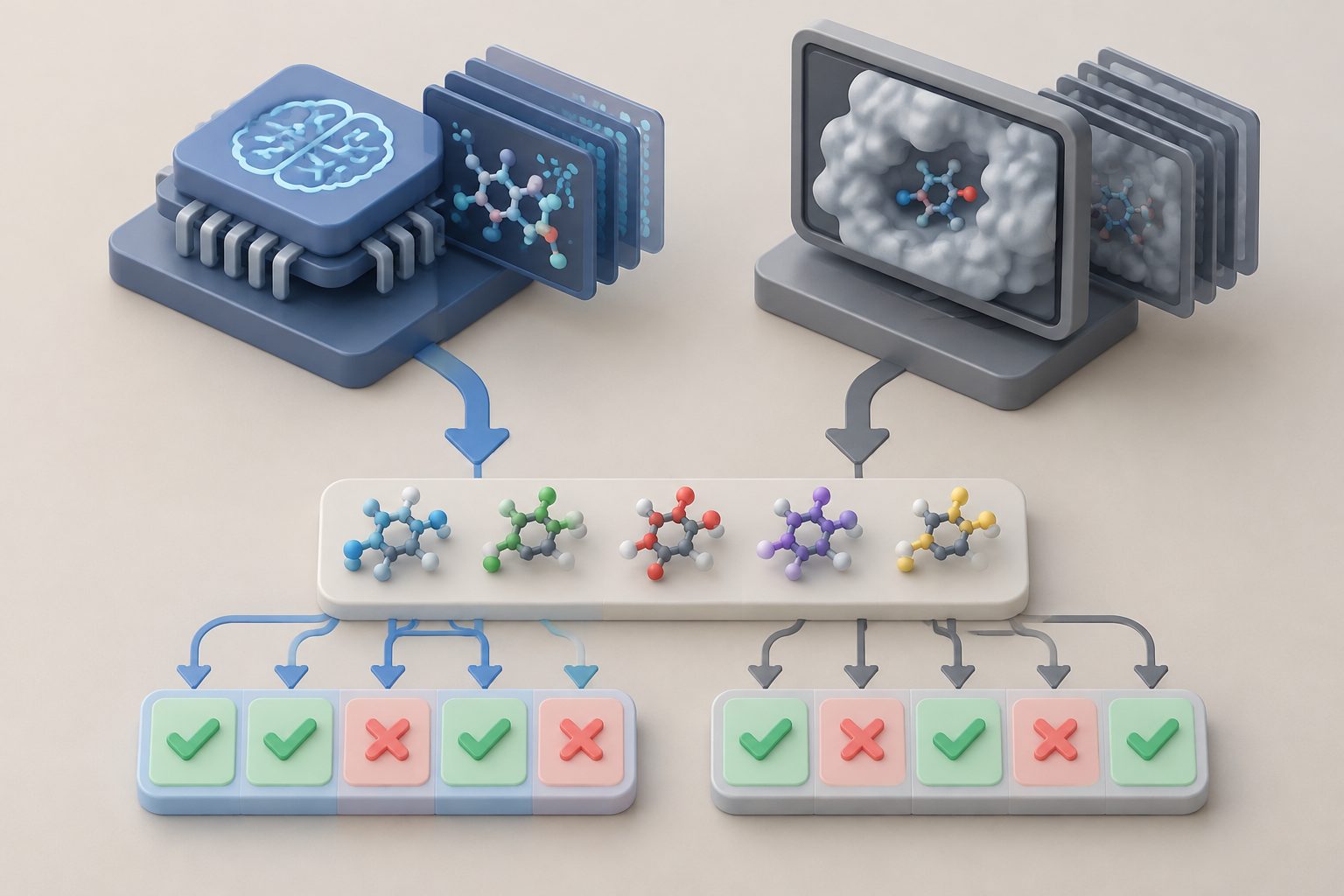
A proposed control design gives AI-generated changes separate stages for proposal, checking, permission and execution.
The architecture treats recursive AI research as a controlled sequence of state changes rather than as a standard automated development pipeline. An AI system may propose a candidate change, but separate controls assess whether the evidence supports it, determine whether the operation is permitted and perform the final state change.
The paper also sets out rules for binding changes to a particular generation, preserving evidence records, revoking permissions, handling rollbacks and recovery, testing failures and requiring fresh approval before readmission. It says the design is meant to make privileged state changes explicit and testable, not to make the AI's overall behavior deterministic.
Four separate control steps
The paper develops a formal control architecture with four distinct functions: proposal, verification, authorization and commit. Proposal creates a candidate change; verification checks whether specified technical requirements are supported by evidence; authorization determines whether the requested operation is allowed for the relevant system, object, scope, generation, time and context; and a separate commit boundary performs the protected change.
The proposed rules state that no earlier stage can inherit the authority of a later one. They also cover protected parts of a system, generation binding, limits on carrying authority from one operation to another, evidence records, revocation, rollback, recovery and fresh readmission. The paper identifies several distinctions the system must preserve, including that a successful benchmark does not by itself grant permission to deploy a change, and that recovery does not automatically restore permission to re-enter service.
Why the separation matters
For AI research systems that can alter the tools, evaluators, training procedures or policies used in future work, separating these functions could make it clearer who or what is allowed to change protected state. The design aims to prevent a proposal or a successful technical check from being treated automatically as permission to make a change.
The framework therefore addresses control of privileged transitions while allowing the surrounding research process to remain autonomous or adaptive. Its relevance is in making the boundaries between evidence, permission and execution explicit enough to be tested and enforced across different systems or providers.
Evidence and limits
This is a research-level architecture and formal state-model paper, published as an article in the Zenodo repository. The abstract describes control rules, invariants, failure analysis and implementation-neutral standardization criteria, but it does not report an experiment, deployment study or measured performance result showing how the design works in practice.
The publication is intentionally limited to public abstractions. It does not provide confidential implementation details, production parameters or non-public test materials. The paper also does not claim to make AI behavior itself deterministic; its narrower goal is to specify and control the meaning of privileged state changes.
// Source
Zenodo (CERN European Organization for Nuclear Research) · 2026 · DOI: 10.5281/zenodo.23032362
Authors: The Second Waters