Review finds bleeding after sinus surgery is uncommon but linked to blood-thinning drugs
Across 20 observational studies, major bleeding was rare, while antithrombotic use was associated with higher odds of postoperative bleeding.
High evidenceReviewInterpret with caution
Medical disclaimer: This article summarizes research findings and is for informational purposes only. It is not medical advice.
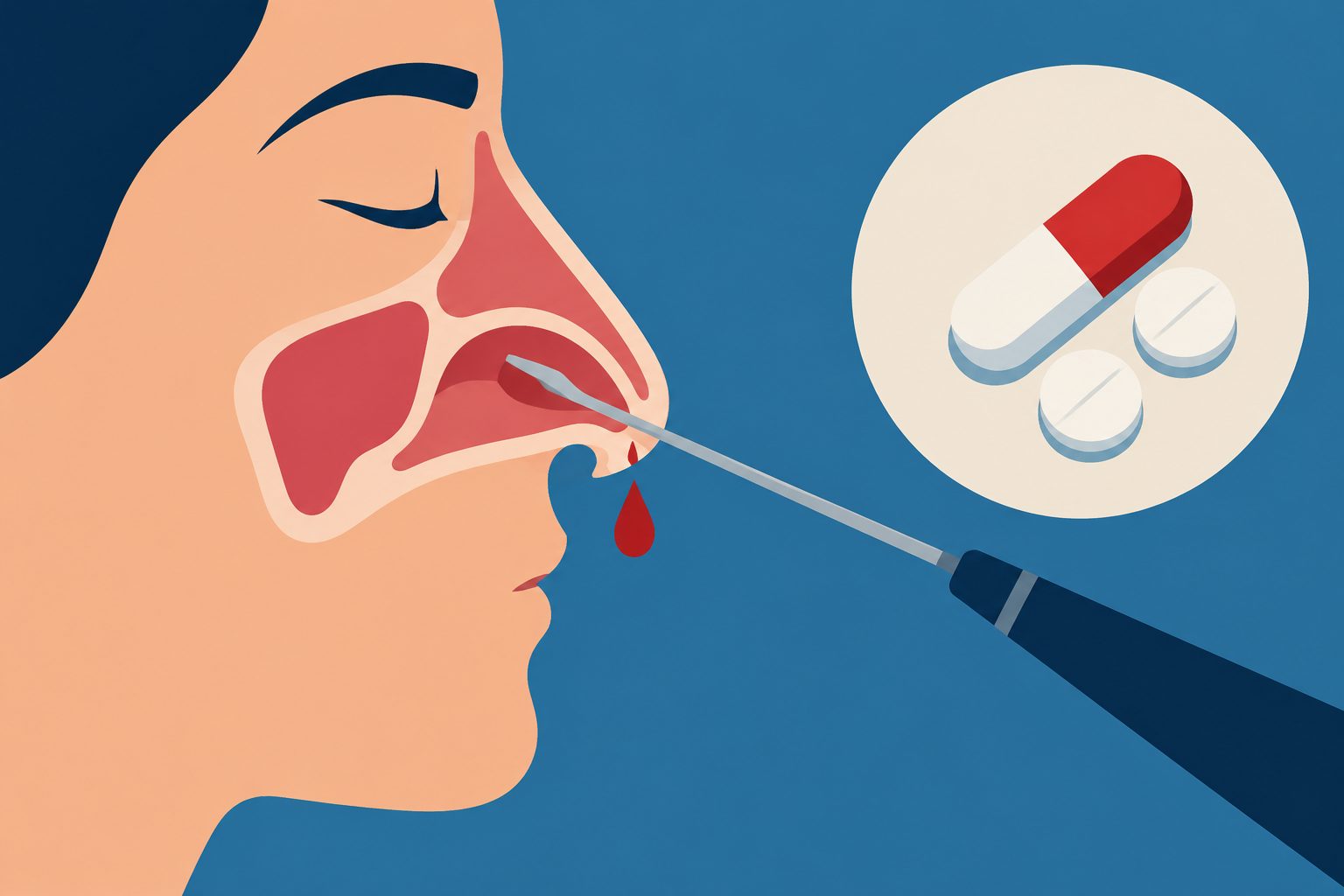
Editorial illustration — not from the study.
Researchers searched medical databases for observational studies of adults who had endoscopic sinus surgery. They reviewed bleeding rates, timing, and possible risk factors, and combined adjusted results when the studies were sufficiently comparable.
The review found that bleeding after surgery was uncommon overall, but reported rates varied because studies used different definitions and designs. Antithrombotic therapy was the most consistent factor associated with bleeding; the pooled odds were 2.35 times higher among people receiving these medicines, with a 95% confidence interval of 1.68 to 3.29. This is a relative comparison and does not mean that most people taking these medicines will have a major hemorrhage.
What the review covered
The researchers examined how often bleeding occurs after endoscopic sinus surgery and which factors are associated with it. They searched PubMed and Scopus through December 2025 and included 20 English-language observational studies involving adults. The review followed PRISMA 2020 methods and was registered in advance with PROSPERO. Two studies reported adjusted estimates that were similar enough to combine in a random-effects meta-analysis.
Key conclusions
Reported postoperative bleeding rates ranged from fewer than 1% to approximately 5%, depending on the study design and the definition of bleeding. Major hemorrhage requiring transfusion or reoperation was rare, occurring in under 1% of cases in large database studies.
Antithrombotic therapy, including aspirin and anticoagulants, was the most consistent factor associated with bleeding. In the pooled analysis of two studies, these medicines were associated with higher odds of postoperative bleeding: pooled odds ratio 2.35, with a 95% confidence interval from 1.68 to 3.29. Individual studies also reported associations with revision surgery, middle turbinate resection, surgery involving the frontal or sphenoid sinuses, hypertension, and higher Lund-Mackay CT scores. These additional findings were heterogeneous and were not combined quantitatively. Because the included studies were observational, the findings show associations and do not establish that any one factor caused bleeding.
Who this may apply to
The findings apply most directly to adults undergoing endoscopic sinus surgery in settings similar to those represented by the included observational studies. They may not apply to children, people undergoing other types of sinus or nasal surgery, or patients whose clinical characteristics and medication use differ substantially from those in the studies. The review describes population-level associations and cannot predict whether a particular person will bleed or how severe any bleeding would be.
The significance
The review provides a broad estimate of how uncommon postoperative bleeding and severe hemorrhage appear to be after endoscopic sinus surgery. It also indicates that antithrombotic therapy is an important factor to consider when interpreting bleeding risk, while emphasizing that the absolute risk of major hemorrhage remained low in the reported data. The findings may help inform discussions between clinicians and patients, but they do not determine how any individual medicine should be managed.
Limitations & evidence assessment
Most included studies were retrospective, and the studies did not use consistent definitions of postoperative bleeding. This prevented the researchers from calculating one pooled overall bleeding rate. Only two studies provided adjusted estimates for the meta-analysis, so the pooled association with antithrombotic therapy should be interpreted cautiously. Medication histories and plans for interrupting antithrombotic treatment were not complete or standardized across the evidence base. The review also did not formally assess publication bias because the meta-analysis contained very few studies. The reported estimates may therefore be affected by differences in study populations, procedures, outcome definitions, and adjustment for other factors.
Why this evidence level: Meta-analysis pooling multiple studies sits at the top of common evidence hierarchies.
Evidence levels are editorial estimates derived from study metadata — they are not clinical appraisals.
// Source
European Journal of Rhinology and Allergy · 2026 · DOI: 10.65396/ejra.1988145
Researchers combined genetic data from more than 1 million human participants to study factors associated with endometriosis. They identified 58 genomic regions, including 27 not previously reported, and used additional molecular analyses to implicate 314 genes. These findings point to possible biological pathways for further research, but they do not establish causes or demonstrate that any treatment will work.
Researchers systematically reviewed laboratory studies of how temperature affects the time it takes arboviruses to become transmissible inside mosquitoes. Across 53 studies covering 17 viruses, higher temperatures were generally linked with greater transmission efficiency and a shorter time to infectiousness for Zika and West Nile viruses, while results for several other viruses were unclear.
This systematic review and meta-analysis examined whether ultra-low-dose computed tomography (CT) can detect pulmonary, or lung, nodules while using less radiation than standard-dose CT. Across 42 studies involving 15,792 patients, pooled sensitivity for nodule detection was 91.9%, but results varied greatly between studies. The review also found that ultra-low-dose CT used an average effective dose of 0.22 millisieverts (mSv), while detection was less reliable for some small or hazy nodules and in patients with a high body mass index.