Review finds a possible link between gut bacteria changes and nerve problems
Seven clinical studies and six genetic analyses reported signals connecting microbial patterns with neuropathy, but the evidence remains limited and varied.
High evidenceReviewSome caution advised
Medical disclaimer: This article summarizes research findings and is for informational purposes only. It is not medical advice.
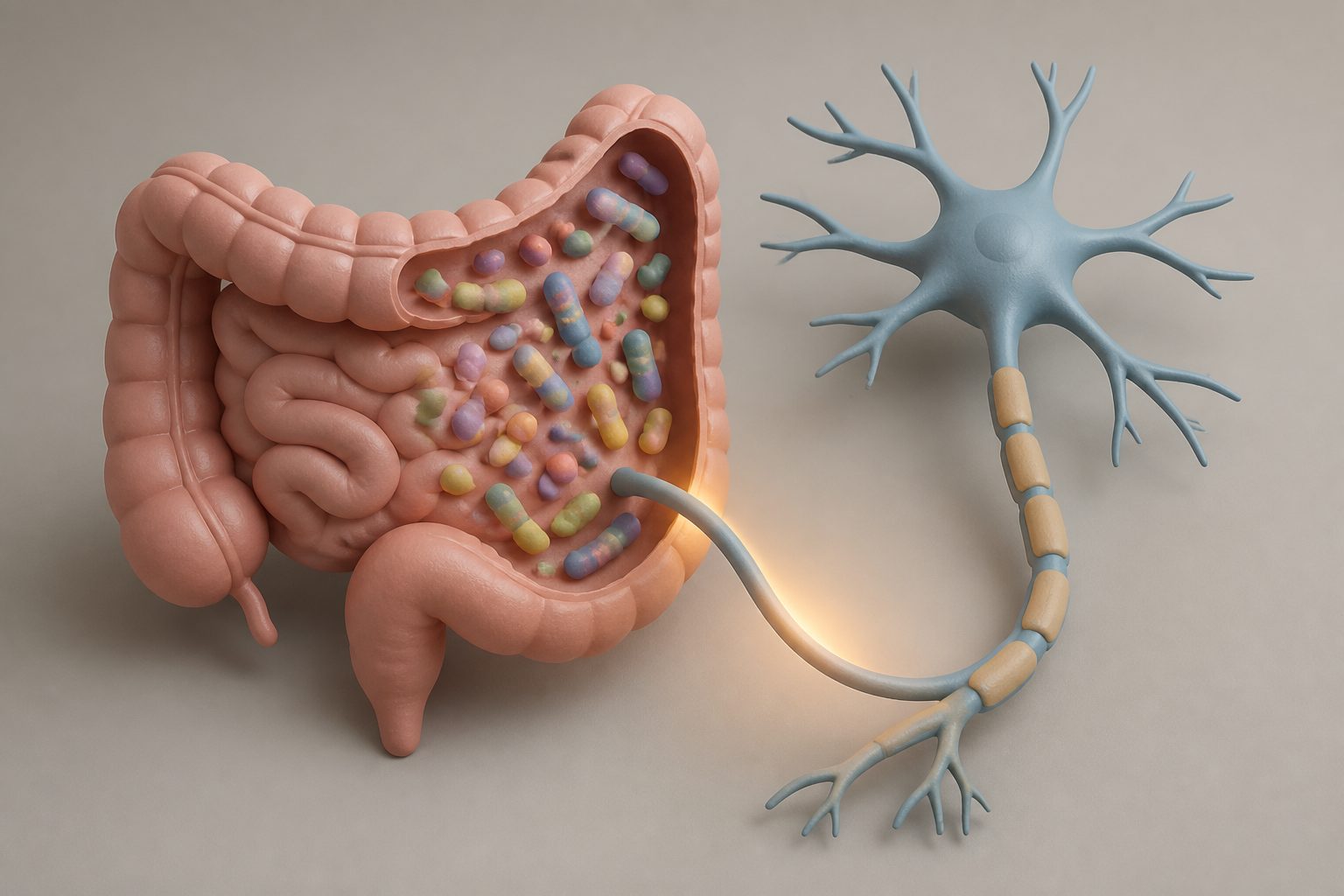
Editorial illustration — not from the study.
A systematic review in humans examined whether changes in the gut microbiome— the community of microorganisms living in the digestive system—are associated with peripheral neuropathy, a type of nerve damage that can cause symptoms such as pain, tingling, or numbness. The researchers identified seven eligible clinical studies and also considered six genetic studies using Mendelian randomization, a method that can provide indirect evidence about possible causal relationships.
All seven clinical studies reported an association between gut microbiome imbalance and neuropathy-related symptoms. The review also described recurring patterns, including more of some inflammation-related bacterial groups and fewer bacteria that produce short-chain fatty acids. These findings indicate a possible biological signal, but they do not establish that gut microbiome changes cause peripheral neuropathy or that altering the microbiome would change symptoms.
What the review examined
Researchers conducted a systematic review following PRISMA guidelines. They searched PubMed and the Cochrane Library for human observational or interventional studies evaluating gut dysbiosis in relation to peripheral neuropathy outcomes. Seven clinical studies met the stated eligibility criteria. The researchers assessed whether the studies showed results in the same direction, used an albatross plot to summarize evidence strength and approximate effect sizes across different designs, and reviewed six Mendelian randomization studies as additional genetic evidence. The abstract does not state the combined number of participants or provide the detailed characteristics of each study.
Key conclusions
The review identified seven eligible human clinical studies, and all seven reported a positive association between gut dysbiosis and neuropathy-related symptoms. A statistical sign test found that this consistent direction of results would be unlikely to occur by chance alone under the test’s assumptions, with a reported probability of 0.78%. An albatross plot suggested that most studies were near an approximate effect-size contour of 0.3, which the authors interpreted as broadly consistent, moderate effects despite differences between studies. Across different patient groups, the review reported more pro-inflammatory bacterial genera and fewer short-chain fatty acid-producing taxa. Six Mendelian randomization studies were described as supporting positive genetic relationships with neuropathy risk. These results support the possibility of a reproducible association and biological contribution, but the review does not demonstrate a direct cause-and-effect relationship in patients.
Where this may apply
The findings may be relevant to people with peripheral neuropathy or related symptoms, but only to the extent that the reviewed studies included similar patient groups. They do not establish that gut microbiome changes cause neuropathy in every person, and they do not show that changing the microbiome improves nerve health.
The significance
The findings suggest that gut microbiome patterns may be relevant to research on why some people develop or experience peripheral neuropathy. They also identify recurring microbial differences that could help guide future studies. However, this review does not show that gut dysbiosis is the cause of neuropathy, that it is an upstream determinant for individual patients, or that microbiome-focused interventions are effective. The results are therefore relevant mainly as evidence of a research connection, not as a confirmed explanation or clinical solution.
Limitations & evidence assessment
Only seven eligible clinical studies were included, and they differed in design and methods. The abstract does not provide the individual study sizes, patient details, follow-up periods, or full quality assessments. The clinical studies included observational and interventional research, so their findings may show associations without establishing cause and effect. The Mendelian randomization findings depend on genetic assumptions and are indirect evidence rather than direct clinical experiments. The review also reports broad microbial patterns, but it does not show that changing those microbes would prevent or improve peripheral neuropathy.
Why this evidence level: Systematic review aggregating primary studies with explicit methodology.
Evidence levels are editorial estimates derived from study metadata — they are not clinical appraisals.
This systematic review examined randomized human trials of concurrent chemotherapy and radiation for locally advanced head and neck, cervical, esophageal, and non-small-cell lung cancers. Across the included trials, combined treatment was reported to provide better overall survival than radiation alone, but it also caused more severe short-term side effects. The review did not provide enough information in its abstract to show how many trials or patients were included.
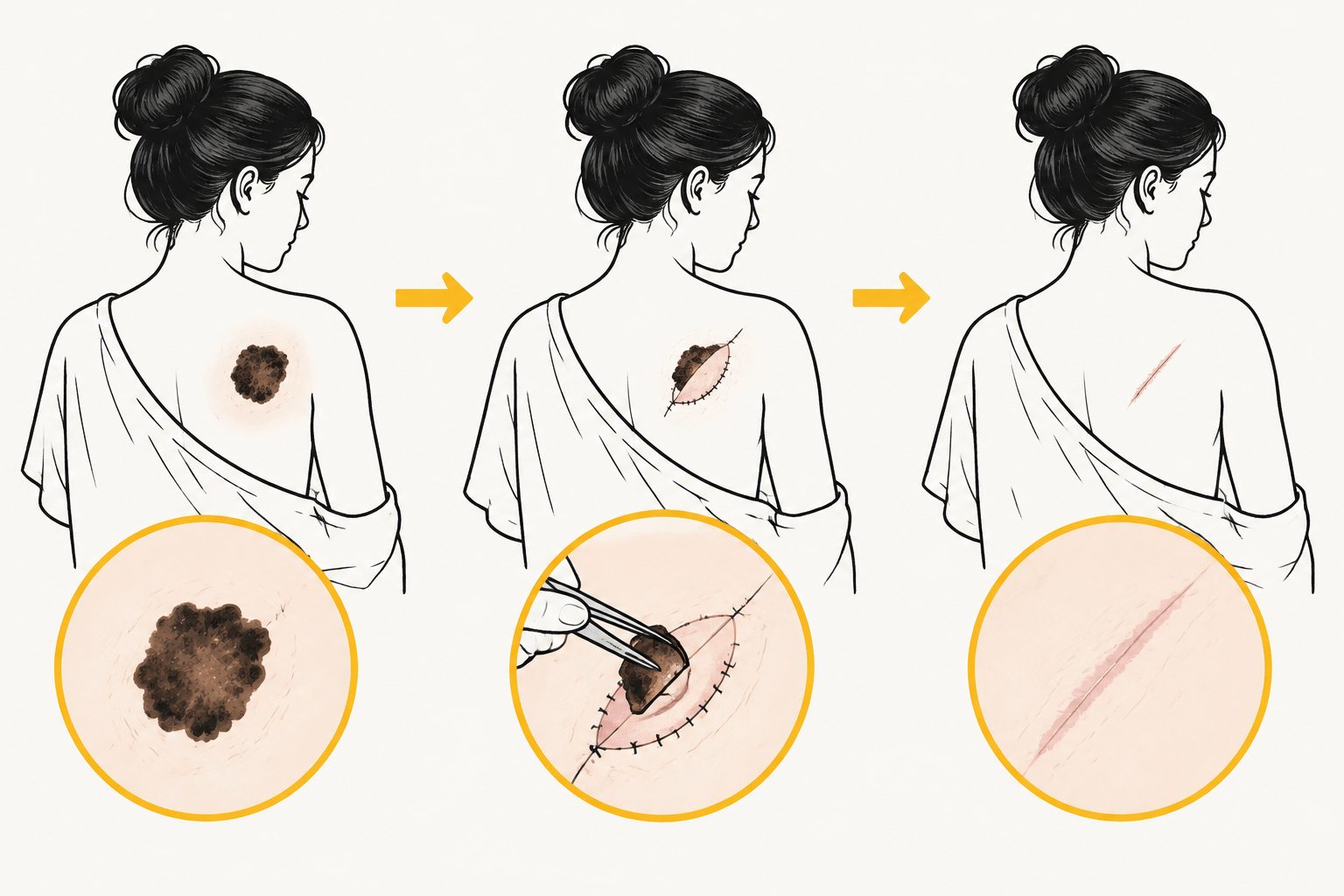
Researchers pooled results from seven human studies comparing multiple-staged with single-stage removal and reconstruction of congenital melanocytic nevi, sometimes called congenital moles. Staged surgery was associated with fewer major wound complications and recurrences, as well as slightly shorter and narrower scars, but the studies did not find a clear difference in cosmetic or overall patient satisfaction.
A cluster-randomized human study in 210 adults with recently detected stage 1 hypertension in Uzbekistan compared salt-sensitivity testing followed by assigned medication choices with conventional management. After 12 weeks, more participants in the testing-guided group reached the study's blood pressure target, although the study was small, short, and conducted in only three primary care centers.