Researchers describe a real-world study of acoramidis use in adults with ATTR heart disease
The ACO-REAL study will follow about 2,000 adults for roughly 12 months in European routine care settings.
Moderate evidenceHuman studySome caution advised
Medical disclaimer: This article summarizes research findings and is for informational purposes only. It is not medical advice.
Editorial illustration — not from the study.
The researchers created ACO-REAL to complement earlier phase 3 trial findings for acoramidis (ATTRibute-CM). Their goal is to understand how acoramidis is used in everyday care and how patients’ disease course and day-to-day functioning change during follow-up.
Because the study is non-interventional, it is designed to observe what happens in clinical practice. It will track demographics and disease characteristics at the start, describe treatment changes (including switching to acoramidis), and evaluate safety and several measures of cardiac function and patient-reported outcomes.
What the study looked at
The study question is how adults with ATTR-CM who are starting acoramidis look and are treated in real-world European healthcare settings, and what safety and clinical course measures are observed over an observational period of around 12 months. Design details include a prospective, non-interventional, multicenter approach with approximately 2,000 adults with wild-type or variant ATTR-CM across 21 European countries.
What the trial found
The provided abstract does not report study results. It describes the study rationale and design, including planned assessments of demographics, disease characteristics, treatment patterns (such as adherence, persistence, and reasons for treatment modification), safety, cardiac function, functional capacity, health status (including NYHA class and 6-minute walk distance), quality of life questionnaires, and healthcare resource utilization, with exploratory descriptive analyses planned.
Who this is relevant to
These study plans may be most relevant to adults with transthyretin amyloid cardiomyopathy (wild-type or variant) who begin acoramidis in European routine clinical settings, and to researchers or clinicians interested in real-world safety, treatment patterns, and patient-reported outcomes. The design and planned measurements do not substitute for controlled evidence of effectiveness, and results (once published) would still reflect observational practice rather than guaranteed causal effects. This article itself does not provide findings, so its direct applicability to patient outcomes is limited until results are reported.
Why it matters
Real-world data can help show how an approved treatment is used outside the tightly controlled conditions of clinical trials, and can highlight patterns of care and safety signals in broader patient groups. However, this particular publication focuses on the design of an ongoing study, so it does not by itself provide evidence about effectiveness; it is meant to support future observational findings in routine care settings.
Limitations & evidence assessment
This article does not provide results—only rationale and study design—so it cannot answer whether acoramidis improves outcomes or how frequently side effects occur. Even when results are available, a non-interventional observational design limits conclusions about cause and effect, since participants are not assigned treatments by the study. The abstract provides no detailed plans for how key confounders will be handled (unknown from the provided text). Follow-up is planned for about 12 months, which may not capture longer-term outcomes.
Why this evidence level: Clinical trial without confirmed randomization details in the available metadata.
Evidence levels are editorial estimates derived from study metadata — they are not clinical appraisals.
// Source
Cardiology and Therapy · 2026 · DOI: 10.1007/s40119-026-00461-9
This systematic review examined randomized human trials of concurrent chemotherapy and radiation for locally advanced head and neck, cervical, esophageal, and non-small-cell lung cancers. Across the included trials, combined treatment was reported to provide better overall survival than radiation alone, but it also caused more severe short-term side effects. The review did not provide enough information in its abstract to show how many trials or patients were included.
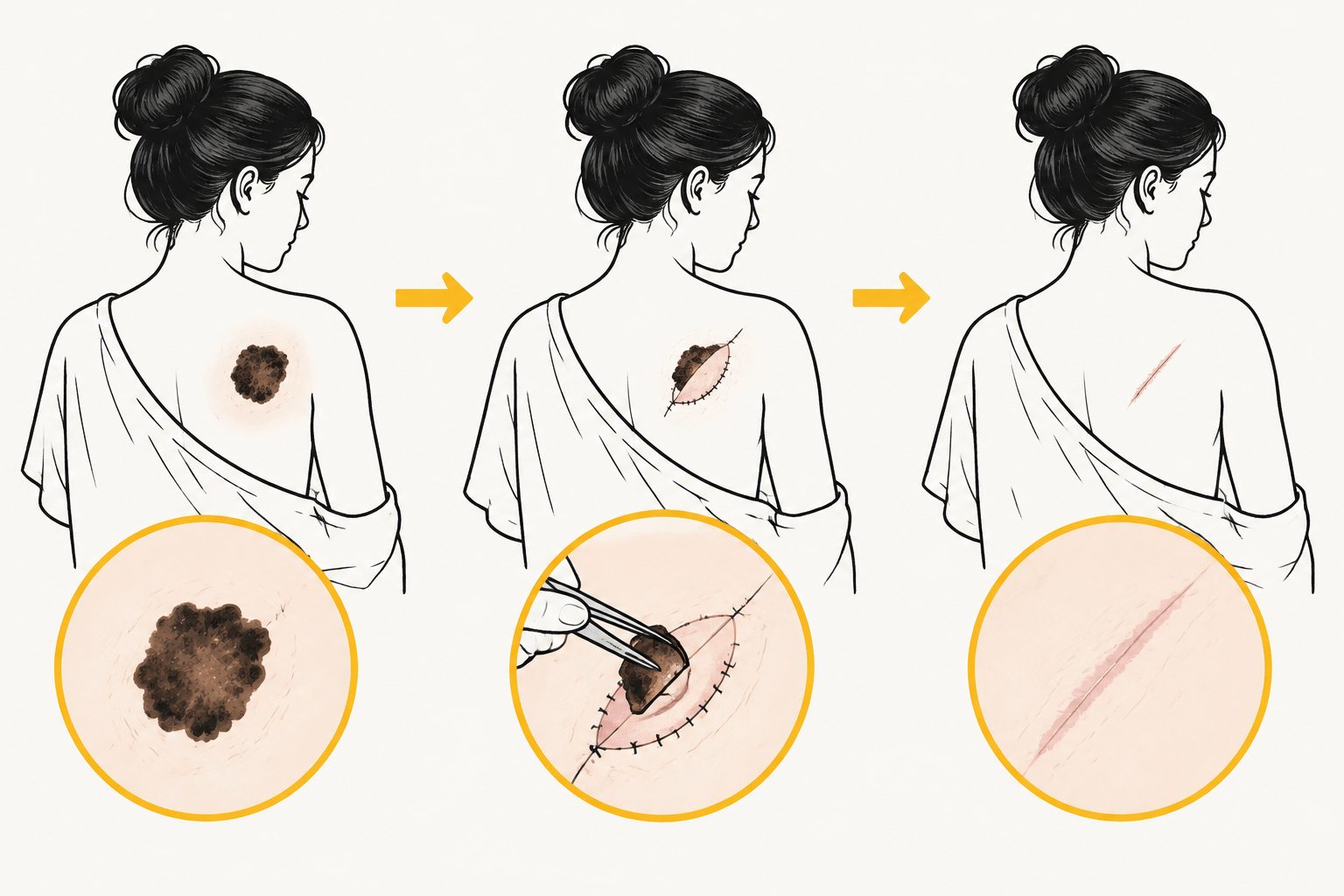
Researchers pooled results from seven human studies comparing multiple-staged with single-stage removal and reconstruction of congenital melanocytic nevi, sometimes called congenital moles. Staged surgery was associated with fewer major wound complications and recurrences, as well as slightly shorter and narrower scars, but the studies did not find a clear difference in cosmetic or overall patient satisfaction.
A cluster-randomized human study in 210 adults with recently detected stage 1 hypertension in Uzbekistan compared salt-sensitivity testing followed by assigned medication choices with conventional management. After 12 weeks, more participants in the testing-guided group reached the study's blood pressure target, although the study was small, short, and conducted in only three primary care centers.