The modeled system also lowered other environmental impacts, but building its infrastructure carried costs linked mainly to steel and cement.
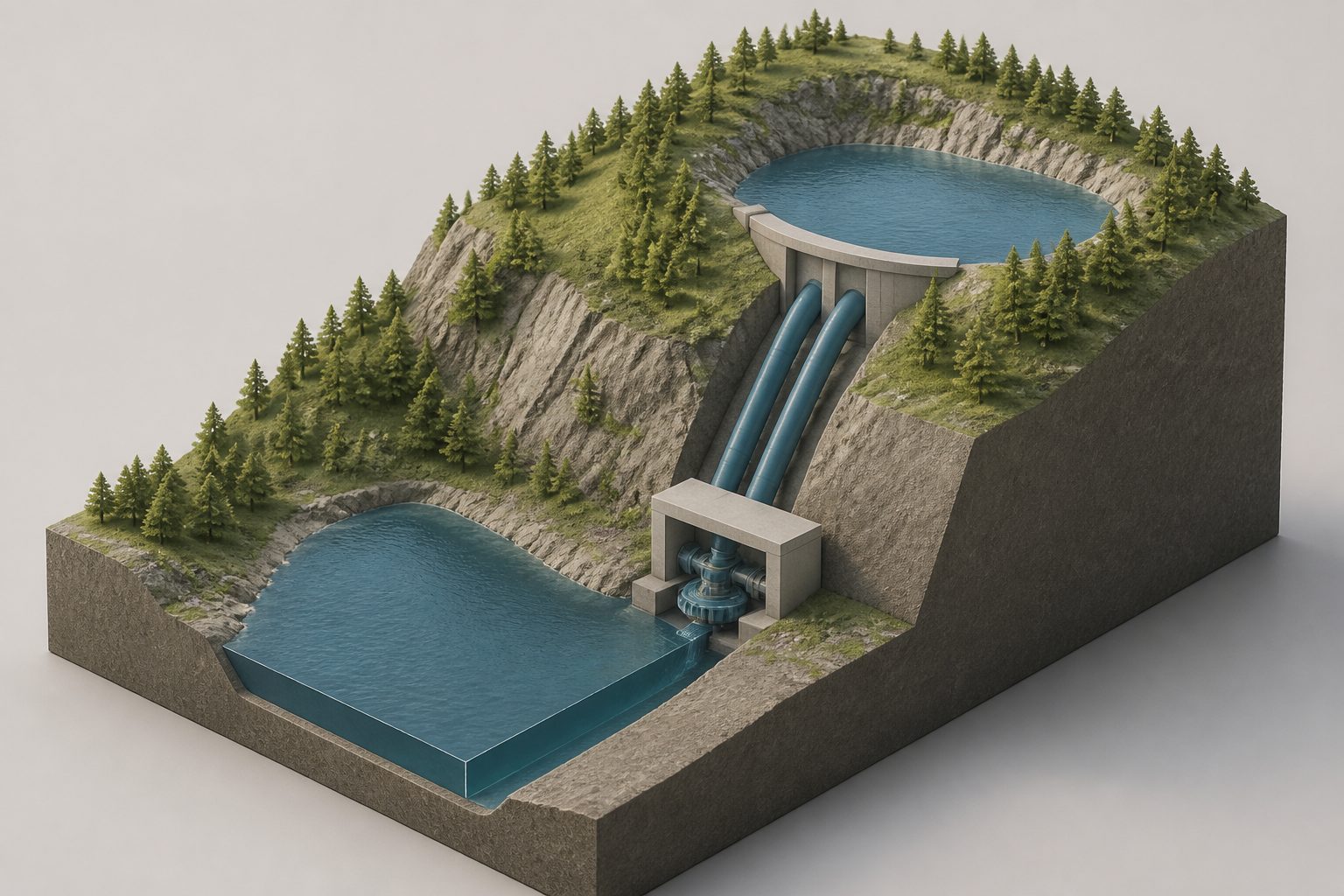
A life-cycle assessment of a pumped-hydro storage facility modeled three scenarios involving wind power, grid electricity, hydropower, storage and electricity demand. Compared with a baseline without pumped-hydro storage, the scenarios with storage produced 81% fewer greenhouse-gas emissions and lower levels of other assessed environmental impacts.
The storage infrastructure also created environmental burdens, especially through the production of the steel and cement needed to build it. The analysis was based on simulated flows for an existing European Alpine facility and covered impacts from construction through the end of the system’s life.
What the storage changed
The researchers compared three realistic scenarios with different combinations of wind power, grid electricity, hydropower, pumped-hydro storage and demand. In the assessment, adding pumped-hydro storage reduced greenhouse-gas emissions by 81% compared with the baseline scenario without storage. The system also reduced other assessed environmental impacts.
The main environmental burdens associated with pumped-hydro storage came from producing the steel and cement used for its infrastructure. The assessment covered the system’s full life cycle, from construction through operation and end of life, using the ReCiPe 2016 and EF 3.1 impact methods.