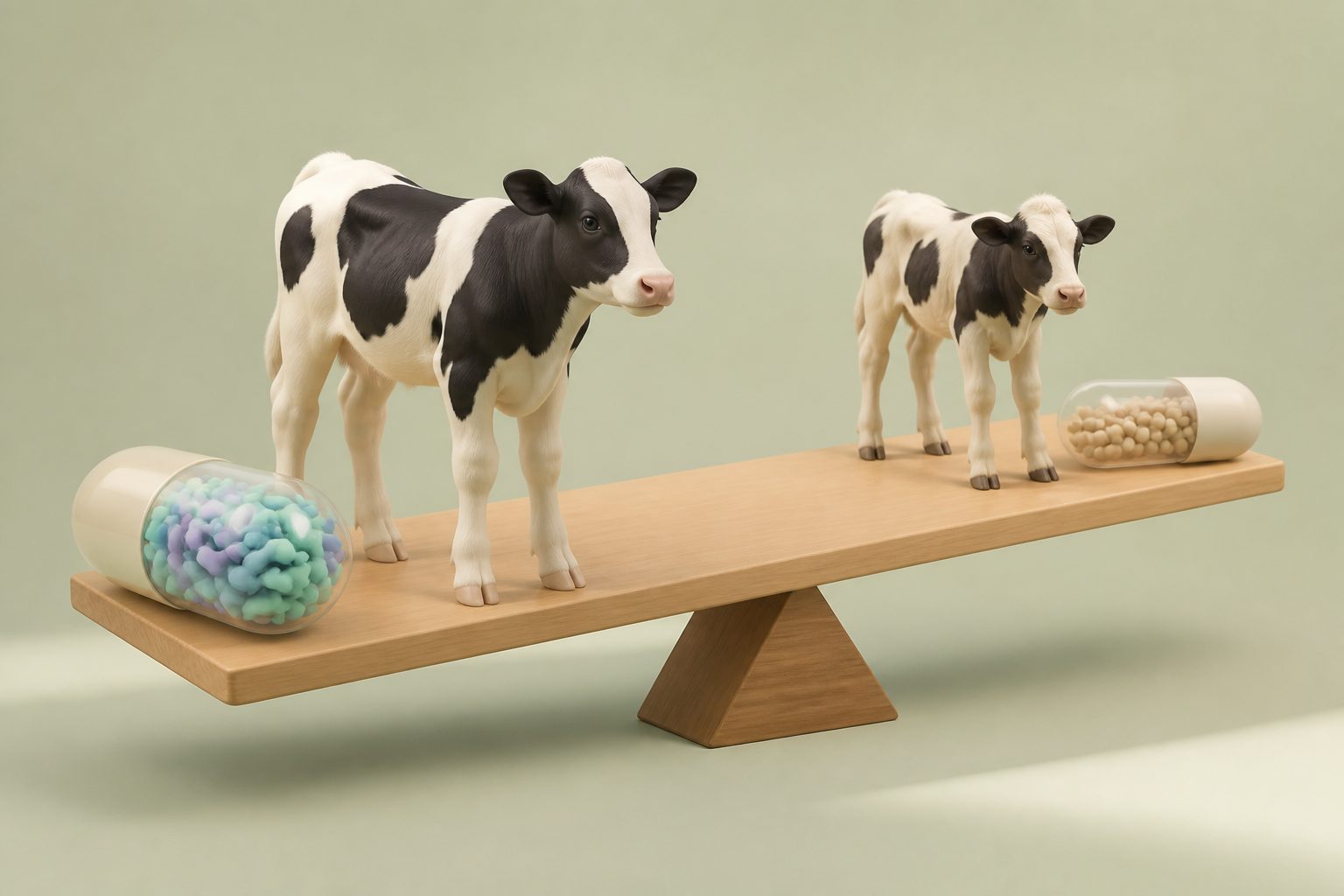
Freeze-dried and encapsulated formulations were linked to stronger growth, healthier gut measurements and improved immune responses in young cattle.
In a randomized study of 40 young indigenous cattle calves, fermented, freeze-dried and encapsulated probiotics were compared with chlortetracycline and a control treatment. The probiotic groups had greater weight gain, feed intake and body growth than both comparison groups.
The calves receiving probiotics also had gut measurements associated with more beneficial microbes and fermentation, along with stronger immune responses in some measures. Encapsulated and freeze-dried probiotics most clearly increased beneficial bacteria and reduced Escherichia coli and Clostridium perfringens.
How the calves responded
The study randomly assigned 40 calves to five groups of eight: a control group; a group receiving chlortetracycline; and groups receiving fermented milk probiotics, lyophilized probiotics or encapsulated probiotics. The probiotics contained Lactiplantibacillus plantarum CRD7 and Lacticaseibacillus rhamnosus CRD11.
Compared with the control and antibiotic groups, probiotic supplementation increased net weight gain, dry matter intake, body length, wither height, heart girth, hip height and the digestibility of neutral detergent fibre. The probiotic groups also had lower fecal scores, fecal pH and ammonia concentrations, and higher fecal lactate and short-chain fatty acid concentrations.
The encapsulated and lyophilized formulations increased fecal counts of Lactobacillus and Bifidobacterium and reduced the abundance of Escherichia coli and Clostridium perfringens. Encapsulated probiotics also produced higher superoxide dismutase activity and stronger cell-mediated and antibody-based immune responses than the other treatments. The researchers concluded that the probiotic treatments reduced indicators of diarrhea while improving growth, gut conditions and immune status in these calves.
Evidence and caveats
This was a randomized animal study involving 40 indigenous cattle calves aged 5–10 days. The calves were divided among five groups of eight: a control group, an antibiotic group, and groups receiving fermented milk, lyophilized or encapsulated probiotics. The abstract does not report how long the treatment lasted, the size of the measured changes, or whether the findings apply to other cattle breeds, ages, farms or probiotic strains.