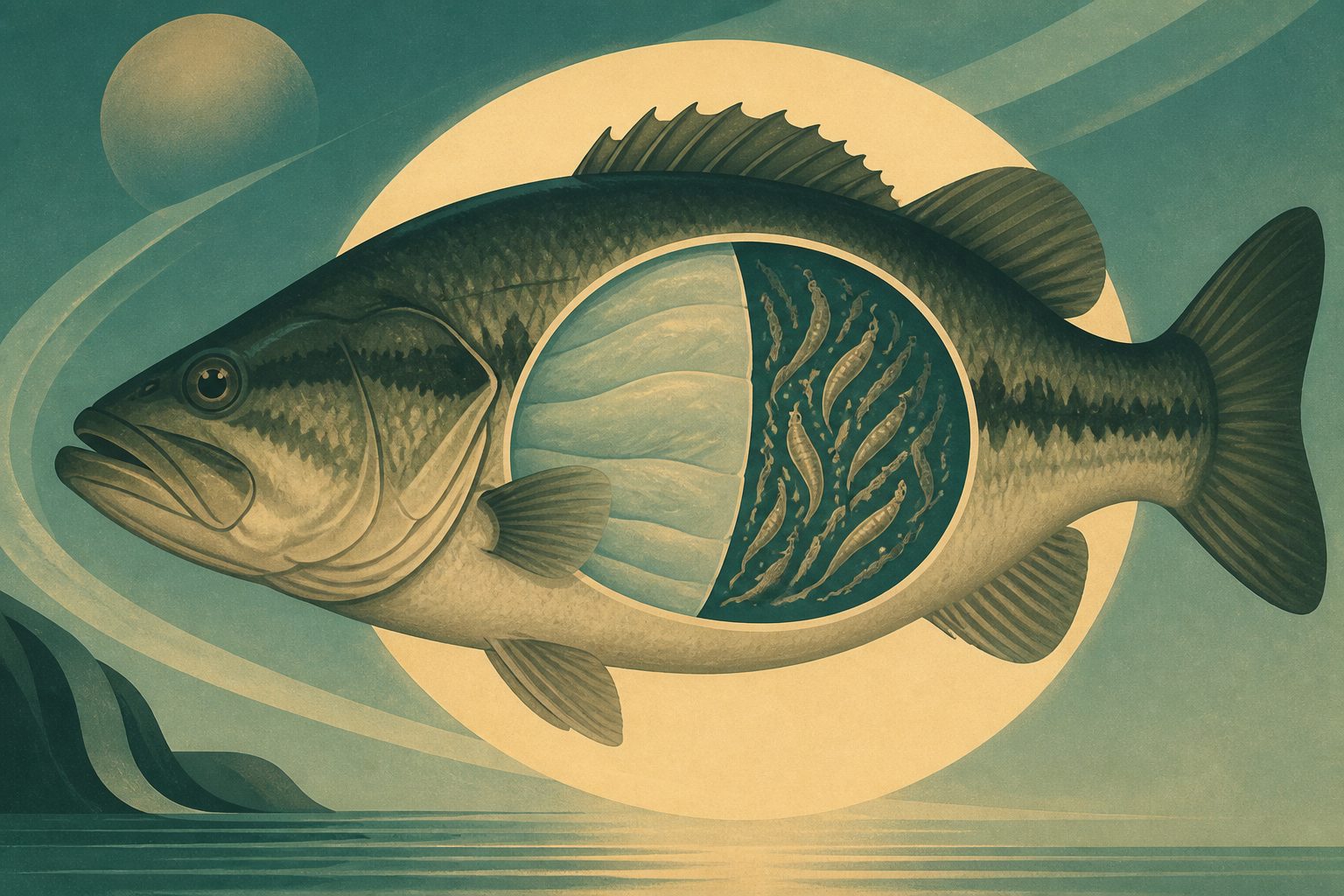
Researchers manipulated nutrient availability in 11 ponds stocked with piscivorous largemouth bass and measured nutrients, fish and invertebrate consumers, and Crepidistomum parasites in the bass’s pyloric caeca, a digestive organ. Fertilization increased phosphorus in the water and fine particulate organic matter while lowering their carbon-to-phosphorus and nitrogen-to-phosphorus ratios.
The nitrogen-to-phosphorus ratio in bass pyloric caeca was inversely related to both total phosphorus in the water and the abundance of Crepidistomum in the tissue. The researchers did not detect fertilization effects on intermediate trophic levels, which include potential hosts for the parasite.