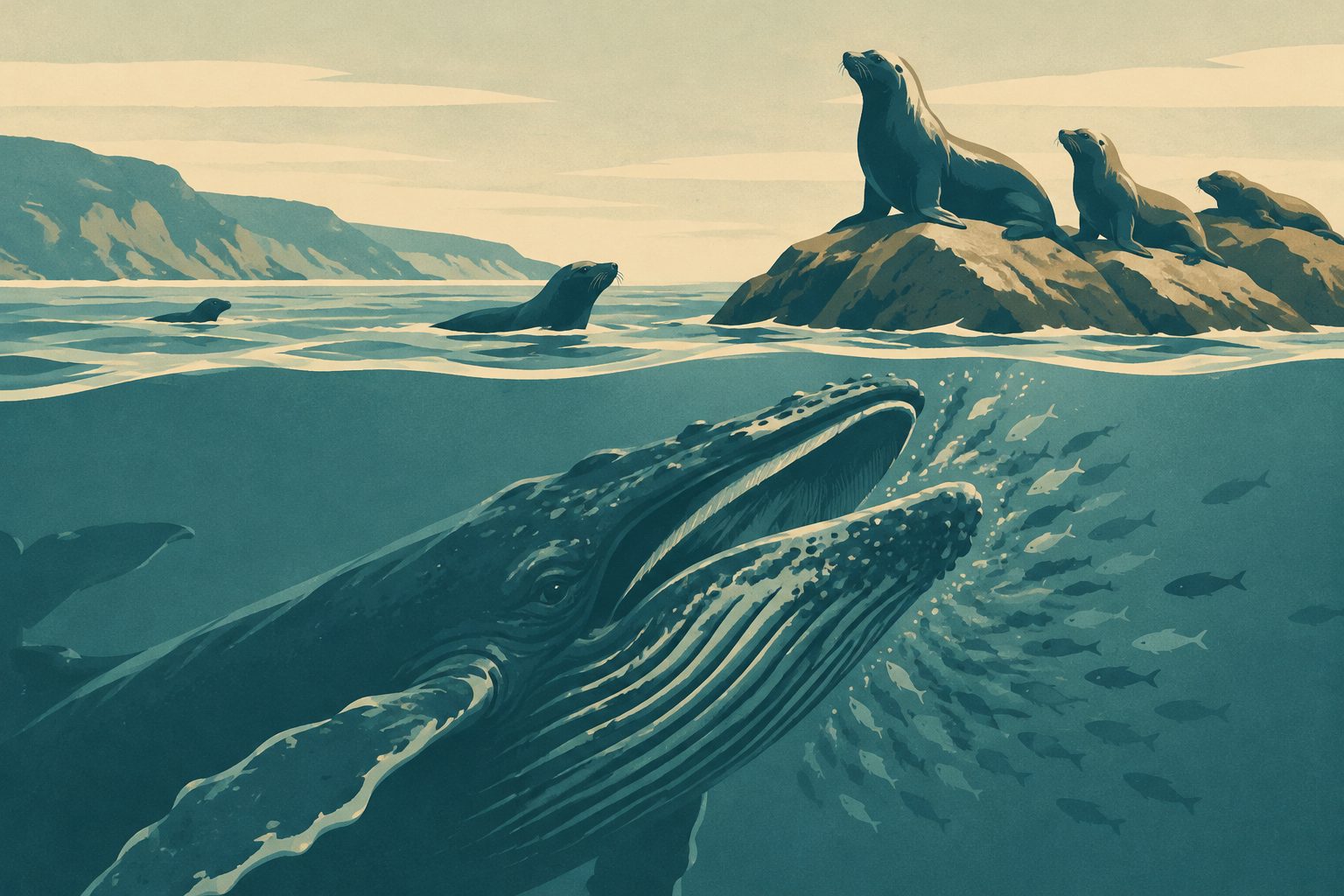
A systematic review of thousands of papers argues that MPA planning needs to treat ecological links and human activity and governance links together.
Marine conservation increasingly aims to protect areas and the connections between them, alongside goals for fairness and effective governance. This review maps a large body of research on ecological connectivity and coastal human activity connectivity, and finds that the fields developed in parallel rather than being integrated into routine MPA assessment.
The authors propose a Social-Ocean Connectivity framework to bring ecological resistance, coastal human activity, governance processes, and socio-cultural relations into a single assessment logic. They also outline how future studies could combine several analytical approaches to evaluate connectivity along with governance capacity, social legitimacy, and equitable conservation outcomes.
Connectivity research is growing, but split
The review analyzed 7,911 peer-reviewed articles published between 2010 and 2024 and found that connectivity research has shifted from studying dispersal, population structure, and spatial patterns toward more applied topics such as marine protected area network design, ecological restoration, and governance. However, the literature has remained limited in addressing social–ecological feedbacks, management effectiveness, equity, and the changing role of human activities in shaping ecological connectivity.
To address these gaps, the authors developed a Social-Ocean Connectivity framework that connects ecological resistance, coastal human activity, governance processes, and socio-cultural relations. They did not apply the framework to a specific case study, but described how methods such as principal component analysis, least-cost path modeling, and hypergraph-based network representation could be combined in future empirical assessments of MPA systems.
// Source
Cambridge Prisms Coastal Futures · 2026 · DOI: 10.1017/cft.2026.10044
Authors: Mingbao Chen, Zexin Long, Wenhui Wang