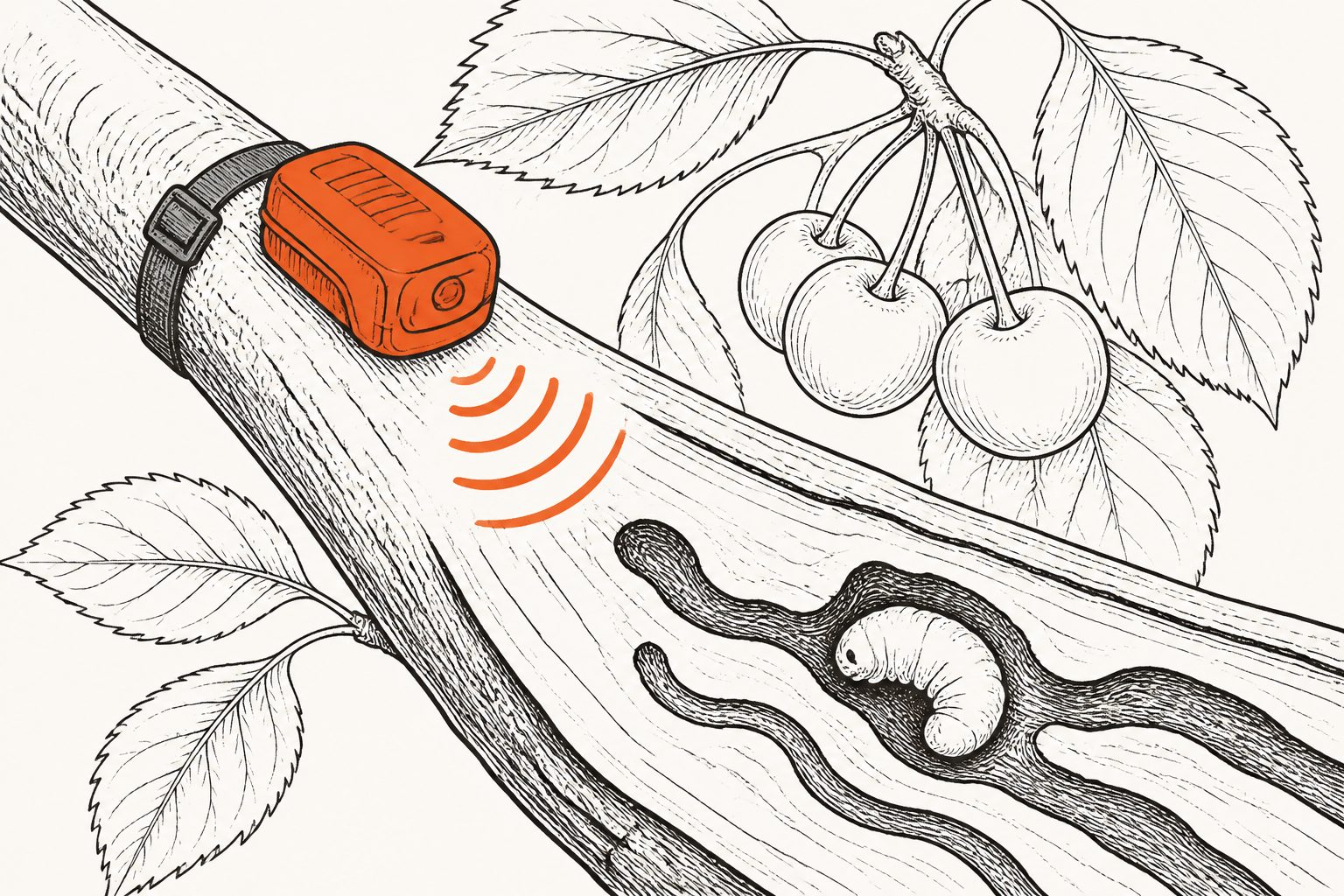
A study in Israeli sweet cherry orchards found that larvae of the longhorn beetle Cerambyx dux were most active in late summer, when older larvae began boring into the wood. Seismic sensors attached to tree stems detected this concealed activity, which was also assessed using frass and visual damage.
Climate & Environment2 months ago
Late-summer sensors reveal hidden larvae of a destructive beetle in cherry trees
The study also found that infestations clustered around affected trees, offering a way to combine seasonal timing, sensors and maps when monitoring the pest.
How the beetle was detected
Larval activity peaked in late summer, coinciding with the start of xylem boring by fourth-instar larvae. Seismic recordings from tree stems detected this concealed activity and were compared with frass discharge and visual damage assessments. The spatial analysis found expanding infestation clusters: the frequency of infestation decreased as distance from infested trees increased. The researchers concluded that visual inspection can provide reliable assessments but is labor-intensive and difficult to use for large-scale monitoring.
Why earlier detection matters
Cerambyx dux is a major pest of stone and pome fruit crops in the Eastern Mediterranean. Detecting larvae inside trees could help growers identify activity that is not visible from the outside and focus monitoring around infested trees. The approach may be particularly useful as pesticide use declines and climate stress creates conditions that may favor the pest’s resurgence, although the study does not establish its performance beyond the orchards examined.
Evidence and caveats
The study examined Cerambyx dux in sweet cherry orchards in Israel. Researchers combined field observations, grower reports and published data to assess seasonal activity, then compared frass discharge and seismic recordings from tree stems with visual damage assessments. Spatial analyses were used to map infestation patterns. The abstract does not report the number of orchards or trees studied, and it does not establish how well the sensors perform across other crops, regions or pest conditions. Visual inspection was described as reliable, but labor-intensive; the sensors were presented as a promising monitoring tool rather than a fully validated replacement.
// Source
Phytoparasitica · 2026 · DOI: 10.1007/s12600-026-01427-2
Authors: Zvi Mendel, Ronen Shapir, Hillary Voet, Shahar Samra, Carmit Sofer‐Arad, Dana Ment
Institutions: Agricultural Research Organization, 3M (Israel), Ministry of Agriculture and Rural Development