In experiments, the material reduced organic carbon, inactivated E. coli and kept trihalomethanes below detection.
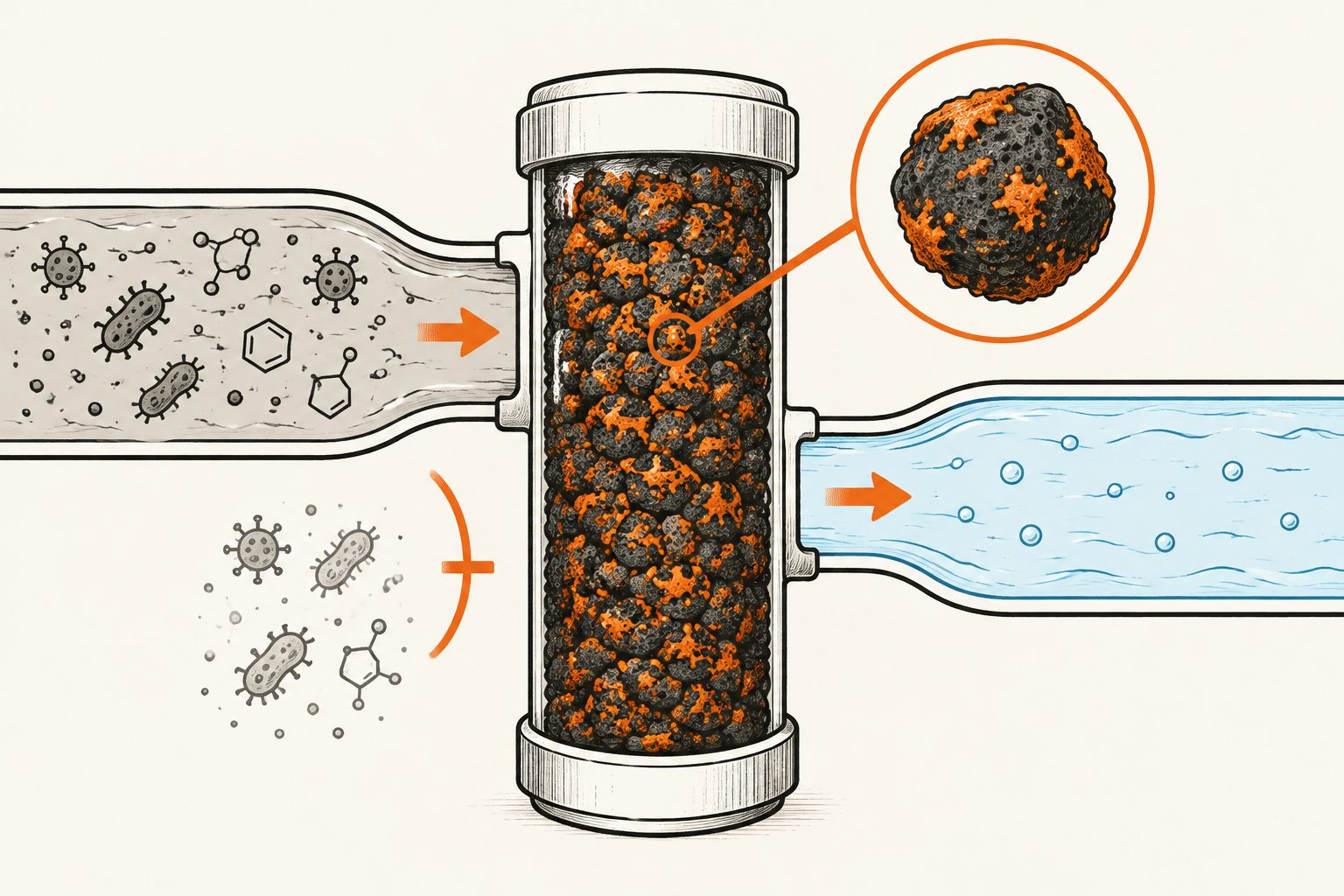
The study tested whether combining magnetite with granular activated carbon could support several treatment steps at once. The material catalyzed the breakdown of hydrogen peroxide, producing strong oxidants intended to reduce organic matter and disinfect water without adding chlorine or other halogens.
The magnetite-coated carbon decomposed hydrogen peroxide seven times faster than magnetite alone. It reduced dissolved organic carbon by 53%, limited trihalomethane formation to below the detection limit and inactivated more than 99.9% of E. coli in the experiments.
Evidence and caveats
The findings come from controlled experiments with the synthesized catalyst, hydrogen peroxide and E. coli, including measurements of hydrogen-peroxide decomposition, dissolved organic carbon, trihalomethanes and bacterial inactivation. The provided material does not report full-scale or field testing, long-term performance, treatment costs, reuse over multiple cycles or results for a broad range of pathogens and water sources. The reported results therefore show potential for drinking-water treatment but do not establish how the material would perform in operating water systems.