Gravitational-wave observatories tighten limits on a cosmic hum
A new analysis found no evidence of a background signal, but lowered the allowed strength of several possible gravitational-wave sources.
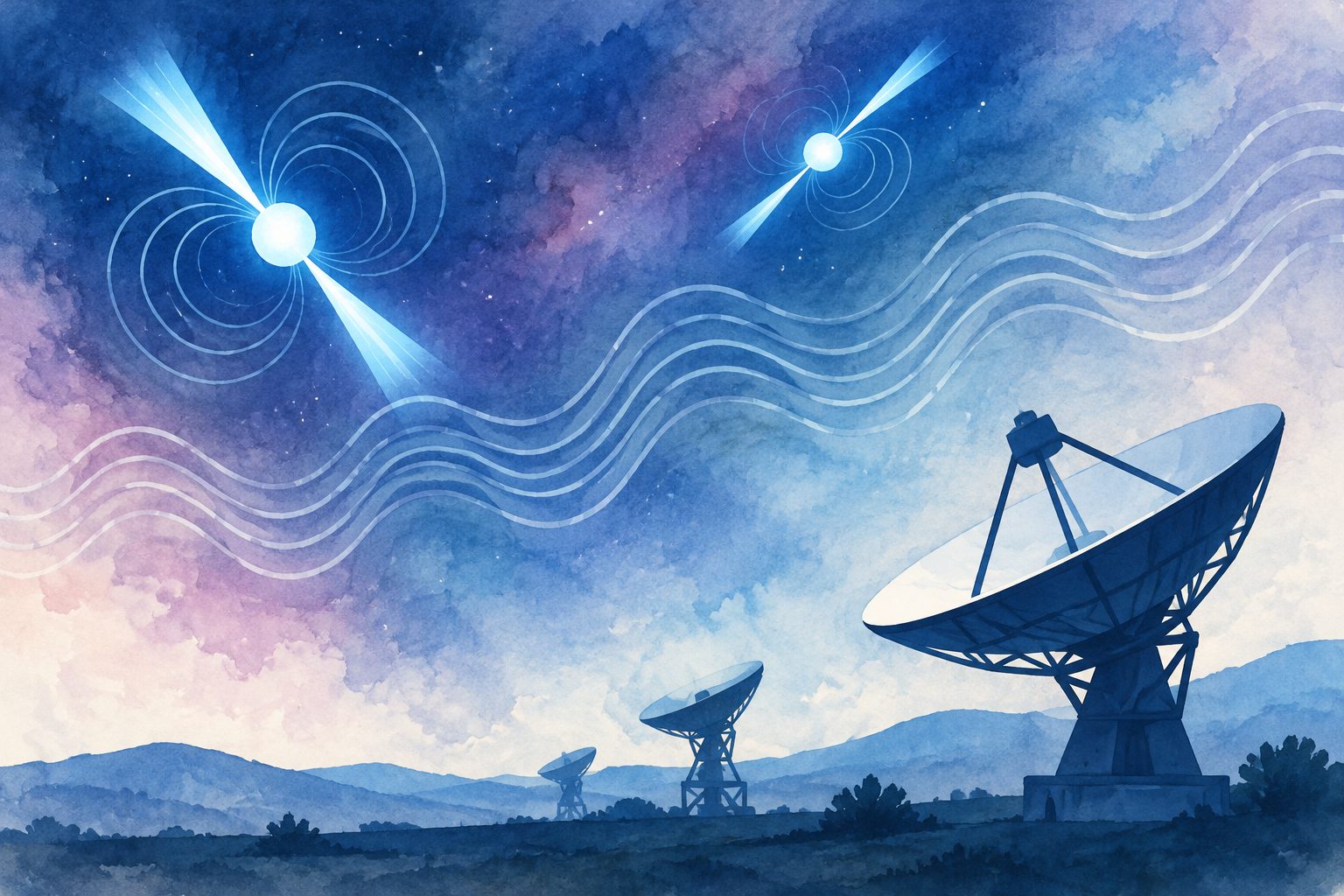
Editorial illustration — not from the study.
Researchers searched for a faint, all-sky background formed by many unresolved gravitational-wave signals. They reprocessed data from the first observing run through part of the fourth, using stricter frequency cuts to remove narrow lines and changing noise features that earlier checks could miss.
The analysis found no background signal. At 25 hertz, it set a 95% credible upper limit of 2.0 × 10⁻⁹ for a background with the frequency pattern expected from merging compact objects, and 2.8 × 10⁻⁹ for a scale-invariant background.
What the search found
The data were consistent with no isotropic gravitational-wave background. For a background with a spectral index of 2/3—the pattern expected from unresolved compact-binary mergers—the gravitational-wave energy density at 25 hertz was limited to no more than 2.0 × 10⁻⁹. For a scale-invariant background, the limit was 2.8 × 10⁻⁹. Both limits use a 95% credible level and a log-uniform prior for the background strength.
Relative to earlier constraints recalculated with the new frequency cuts, the limits improved by a factor of 1.4. The researchers also found that correlated magnetic noise was below the search’s sensitivity and updated limits on possible scalar and vector polarization modes. Using population models informed by GWTC-5.0, they estimated the compact-binary background at 25 hertz to be 6.3⁺⁵·⁰₋₂·₂ × 10⁻¹⁰ at the 90% credible level.
Why the limits matter
A background of unresolved gravitational waves could carry information about populations of merging compact objects and about processes in the early universe. By lowering the allowed strength of such a background, the analysis narrows the range of signals that future searches can still find.
The predicted compact-binary background remains below the current observational limits, so this study does not detect it. The researchers say expected sensitivity improvements in the fifth observing run could make detecting that background increasingly plausible.
Evidence and caveats
This was a cross-correlation search using gravitational-wave detector data from the first observing run through April 1, 2025, over 20–1726 hertz. The analysis used LIGO Hanford and LIGO Livingston data for the newer fourth-run periods, included Virgo data from the third run, and did not include Virgo fourth-run or KAGRA data because their added sensitivity was small for this search.
The result is an upper limit rather than a detection. The quoted bounds depend on the assumed frequency pattern and on the prior used for the background strength; a uniform prior gives a less restrictive limit for the scale-invariant case. The analysis also required revised frequency cuts because of previously unrecognized, changing noise features. Although the researchers checked correlated magnetic noise, other possible backgrounds remain constrained only to the levels allowed by this analysis.
// Source
Physical review. D/Physical review. D. · 2026 · DOI: 10.1103/fvk7-qcjr
Researchers used machine learning to design germanium structures with localized silicon features that could improve quantum-dot spin qubit performance. The proposed structures increased spin–orbit interaction by up to three orders of magnitude and produced quality factors up to 100 times higher than those of current materials in the study’s calculations.
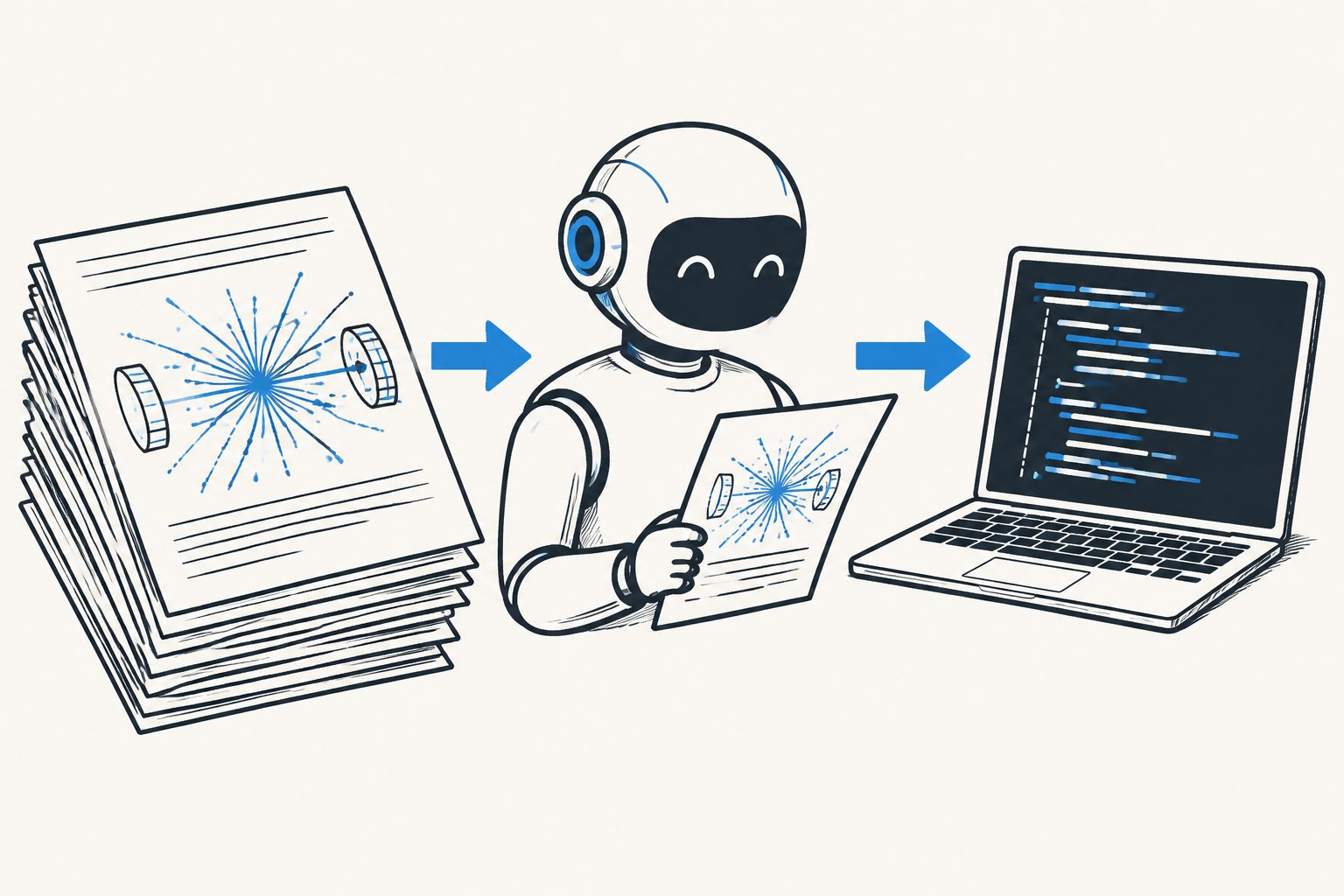
Researchers developed AgentRivet, an automated system that reads particle-physics publications and writes Rivet routines for recreating their analyses in code. Tests on two recent measurements found few syntax errors, although the accuracy of the physics implementation varied between tasks and language models.
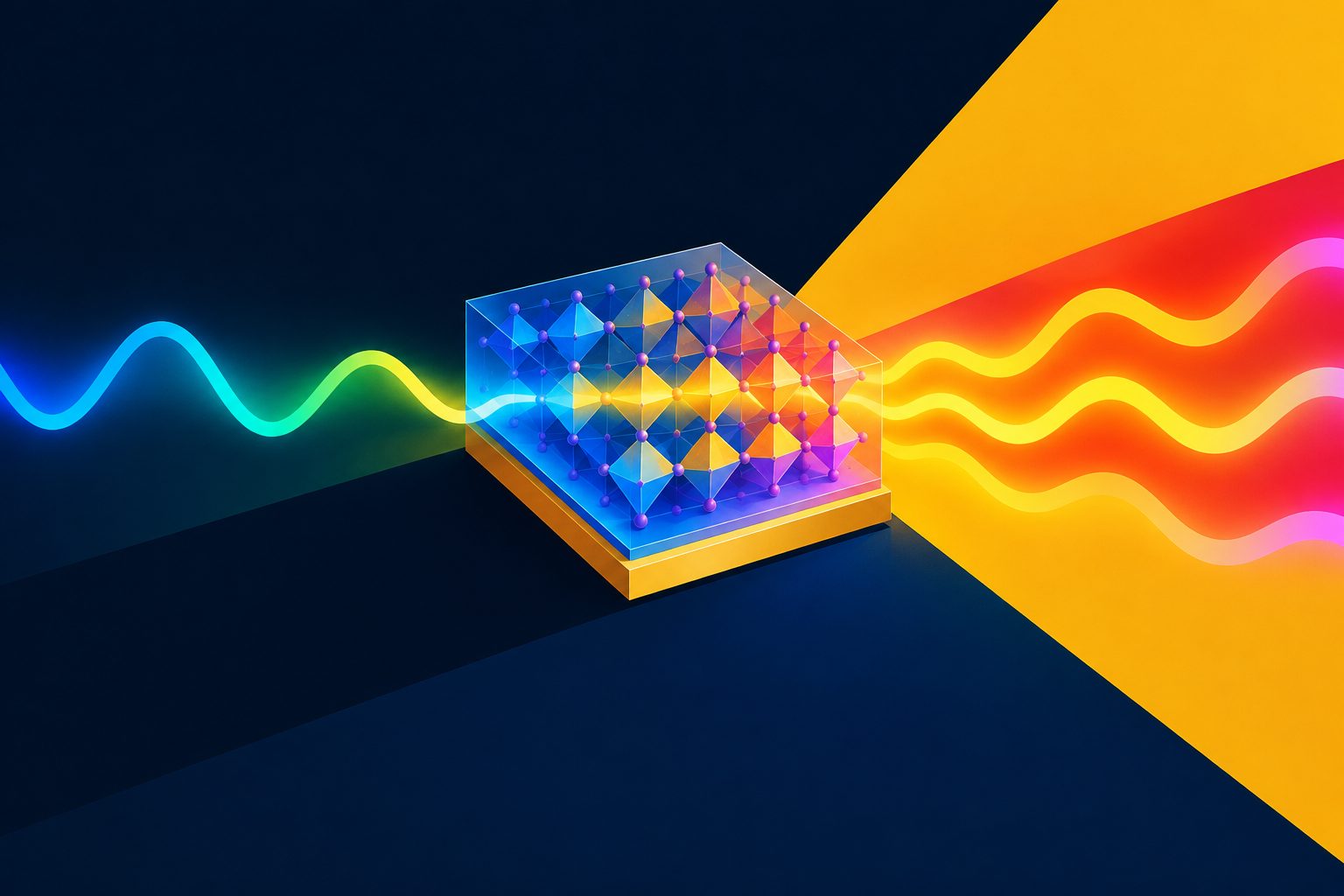
Researchers have built a perovskite circuit that combines polariton lasing, amplification and nonlinear phase control on one chip. The device operates at room temperature and uses integrated gratings to guide and control light.