The study found no single clear cause of fluoride levels and recommends confirming results at individual high-risk sites.
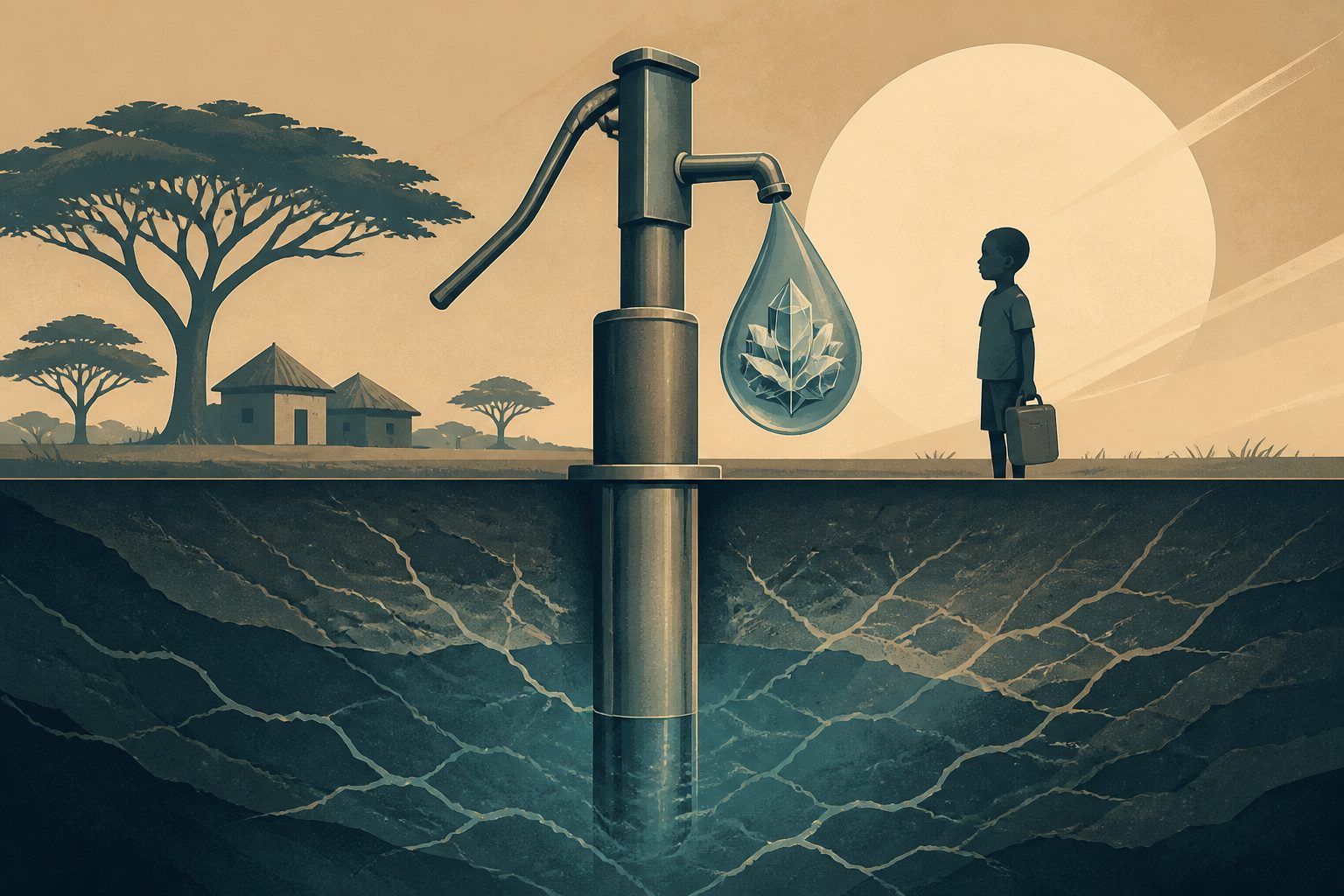
A study of 34 public boreholes in Ghana’s semi-arid Voltaian basin found that children had a 69% modeled probability of exceeding a fluoride health-risk threshold under dry-season drinking conditions. The researchers did not find one statistically supported geochemical factor that explained fluoride levels.
Most samples were rated excellent in an overall groundwater-quality assessment, but some were classified as degraded or unsuitable. The authors recommend confirmatory fluoride testing, communication focused on children, and site-specific consideration of treatment or alternative water sources at high-risk boreholes.
Fluoride risk in children
Researchers collected 34 dry-season samples from public boreholes in Karaga District, in Ghana’s Voltaian sedimentary basin. The groundwater was mainly a sodium-bicarbonate type and showed signs of rock-water interaction, ion exchange and differences in mineralisation.
In the overall groundwater-quality assessment, 25 of the 34 samples (73.5%) were classified as excellent, while 8 (23.5%) were classified as degraded and 4 (11.8%) as unsuitable. These categories and percentages are reported in the study’s abstract but do not form a single non-overlapping total.
Fluoride was not linked to one statistically supported driver. Instead, weak exploratory signals connected it with the water’s ion-exchange state, mineralisation and indicators of weathering. Under the modeled dry-season drinking scenario, children had a 69% posterior probability of exceeding the fluoride hazard index. Nitrate-related blood health risk remained below the assessment threshold.
// Source
Scientific Reports · 2026 · DOI: 10.1038/s41598-026-66475-4
Authors: Dickson Abdul-Wahab, Emmanuel Daanoba Sunkari, Celestina Akasi Yalley, Ebenezer Aquisman Asare, Cynthia Laar, Tulika Chakrabarti, Kamal Kant Hiran, A. A. Ambushe
Institutions: University of Johannesburg, University of Ghana, Ghana Atomic Energy Commission, Sir Padampat Singhania University, University of Mines and Technology