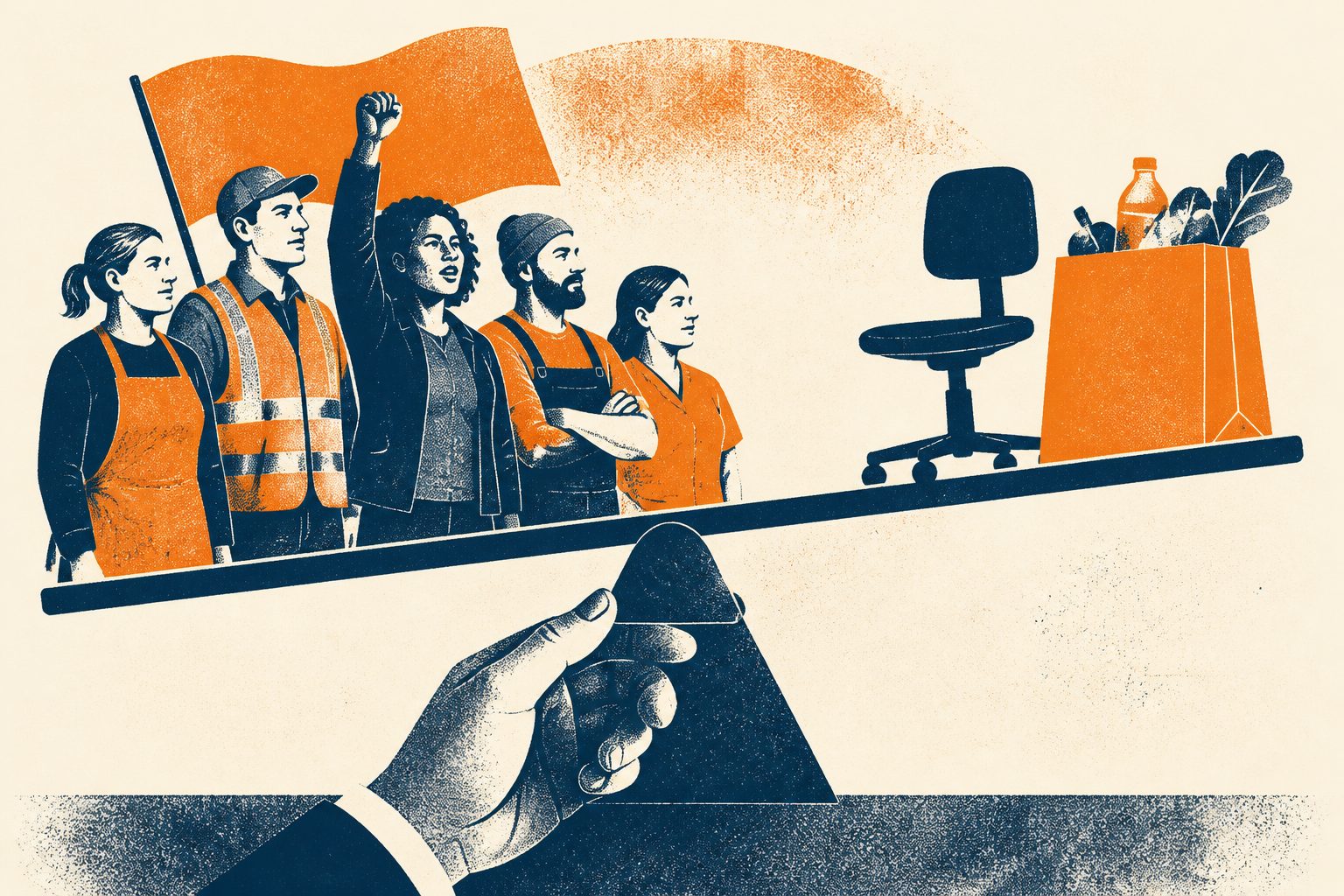
The study examines wage bargaining shocks—unexpected changes in workers’ ability to negotiate pay—using episodes involving Germany’s minimum wage and strikes. The authors use this variation to estimate how such shocks affect unemployment, output and other parts of the economy.
They find that wage bargaining shocks contribute meaningfully to fluctuations in unemployment and inflation. The results also show substantial pass-through to prices, with patterns for job vacancies, firms’ profits and the share of income going to workers that are consistent with models of how workers and employers search for jobs and fill them.