Loss of orientation after release was a strong warning sign of later death, while preventing deep hooking offered the best survival prospects.
Researchers examined post-release survival and impaired reflexes in bogue, a fish commonly caught in Mediterranean and Atlantic temperate fisheries. Overall, 20.4% of the fish died after release, with most deaths associated with deep-hooking events.
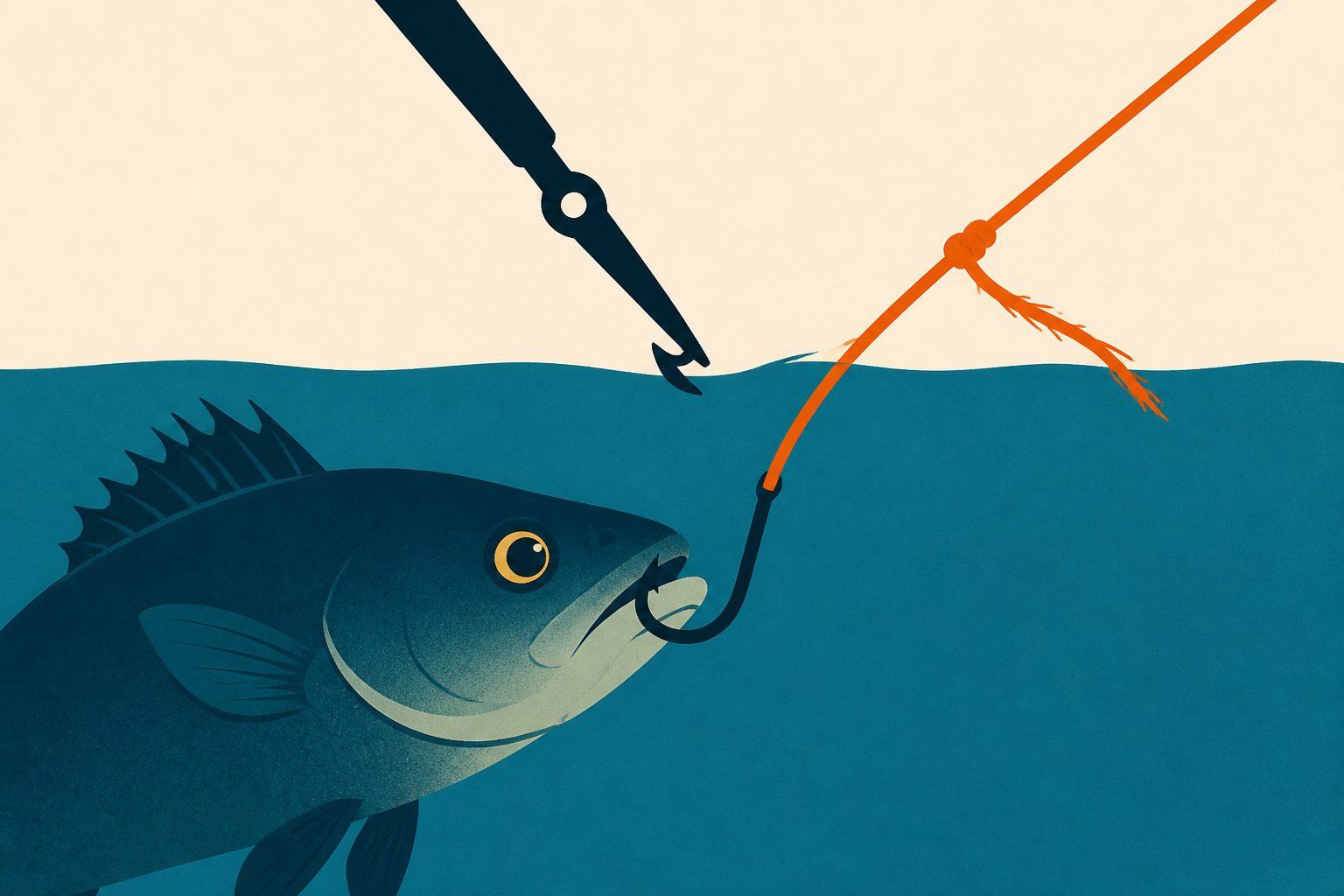
When fish were deeply hooked, mortality did not differ significantly between those treated with a de-hooker and those released after the line was cut. Loss of orientation was especially common in deeply hooked fish and strongly predicted mortality; fish showing both bleeding and disorientation consistently died.
What happened after release
Overall post-release mortality was 20.4% (95% confidence interval: 13.5% to 29.4%), and it was largely associated with deep hooking. Among fish with shallow hook locations, manually removing the hook was associated with 2.5% mortality (95% confidence interval: 0.1% to 14.7%). In deep-hooking cases, mortality was 29.4% after line-cutting (95% confidence interval: 15.7% to 47.7%) and 32.4% after use of a de-hooker (95% confidence interval: 18% to 50.6%). The difference between line-cutting and de-hooker use was not statistically significant.
Loss of orientation was a strong predictor of post-release mortality and was most frequent among deeply hooked fish. Bleeding was also associated with mortality. The combination of bleeding and disorientation consistently resulted in death. Neither reflex impairment nor bleeding differed significantly between the de-hooker and line-cutting groups, suggesting that de-hookers did not reduce the physiological damage caused by deep hooking.