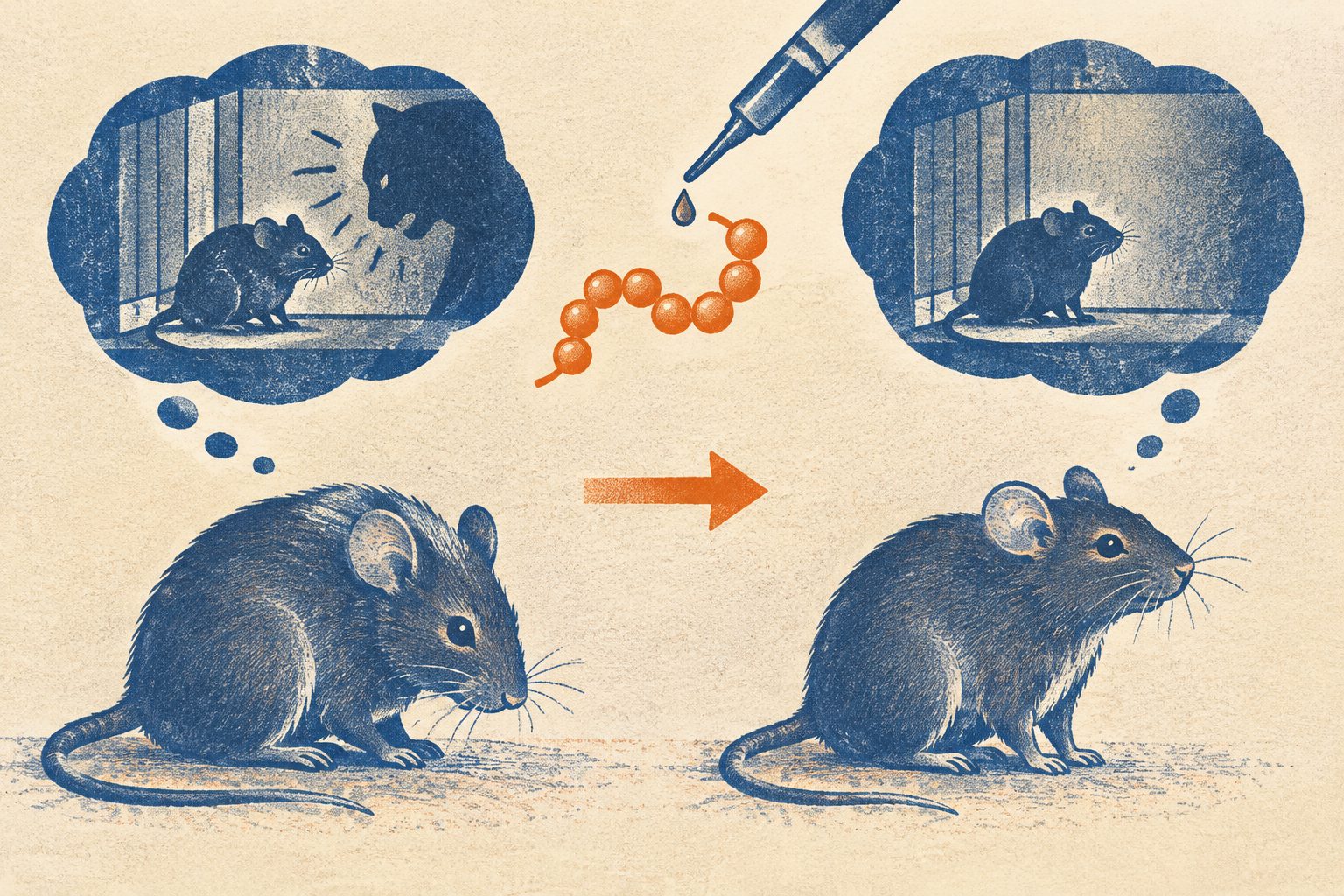
The study focused on parvalbumin- and somatostatin-expressing inhibitory interneurons in the primary visual cortex (V1). Male Long–Evans rats received the NMDA receptor blocker MK-801 or saline during a specific early postnatal window (postnatal days 10–20). The researchers then exposed the animals to environmental enrichment in adulthood (postnatal days 55–73).
Staining showed that early NMDA receptor hypofunction caused a marked reduction in parvalbumin-positive interneurons in layers II/III and IV, while somatostatin-positive populations were largely preserved. Environmental enrichment increased parvalbumin-positive cells across groups and modestly increased somatostatin-positive cells in layer IV, without a clear interaction between early treatment and later housing.
At the protein level, MK-801 lowered the NMDA receptor subunit NR1 and increased Akt phosphorylation. Environmental enrichment increased PSD95, boosted ERK phosphorylation, and raised GABA_A receptor β2/3 subunit levels, without increasing NR1.