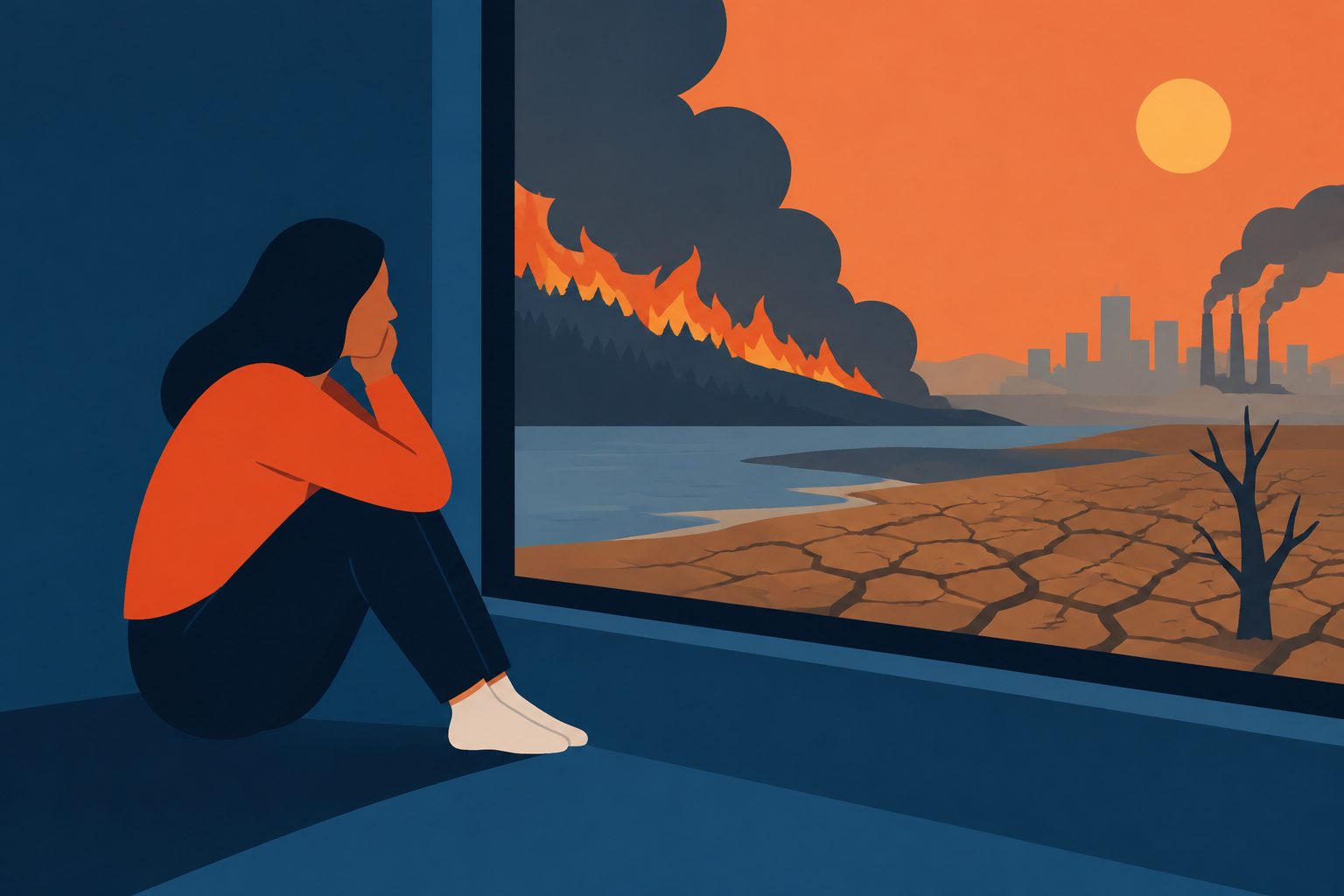
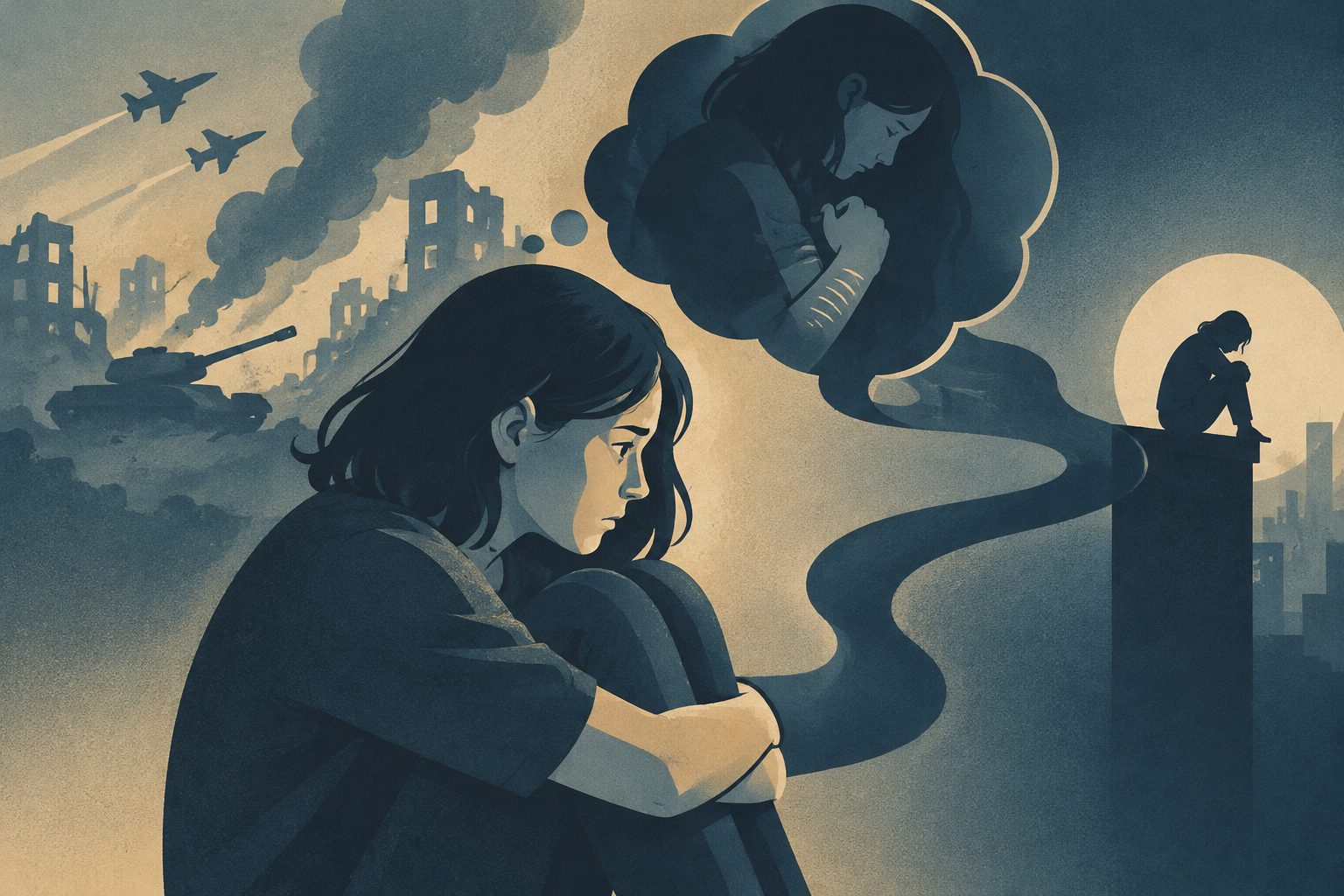
People described distress not only from climate information but also from witnessing environmental change and feeling unable to act.
Researchers conducted 58 interviews with 30 participants about specific experiences of ecological anxiety. Participants described fatigue, rumination, bodily sensations, sleep difficulties and emotions including guilt, shame and anger, alongside greater empathy for people and other living beings.
The researchers identified distress linked to climate information and distress arising from witnessing environmental consequences. Many participants felt obliged to stay informed even when the information was upsetting, while also feeling separated from the future, rushed in the present and short of agency.
How ecological anxiety feels
Participants described ecological anxiety as affecting several parts of everyday experience. Some reported fatigue, difficulty sleeping, racing or repetitive thoughts, isolation and unpleasant bodily sensations such as chest tightness. Two participants reported panic attacks, and one participant with a previous diagnosis of generalized anxiety experienced severe suicidal feelings and sought psychiatric help.
The researchers identified two forms of ecological anxiety: informational anxiety, linked to learning about the climate crisis, and experiential anxiety, linked to directly witnessing its consequences. Participants often felt a responsibility to keep learning about the crisis despite the distress this caused. They also described feeling alienated from the future, hurried in the present and unable to influence events.
For seven participants, ecological anxiety was episodic and later subsided. Twelve linked it to other psychological experiences, and seven participants with psychiatric diagnoses viewed it as part of an existing disorder. For others, it was a new and distinct experience. The researchers interpreted the combined accounts as a background sense of living in a damaged world that could also shape how participants understood personal and social concerns.
Evidence and limits
This was a qualitative phenomenological study based on 58 interviews with 30 people who identified themselves as experiencing ecological anxiety. Interviews used open-ended questions and focused on concrete experiences; transcripts were analyzed with constructivist grounded theory, with participant validation and checks between coders.
The study was not designed to estimate how common ecological anxiety is or to establish causes. Most participants came from affluent, Western, highly educated countries, so the findings may not apply across cultures or social groups. The researchers also noted that their psychiatric and psychological backgrounds may have led them to approach ecological anxiety mainly as an individual mental-health problem, even though the issue has collective and social dimensions. More research is needed on how people cope with it and on experiences in broader populations.