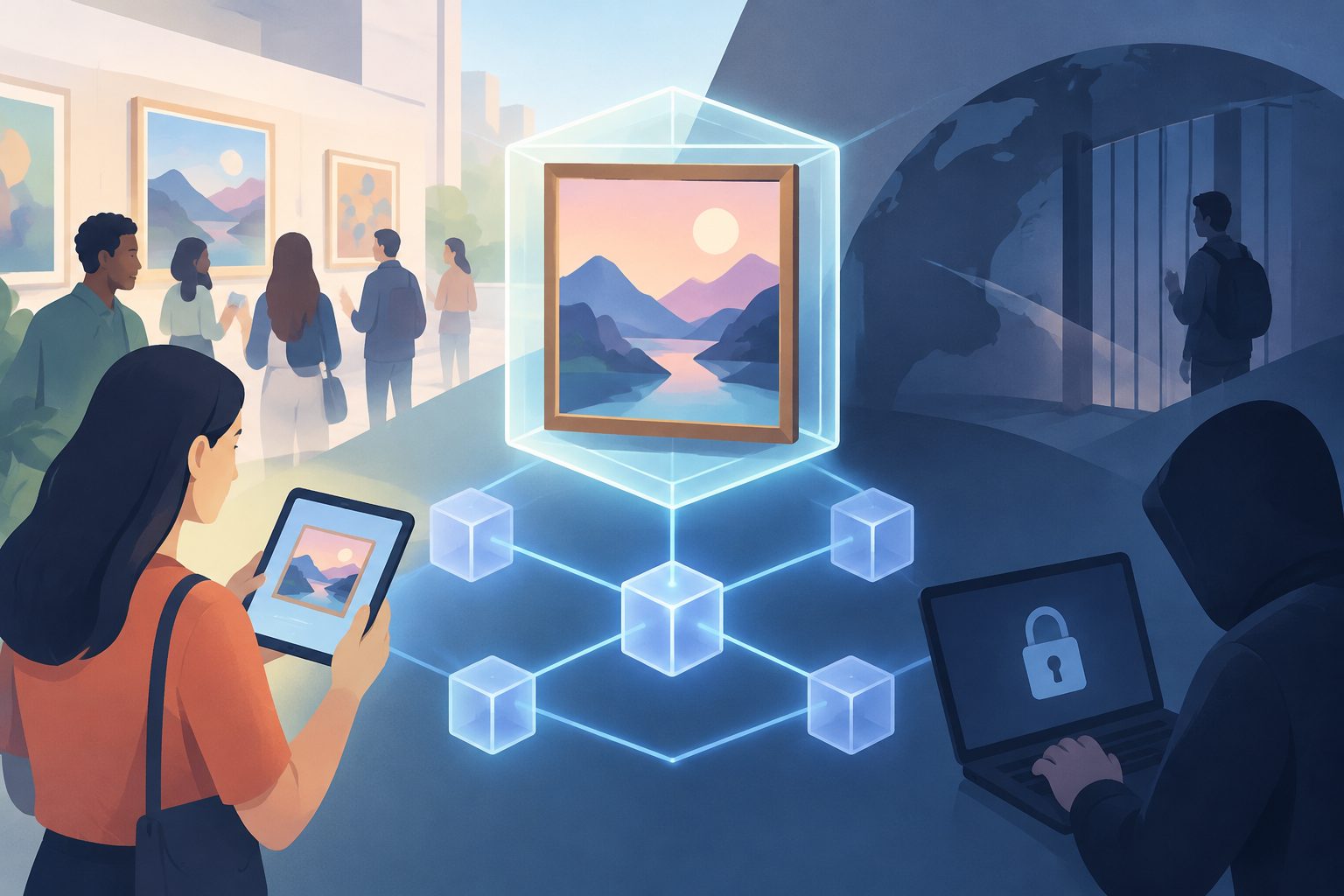
A survey finds that blockchain-based art markets may help artists connect with collectors while creating new privacy, security and usability problems.
The review examines how blockchain-based systems and non-fungible tokens are being used in visual art. These systems can provide digital certificates linked to artworks, help artists reach collectors through decentralized marketplaces and support automatic royalty payments through software-based contracts.
The researchers also identify major obstacles to broader adoption. These include security weaknesses in smart contracts, the public nature of many blockchain records, difficulties related to scale and compatibility between systems, and steep learning curves that may exclude artists who are less familiar with digital tools.
What the survey found
The survey finds that non-fungible tokens can support ownership verification for digital artworks and reduce artists’ dependence on intermediaries. Existing studies also describe ways for artists to connect directly with collectors, retain more revenue and receive recurring royalties through smart contracts. However, the review identifies security vulnerabilities, privacy concerns, scalability and interoperability problems, and limited digital literacy as barriers to adoption. It concludes that these issues must be addressed for blockchain-based art markets to become more equitable and sustainable.