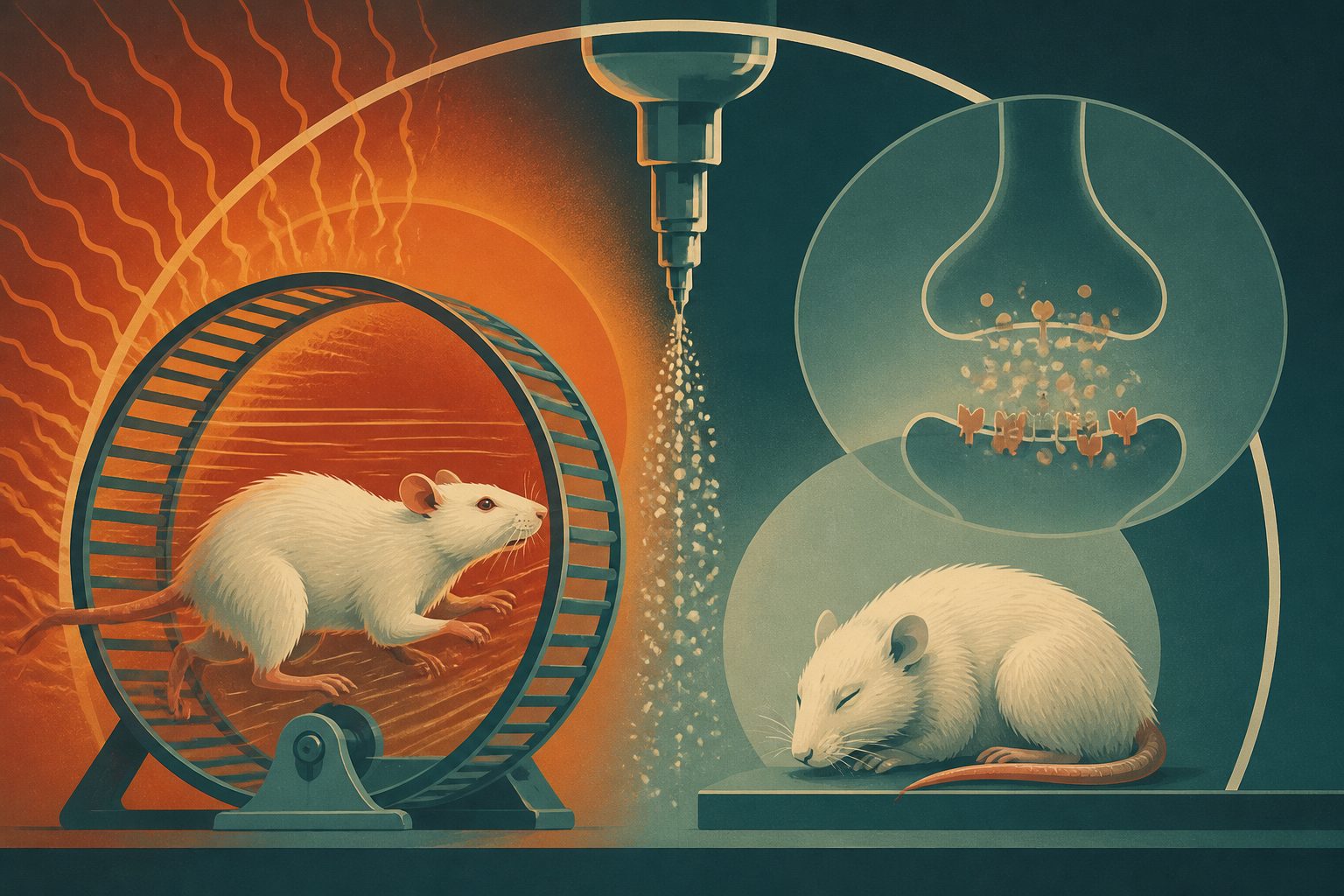
The drug also reduced methamphetamine-related rises in dopamine and noradrenaline in a brain region involved in temperature control.
Researchers gave male Wistar rats methamphetamine after pretreatment with dexmedetomidine, two other drugs that activate related receptors, or a vehicle control. They continuously measured body temperature and movement, and sampled chemical signals in the anterior hypothalamus, a brain region involved in regulating body temperature and other functions.
Dexmedetomidine reduced methamphetamine-induced hyperthermia and hyperlocomotion in a dose-dependent manner. Guanfacine had similar effects, while the α2C-receptor drug NBP did not significantly reduce either response, pointing to a larger role for α2A receptors. Methamphetamine raised dopamine, noradrenaline and serotonin in the anterior hypothalamus; dexmedetomidine notably reduced the dopamine and noradrenaline increases, especially the noradrenaline response, without significantly affecting serotonin.
Evidence and caveats
This was an animal study in male Wistar rats, using controlled drug administration, continuous measurements of temperature and movement, and microdialysis to measure chemical signals in the anterior hypothalamus. It provides evidence of effects under the tested conditions, but the abstract does not report results in humans, female animals, or people with methamphetamine intoxication. It also does not establish the drug's safety, effective dose, or clinical benefit in people. The proposed α2A mechanism is supported by the similar effects of guanfacine and the lack of significant effects from NBP, but the abstract describes it as likely rather than proven.
// Source
Psychopharmacology · 2026 · DOI: 10.1007/s00213-026-07153-1
Authors: Tsuyoshi Okada, Seiji Obi, Katsutoshi Shioda, Chikara Yonekawa, Shiro Suda
Institutions: Jichi Medical University