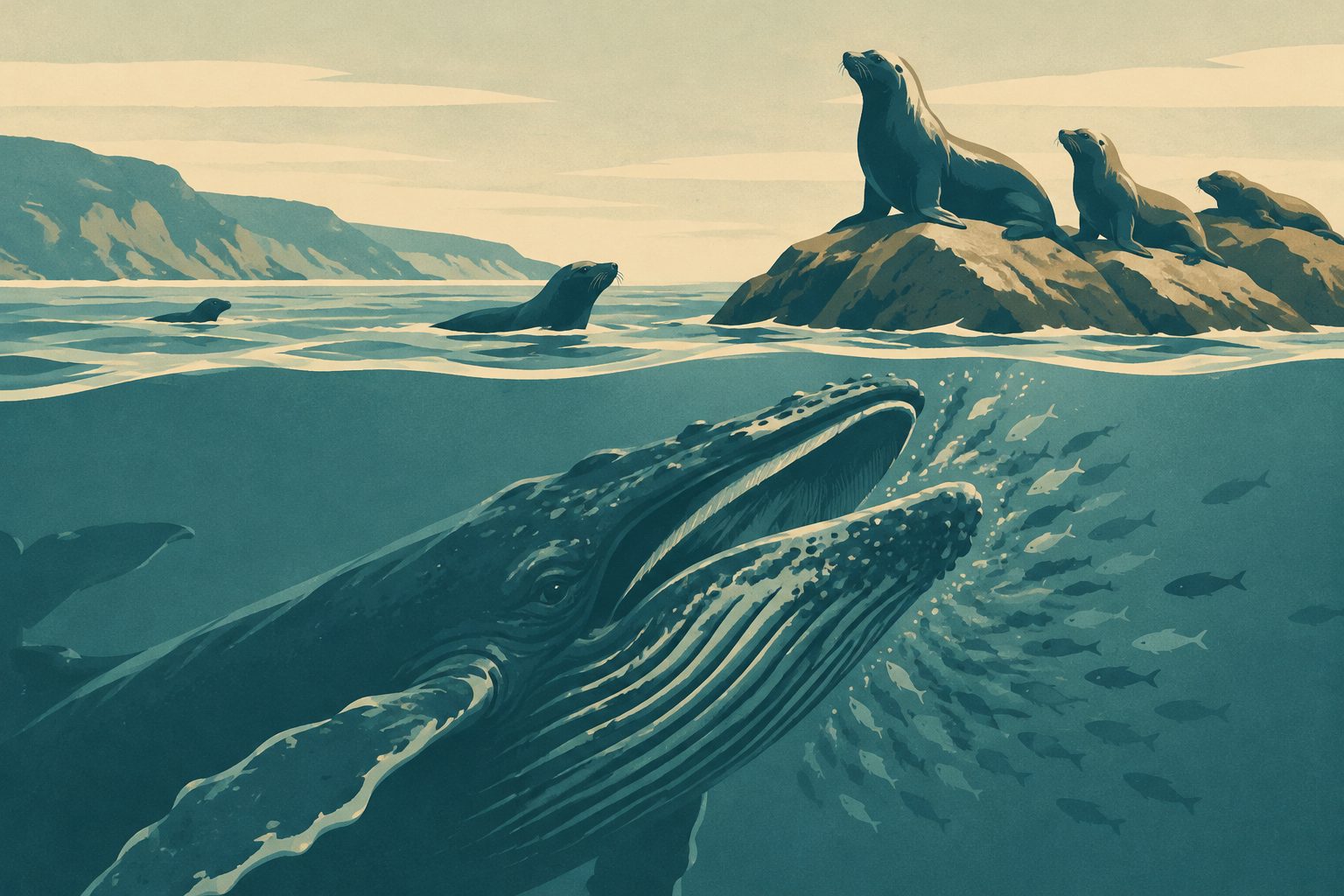
Mapping in the Santos Basin found especially strong overlap for Guiana dolphins, franciscanas and bottlenose dolphins.
Researchers combined long-term records of cetacean sightings and fishing activity to map core-use areas in the Santos Basin, a region with high marine biodiversity and substantial human activity. They found that gillnet fisheries were concentrated mainly along the continental shelf, where several cetacean species also occur.
Guiana dolphins, franciscanas and bottlenose dolphins had the highest spatial overlap with the fisheries. The researchers identified priority areas for assessing bycatch risk and managing interactions, including a region with high cetacean diversity.
Where dolphins and nets overlap
Among the 13 cetacean species analysed, Guiana dolphins, franciscanas and bottlenose dolphins showed the greatest spatial overlap with gillnet fisheries. The Guiana dolphin and franciscana, which use coastal and inner-shelf waters, may be particularly exposed because their habitats overlap with areas where gillnets are concentrated. The study also identified priority locations for bycatch risk assessment and management, including an area with high cetacean diversity. The spatial patterns were consistent with mortality information from beach monitoring.
// Source
Biodiversity and Conservation · 2026 · DOI: 10.1007/s10531-026-03445-2
Authors: M. R. Caiaffa, F.G. Daura-Jorge, L. L. Wedekin
Institutions: Universidade Federal de Santa Catarina, Instituto Sócioambiental