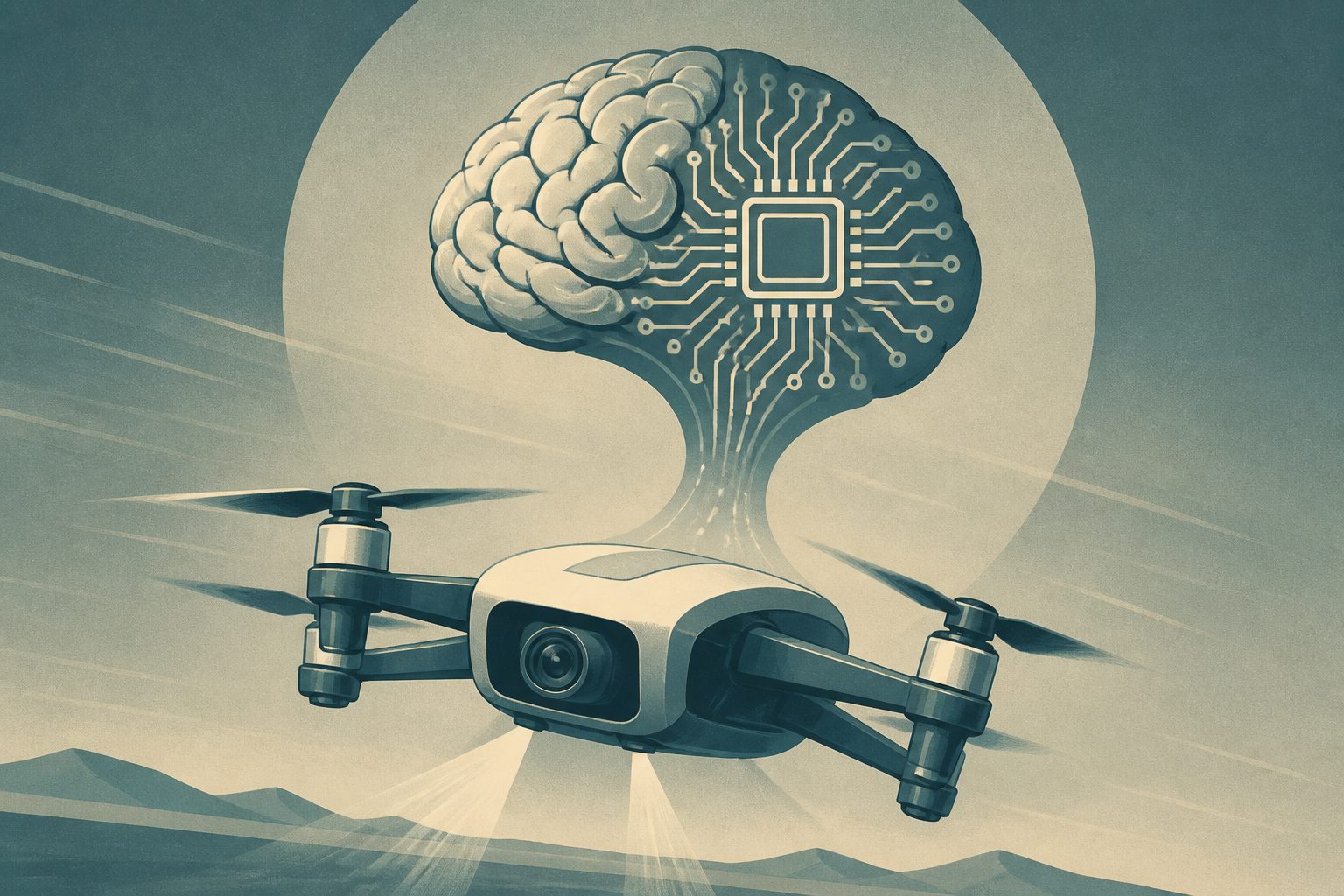
A review finds that these systems are developing beyond small demonstrations, but are more likely to work alongside standard processors than replace them.
Neuromorphic computers use event-driven communication, parallel processing and memory that is close to—or part of—the computation. The reviewed research covers spiking neural networks, digital and analog processors, new memory devices, software tools and applications including robotics, event-based vision and biomedical monitoring.
The field has progressed beyond small proof-of-concept chips toward larger platforms with closer links between hardware and algorithms. However, the review concludes that conventional processors are likely to remain central, with neuromorphic hardware serving specialized workloads where it has a clear advantage.
What the review found
The review describes a field developing larger and more programmable neuromorphic platforms, alongside tighter integration between computing hardware and the algorithms that run on it. It identifies progress across spiking neural networks, digital and analog processors, memristive devices and other emerging technologies, as well as software ecosystems and applications such as robotics, edge intelligence, biomedical monitoring and event-based vision.
The paper also identifies unresolved problems involving training methods, benchmarking, programmability, variation between devices and fabrication. It says it remains unclear how much of neuromorphic computing’s potential energy advantage applies to general-purpose workloads. Its overall assessment is that these systems are more likely to complement mainstream processors than displace them.
Why specialized hardware matters
Many devices need to respond quickly while operating with limited power, including systems that process sensors locally rather than sending all data to a distant computer. The review suggests that event-driven and in-memory computing could be useful for such specialized tasks, particularly when intelligence must be adaptive and operate in real time.
This points to a hybrid computing landscape: standard digital processors would continue handling general-purpose work, while brain-inspired accelerators could be added where their particular design provides a genuine benefit.
Evidence and open questions
This is a review and assessment of recent literature, not a report of a single new experiment or a new performance test. The abstract provides no shared benchmark, sample size or measured energy saving across systems.
The review highlights substantial uncertainty about training, fair comparisons, software support, device variability, manufacturing and the performance of neuromorphic systems on general-purpose workloads. Its conclusions describe the field’s direction and potential applications, but do not establish that neuromorphic computers will outperform conventional processors broadly.
// Source
International Journal of Technology & Emerging Research · 2026 · DOI: 10.64823/ijter.2621029
Authors: Jisna C Jeejo, Habeeba M A
Institutions: Shreemati Nathibai Damodar Thackersey Women's University