An AI model predicts how dense polymers are and when they soften
Trained only on quantum-chemical calculations, the model reproduced measured density and glass-transition behavior across many polymers.
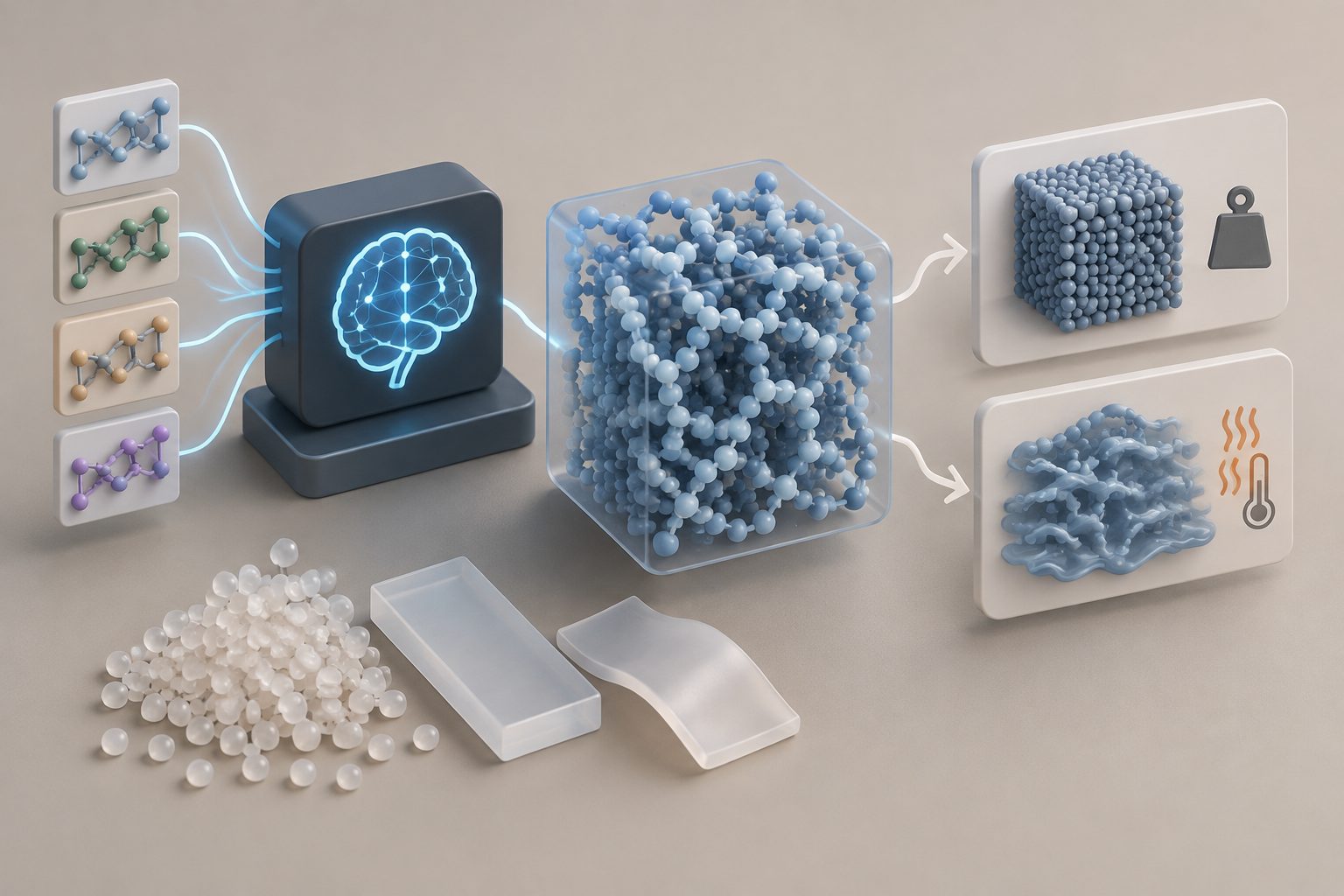
Editorial illustration — not from the study.
The model, called Vivace, was trained on quantum-chemical calculations and designed for large-scale polymer simulations. Tests across a broad collection of polymers showed that it reproduced measured densities about as well as, or better than, established classical force fields.
The model also captured the change in density with temperature associated with the glass transition—the shift between a hard, glassy state and a softer state—allowing researchers to estimate glass-transition temperatures. The study includes PolyArena, a benchmark of measured densities and glass-transition temperatures for 130 polymers, along with quantum-chemical training data called PolyData.
What the model predicted
The researchers trained a machine-learning force field exclusively on quantum-chemical data, without experimental measurements in the training process. Across a chemically diverse set of polymers, it reproduced measured bulk densities as accurately as, or more accurately than, established classical force fields.
The model also reproduced the glass-transition signature in polymers’ density-versus-temperature curves. That made it possible to predict glass-transition temperatures, although the excerpts do not report numerical error values. The researchers released PolyArena, a benchmark containing experimental densities and glass-transition temperatures for 130 polymers, and PolyData, an accompanying set of quantum-chemically labeled polymer structures.
Why polymer predictions matter
Polymer properties emerge from interactions within individual chains and between chains, making them difficult to simulate accurately at useful sizes and timescales. A model that combines quantum-chemical training with faster simulations could help researchers compare polymer designs computationally before making them, while the experimental benchmark provides a way to test whether such models predict real bulk behavior.
The results support computer-guided design for a broad range of polymers, rather than a model trained for just one polymer at a time. They do not yet amount to a complete virtual design system, but the released benchmark and training data are intended to support further development.
Evidence and remaining limits
The evidence comes from atomistic simulations evaluated against measured polymer densities and glass-transition temperatures, alongside comparisons with established classical force fields. The model was trained only on quantum-chemical calculations, while the experimental data were used for validation and benchmarking.
The approach does not explicitly represent important long-range non-covalent interactions such as electrostatics. Simulations remain computationally demanding, especially for glass-transition temperatures, and larger systems and longer polymer chains may be needed because properties such as density and glass-transition temperature can depend on them. The study focuses on density and glass-transition behavior; other properties, such as elastic strength and thermal expansion, were identified as future targets.
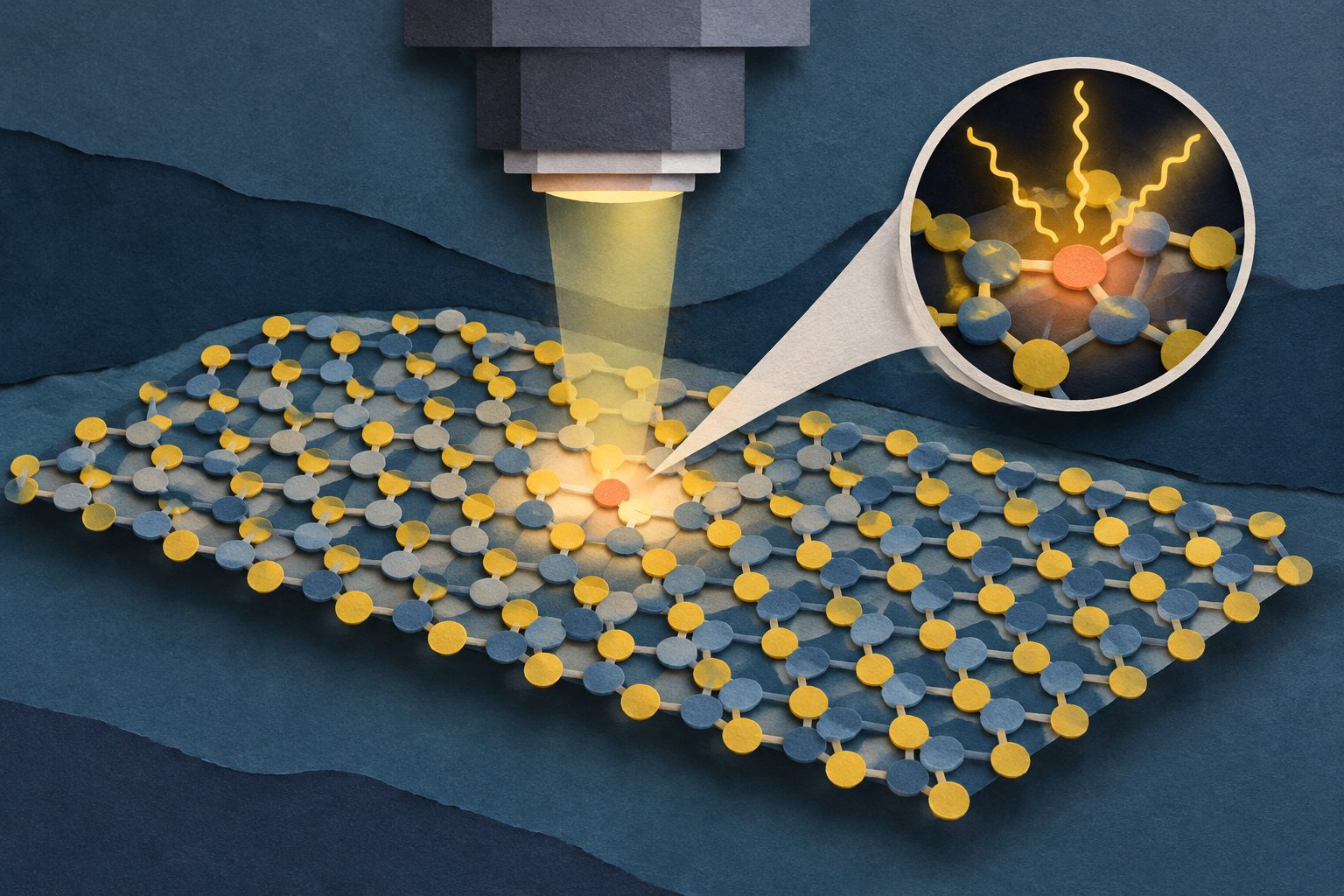
Researchers have mapped exciton emission around individual defects in a monolayer of MoS2, a two-dimensional semiconductor. They link a characteristic defect-related emission band to negatively charged carbon–hydrogen complexes and distinguish it from the effects of sulfur vacancies and oxygen substitutions.
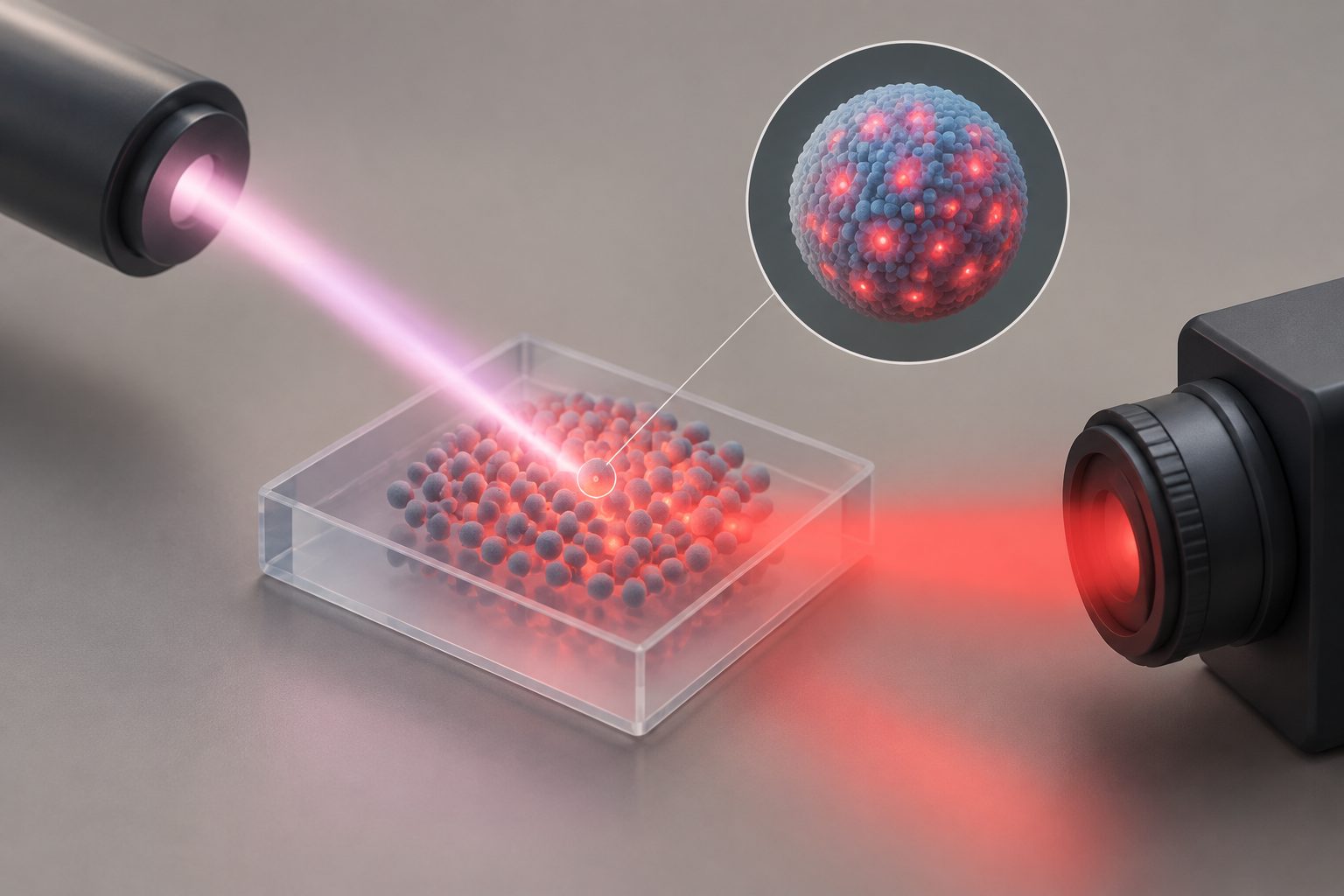
Researchers report holmium-doped nanoparticles that convert 2-micrometre shortwave infrared light into visible red light at 640 nanometres. In a demonstration, the particles enabled high-contrast, high-resolution bioimaging through highly scattering media using low-cost silicon-based detection.
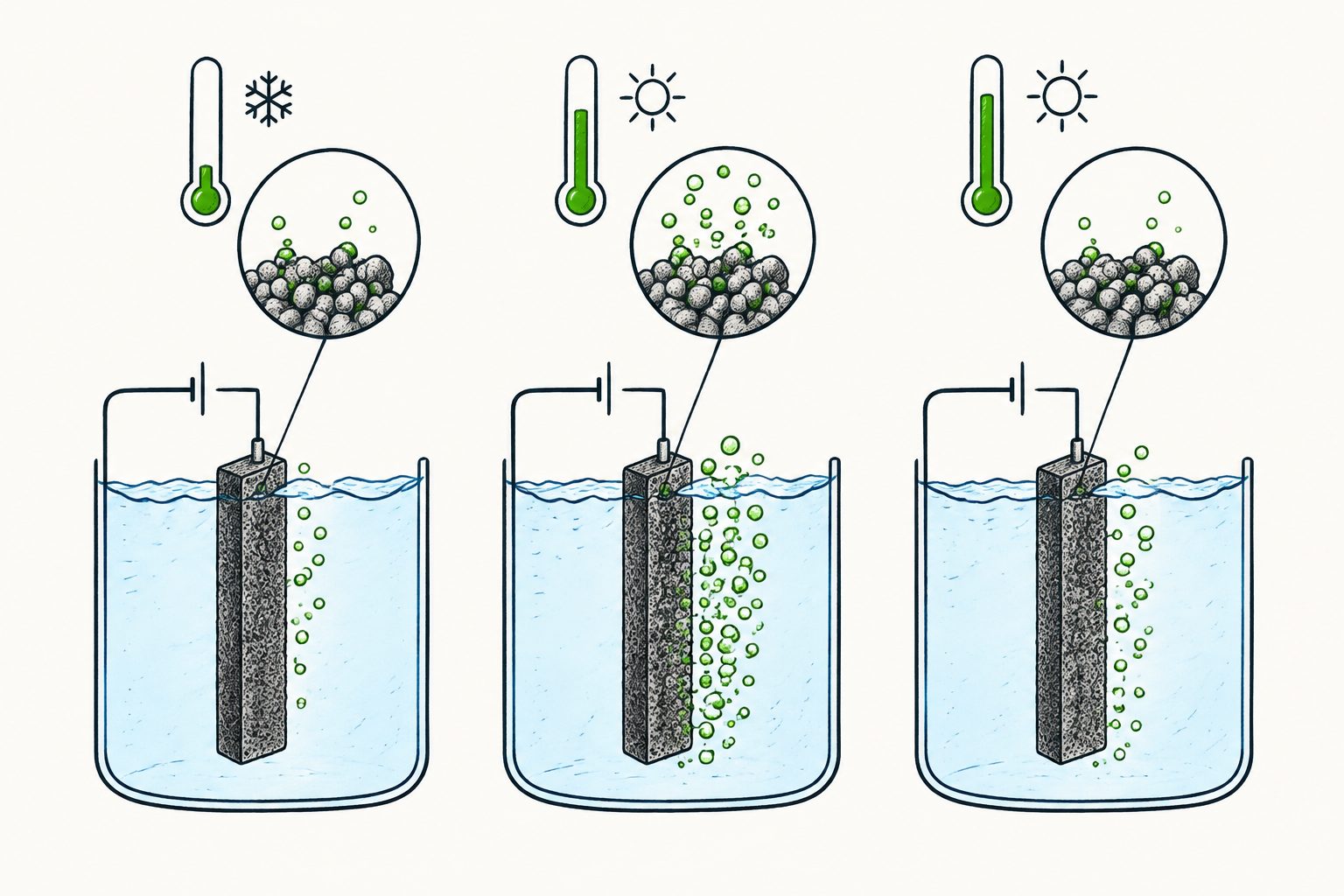
A simple model of hydrogen-making reactions helps explain why their measured rates can change with temperature in unexpected ways. The analysis points to changes in the entropy of molecules attaching to and leaving metal surfaces as the main cause.