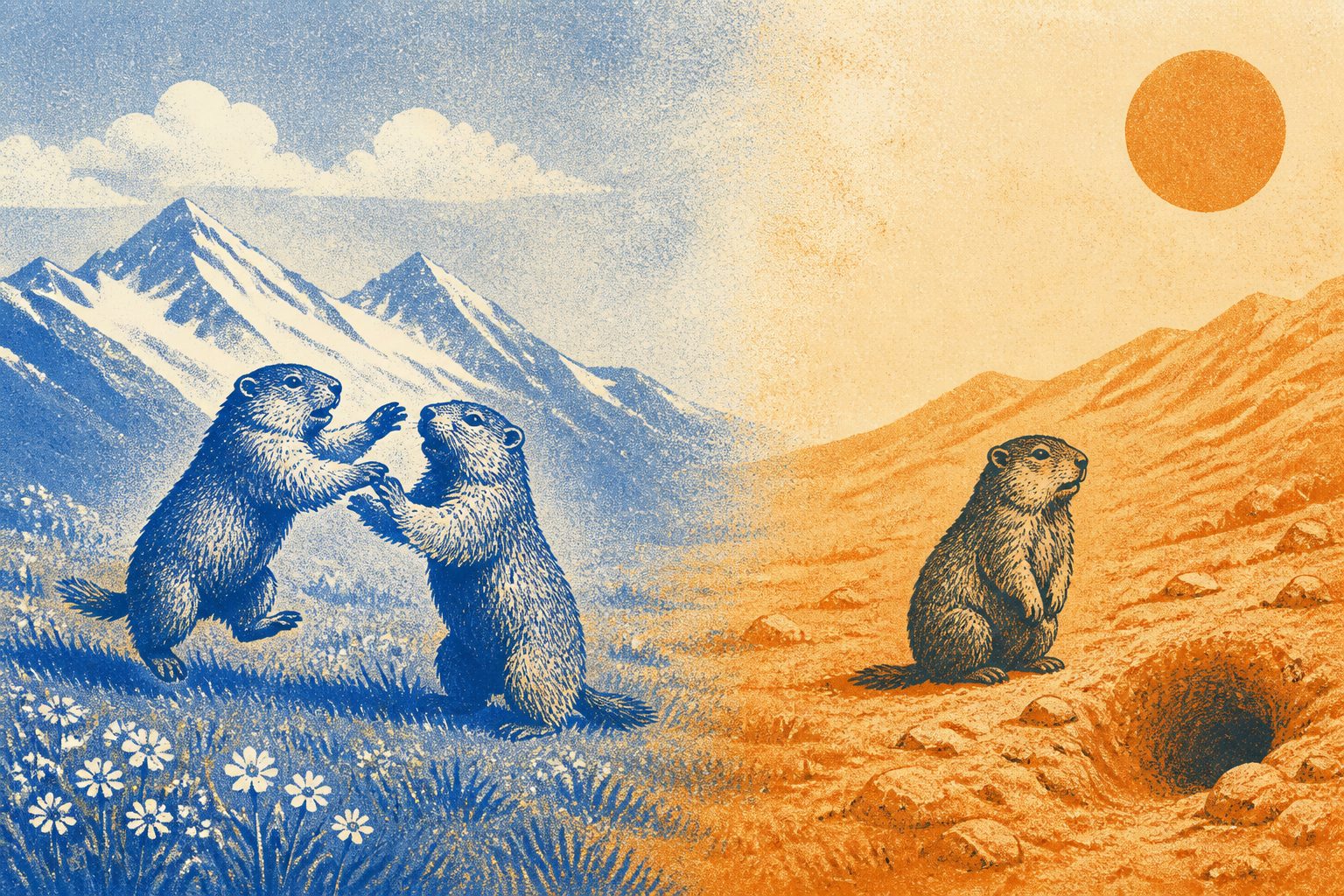
In observations of 14 family groups, play fell sharply above 21 °C while social behaviours important for group stability persisted.
A study of wild Alpine marmots found that temperature affected their social behaviours differently. Grooming, greetings and aggressive interactions remained relatively stable, while play declined as conditions became warmer.
Play was most common at 12.8 °C, but play interactions fell to almost zero above 21 °C. The researchers suggest that this flexible behaviour could provide an early sign of heat stress, before changes in population numbers become apparent.
What happened to play
The researchers recorded 667 social interactions during 189 hours of observation of 14 Alpine marmot family groups in June 2023, 2024 and 2025. They examined four behaviours: play, aggression, greetings and grooming.
Temperature did not constrain all social behaviour in the same way. Grooming, greetings and aggressive interactions were buffered against warmer conditions, but play was suppressed. Play activity peaked at 12.8 °C, and the rate of play interactions fell to near zero as temperatures rose above 21 °C.
The researchers describe play as a flexible behaviour that occurs when animals are in relatively relaxed conditions and may be given up under stress. Because play helps immature marmots acquire motor and social skills, they suggest that a sustained reduction could have long-term developmental consequences. The study did not directly measure those consequences.