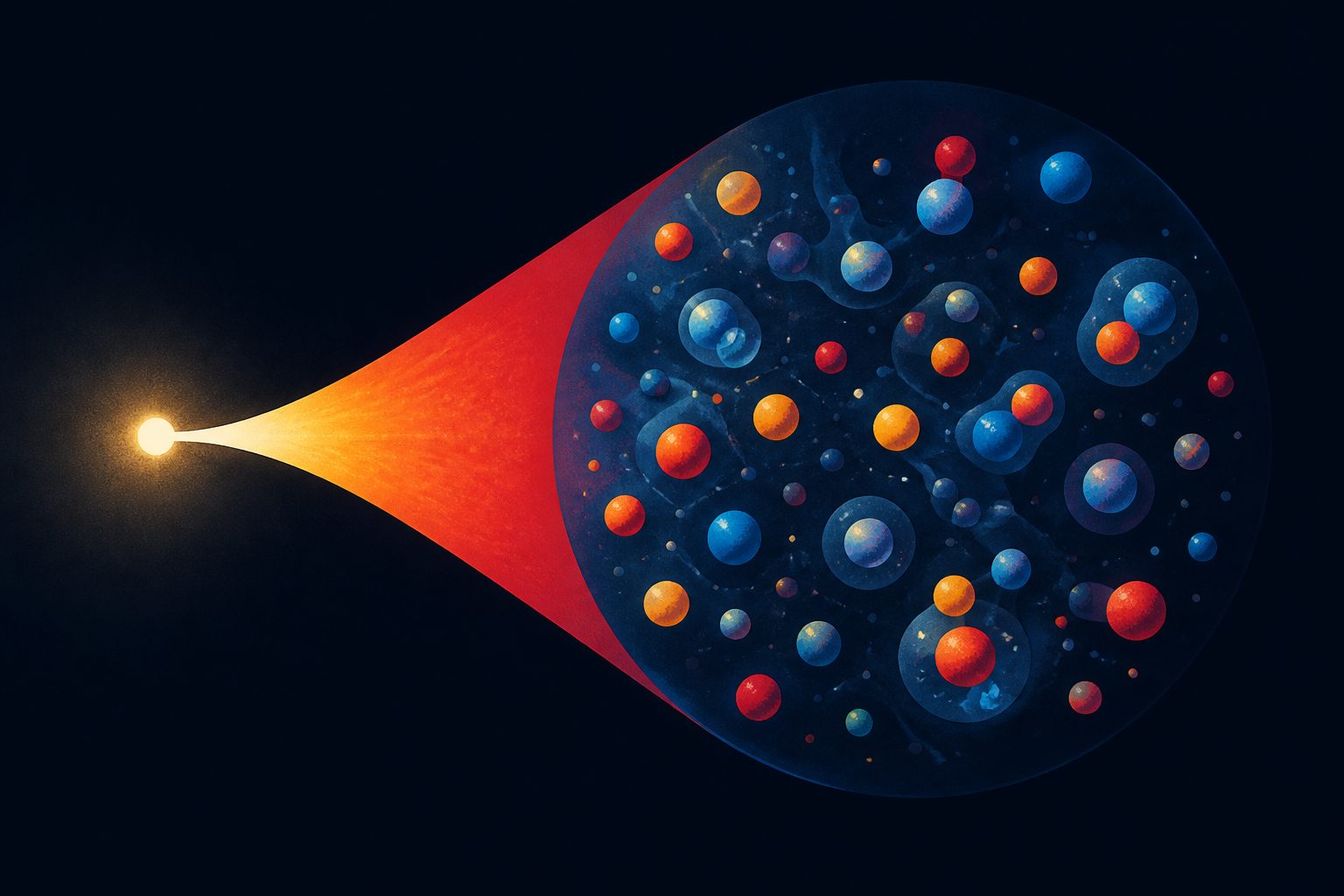
The method, called Lorentz Local Canonicalization, predicts a local reference frame for each particle in a Large Hadron Collider setting. It then transfers information between those frames while preserving how that information should change under Lorentz transformations, which describe rotations and changes between steadily moving observers.
The researchers tested the design with graph networks and transformers. They report applications to amplitude regression, end-to-end event generation and jet tagging, and introduce a large dataset for benchmarking models that identify top-quark jets.