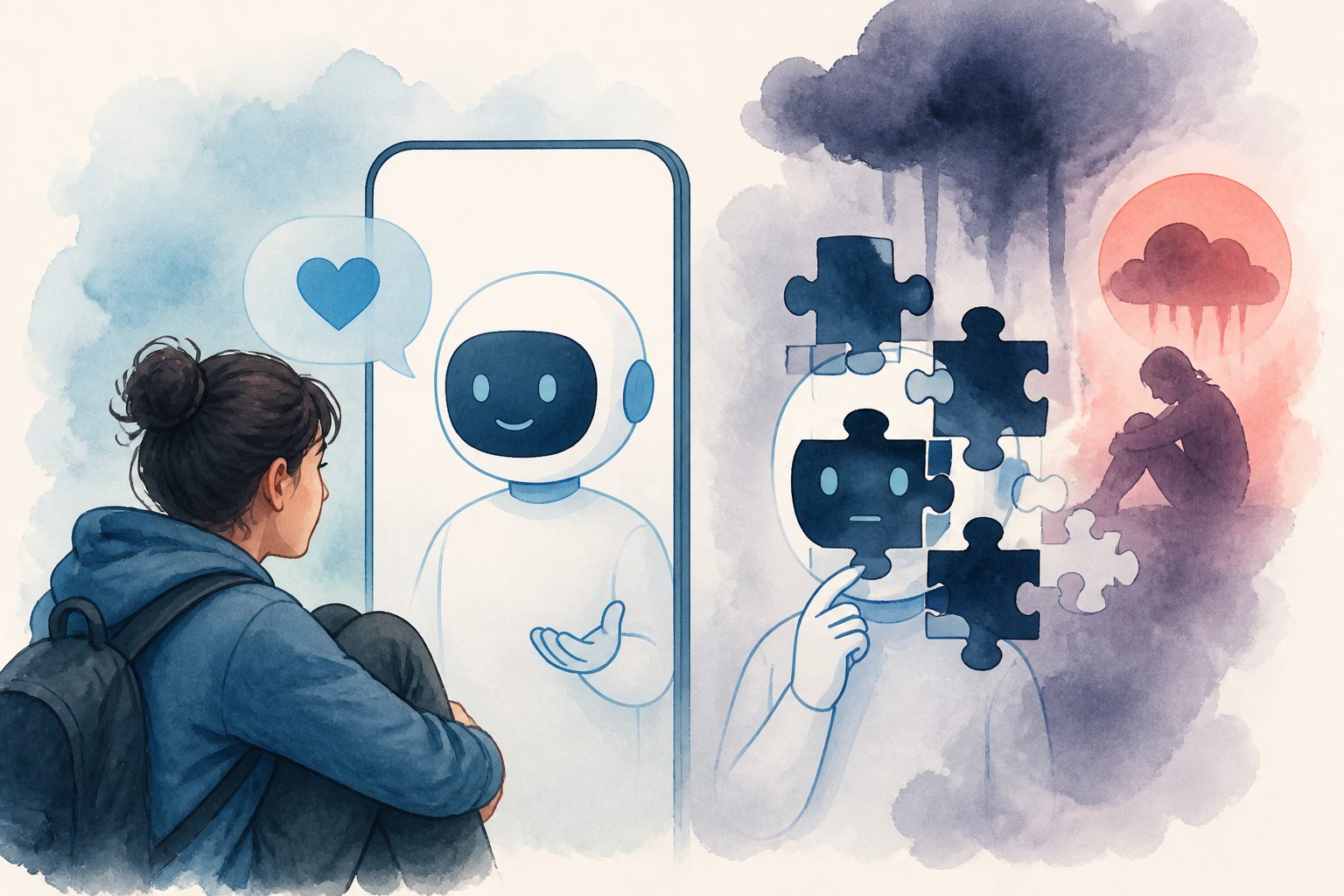
A study of Chinese university students found that an AI agent encouraged disclosure, while trained counselors remained essential for assessing crisis risk.
A randomized study of 388 university students in China found that an AI-based counseling agent improved students’ views of the counseling relationship and their willingness to disclose information, compared with a control condition. A stronger perceived counseling alliance partly explained the greater willingness to disclose.
The agent also improved recognition of general risks and slightly improved sensitivity to high-risk cues. Its performance was more limited when students’ scenarios involved crisis-level disclosures, supporting a role as an initial support tool rather than a system that independently assesses and responds to danger.
What the study found
Students assigned to the LLM-based counseling condition reported significantly higher perceived counseling alliance and willingness to disclose than those in the control condition. Perceived counseling alliance partly mediated the relationship between the counseling condition and disclosure willingness.
In scenario-based tests, the agent improved general risk recognition and slightly increased sensitivity to high-risk cues. However, its performance was more limited for crisis-level disclosures. The results therefore indicate stronger benefits for engagement and emotional expression than for independent crisis detection.
// Source
Behavioral Sciences · 2026 · DOI: 10.3390/bs16081316
Authors: Jianshan Cheng
Institutions: Wuhan Institute of Technology