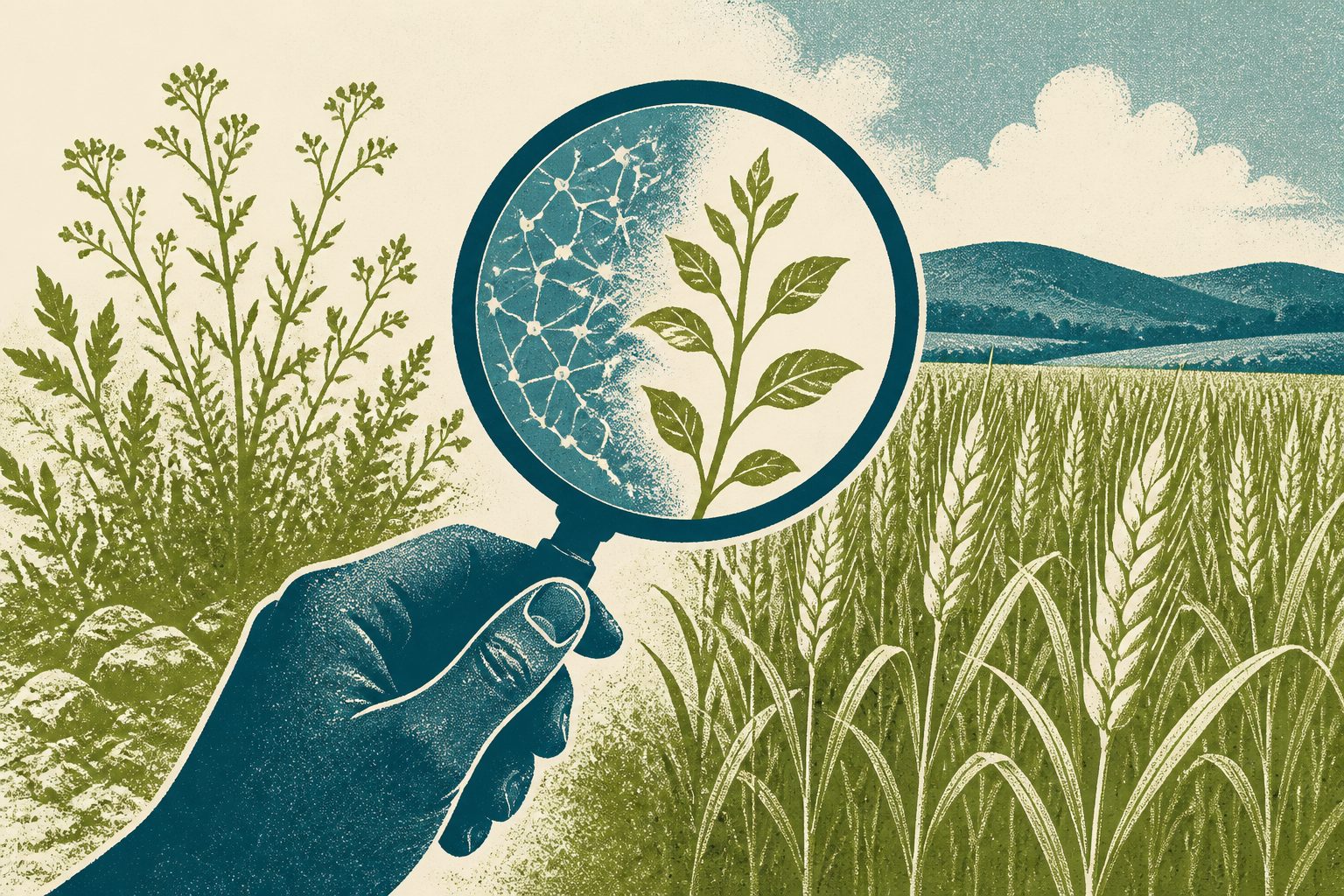
Crop domestication narrowed the genetic diversity used in modern varieties. The review explains that important differences may remain in wild relatives, including structural variations such as DNA segments that are present in some plants but absent in others, or occur in different copy numbers.
The authors describe a shift from a single linear genome reference to richer representations, including genome graphs and short sequence patterns. They discuss how graph-based neural networks and Transformer-based models could incorporate these variations, account for interactions between genetic changes, predict the effects of previously uncharacterized wild variants and assess how genetic effects vary across environments.