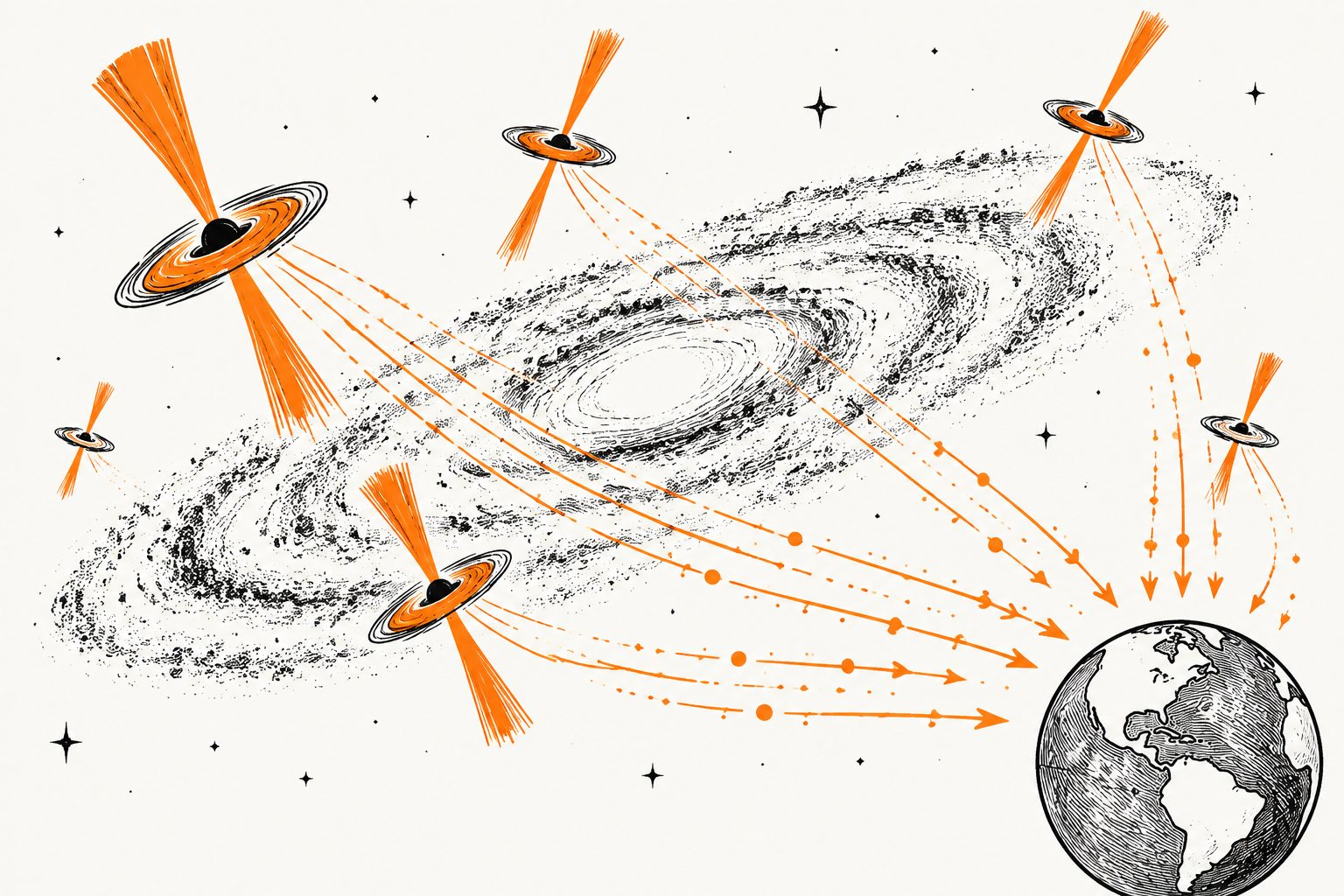
A population model suggests that a small number of powerful microquasars may produce much of the Galaxy’s highest-energy cosmic rays.
Researchers modeled the combined contribution of the Milky Way’s powerful microquasars, compact stellar systems that can accelerate particles to very high energies. They find that about 10 active sources at any given time could account for the proton flux around the cosmic-ray knee and provide a consistent explanation of cosmic-ray and gamma-ray data.
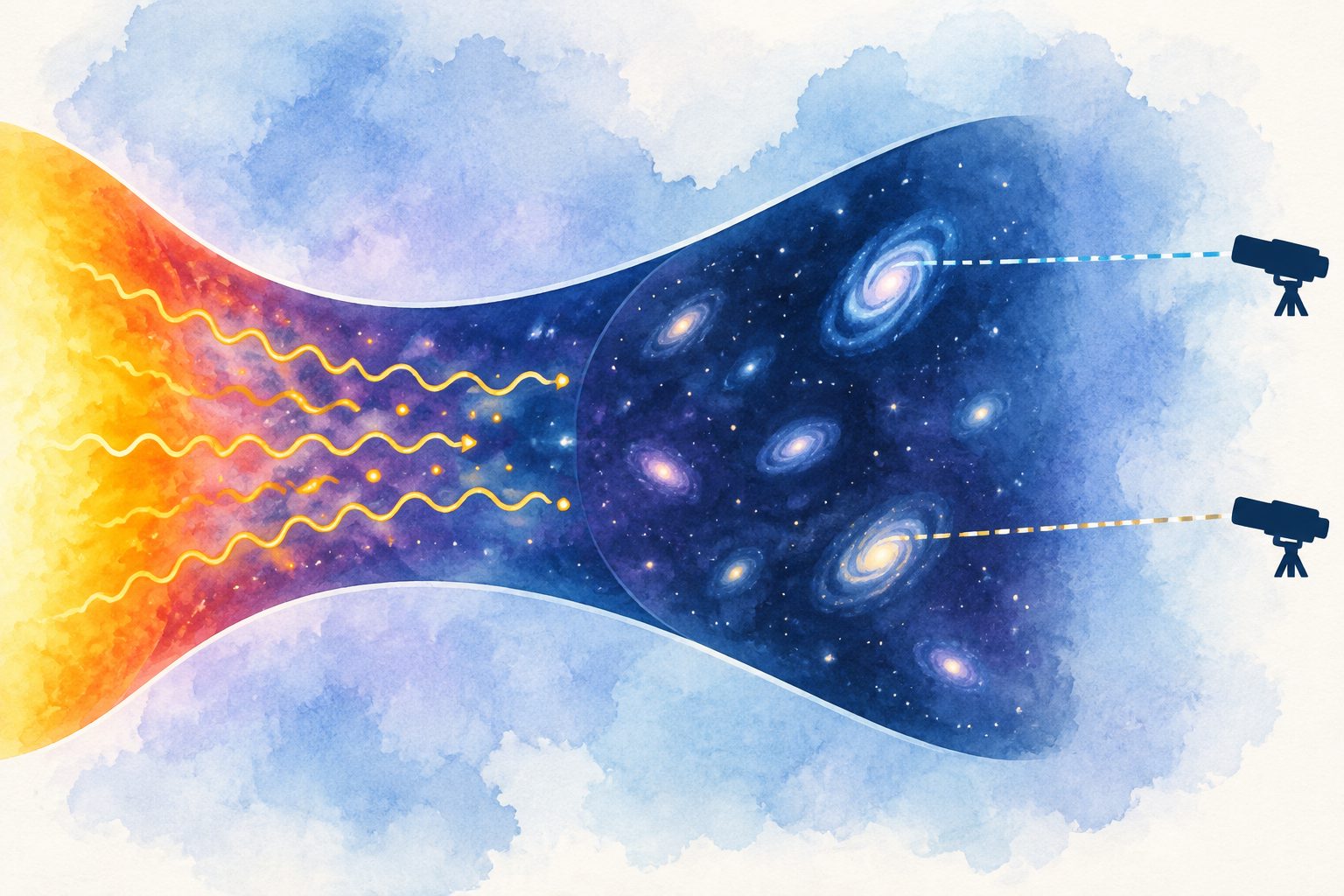
In the model, a bump around 10 teraelectronvolts and a hardening of the cosmic-ray spectrum around 300 teraelectronvolts arise naturally. The model also accounts for the diffuse gamma-ray background measured by LHAASO above a few tens of teraelectronvolts.
What the microquasars could explain
The researchers conclude that roughly 10 active powerful microquasars in the Galaxy could be sufficient to explain the proton flux around the cosmic-ray knee. Their population model also reproduces the 10-teraelectronvolt bump and the 300-teraelectronvolt hardening in the cosmic-ray spectrum, while accounting for LHAASO’s measurement of diffuse gamma-ray emission above a few tens of teraelectronvolts.
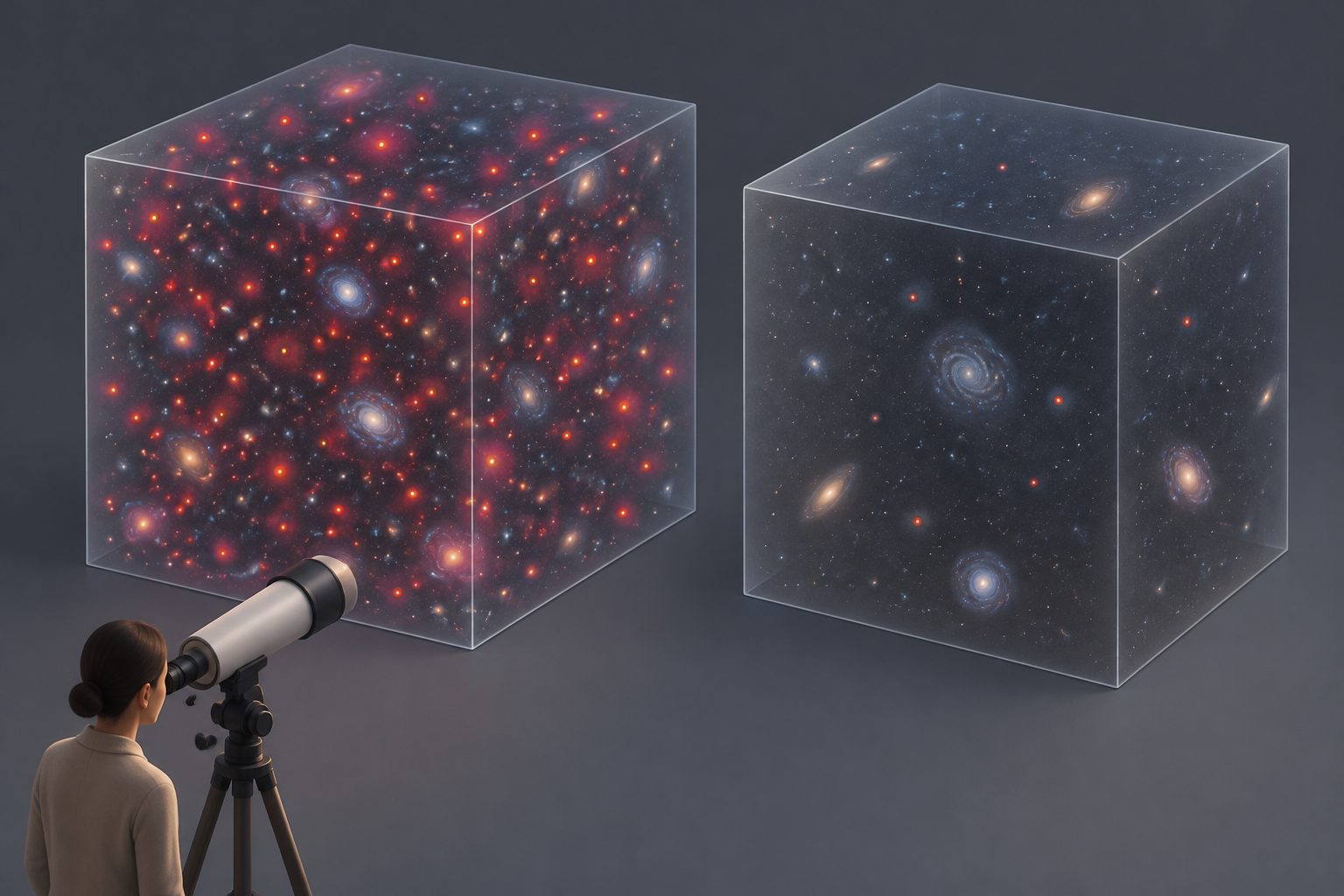
The study builds on LHAASO’s detection of gamma-ray emission extending beyond 100 teraelectronvolts from four sources associated with powerful microquasars. The results support a picture in which cosmic rays around the knee are predominantly accelerated by a small number of these sources.
Evidence and limits
The result comes from a population model that combines the proposed contribution of powerful microquasars with cosmic-ray and gamma-ray observations, including LHAASO measurements. It is therefore an inference from modeling rather than a direct demonstration that each predicted source is responsible for the measured cosmic rays.
The abstract does not report a direct census of all active microquasars or quantify uncertainties in the population estimate. The conclusion that about 10 sources are sufficient also depends on the assumptions used to model the full Galactic population and its particle and gamma-ray output.
// Source
Physical Review Letters · 2026 · DOI: 10.1103/5lvd-k4qb
Authors: S Kaci, Gwenael Giacinti, F. Aharonian, J. S. Wang