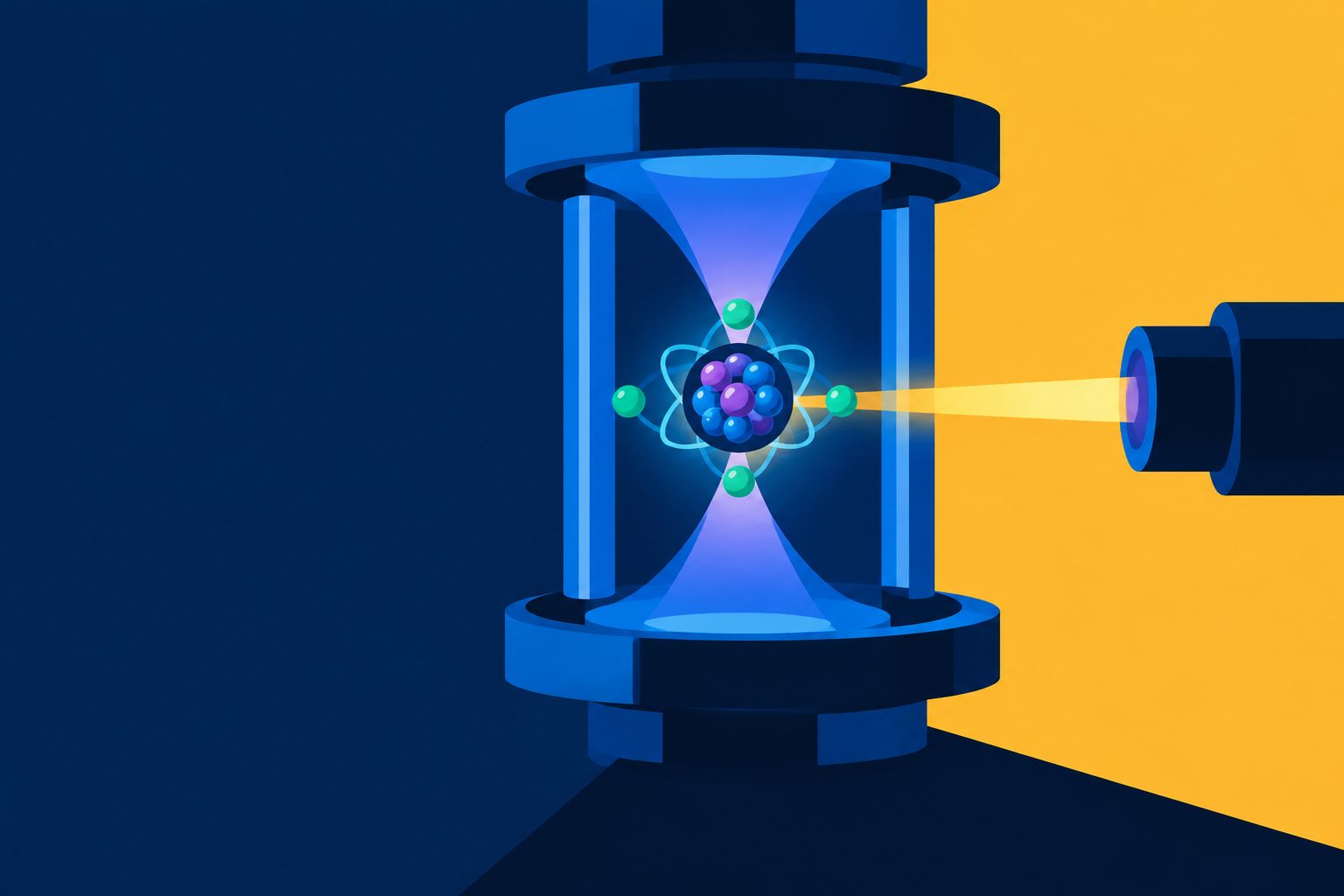
The researchers reassessed the dominant split spectral signal in thorium-doped calcium fluoride. Earlier work had assigned this signal to a thorium pair, but thermodynamic estimates, density-functional calculations and comparisons of electric-field gradients favored an isolated thorium atom with two nearby fluorine atoms arranged initially at about 90 degrees and then relaxed.
The calculations also identified a higher-energy arrangement involving fluorine atoms in different shells as a possible minor site. The results suggest that the clock-active site is governed mainly by local charge compensation from fluorine rather than unavoidable thorium clustering.