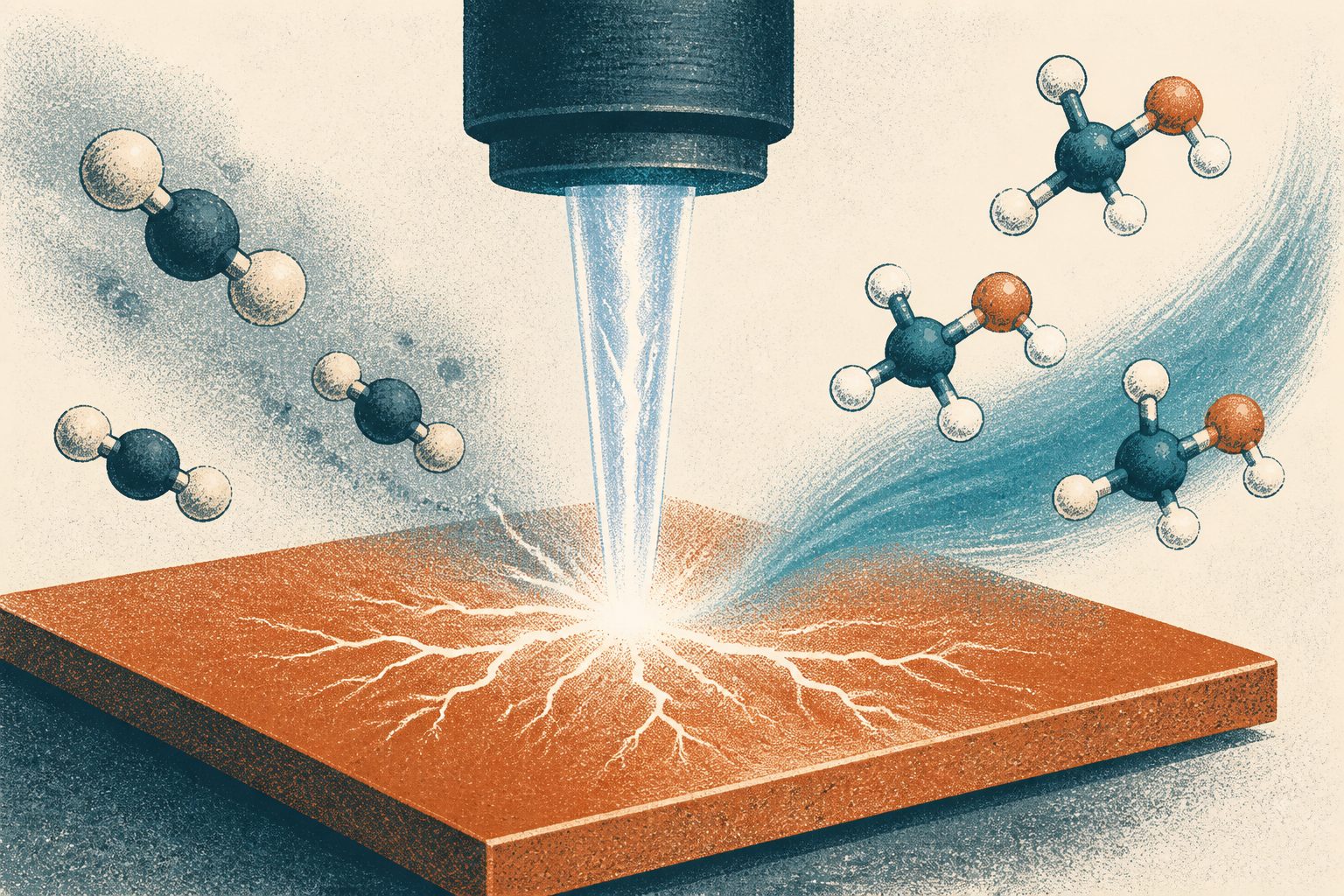
The treated copper mesh favored carbon-based products during electrochemical carbon dioxide reduction while limiting hydrogen formation.
The study treated copper mesh with non-thermal plasma, creating a coated surface of copper oxides and near-surface defects. The carbon dioxide plasma treatment increased surface roughness and created oxygen vacancies, which the authors say helped provide active sites and stabilize reaction intermediates.
During electrochemical carbon dioxide reduction at −1.2 volts versus the reversible hydrogen electrode, the treated catalyst favored products containing two or more carbon atoms and suppressed hydrogen evolution. The reported products were mostly acetic acid, ethanol and propanol, at 35%, 20% and 10%, respectively.
Products from treated copper
The plasma treatment produced a well-coated copper oxide surface containing copper(II) oxide and copper(I) oxide, along with superficial defects. The researchers report that carbon dioxide plasma created a rougher surface and oxygen-vacancy defects, which played a partial role in the catalyst's performance. They associate these changes with stabilization of carbon monoxide reaction intermediates and the formation of carbon–carbon bonds.
At −1.2 volts versus the reversible hydrogen electrode, products containing two or more carbon atoms reached a faradaic efficiency above 70%, while hydrogen formation was suppressed. The reported product mix was mostly acetic acid at 35%, ethanol at 20% and propanol at 10%.
Why the surface matters
Copper catalysts can produce several carbon-based chemicals from carbon dioxide, but their surfaces need to be tuned to favor particular products. This study presents plasma treatment as a way to change the surface of a copper catalyst and shift its selectivity toward acetic acid, ethanol and propanol while reducing competing hydrogen production.
The findings are relevant to efforts to use electrochemical reactions to convert carbon dioxide into chemicals with potential value. The abstract reports improved performance compared with what is typically reported for a metallic copper substrate, but it does not establish how the catalyst would perform over longer operation or at larger scale.
Evidence and open questions
This is an experimental journal article testing plasma-treated copper oxide nanostructures on copper mesh in electrochemical carbon dioxide reduction. The reported results include product selectivity and faradaic efficiency at a stated potential, along with proposed links between surface defects and catalytic behavior.
The abstract does not provide the full experimental conditions, product amounts, operating duration, durability results or a detailed comparison group. It also describes oxygen vacancies as playing a partial role, so the reported mechanism is not presented as the only explanation for the catalyst's performance. The findings therefore show the behavior of this tested catalyst under the reported conditions, not its general performance in every electrochemical system.