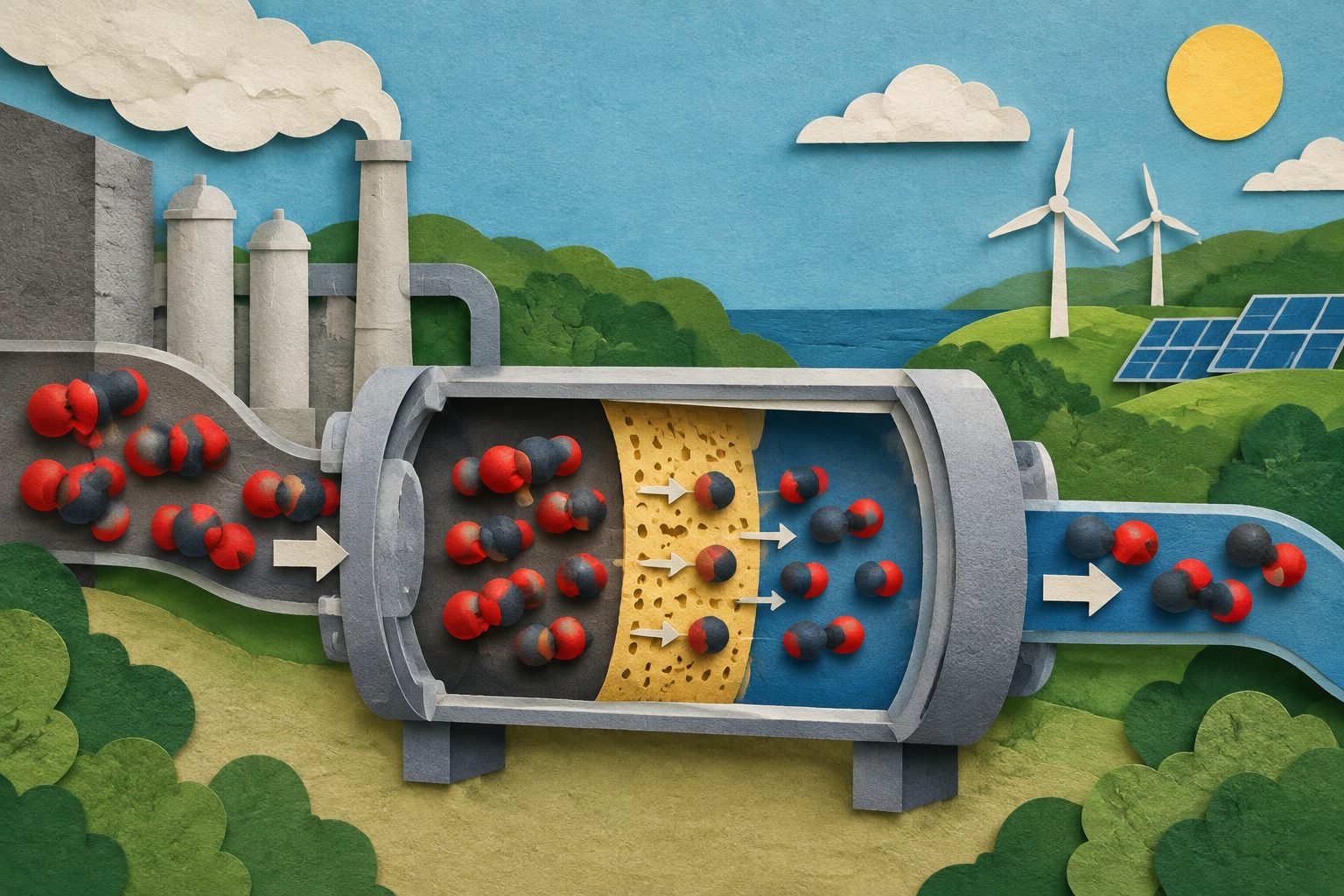
The device converts bicarbonate directly, potentially avoiding some energy-intensive steps used to release and transport carbon dioxide.
Carbon capture commonly stores carbon dioxide in solutions containing bicarbonate or related compounds. Converting that captured carbon into useful chemicals usually requires releasing, compressing and transporting the carbon dioxide first, which consumes energy.
In this study, researchers combined a proton-exchange membrane with a porous solid electrolyte in a modular reactor. The setup converted bicarbonate directly into carbon monoxide while regulating proton and gas movement near the electrode.
How the reactor works
The porous solid electrolyte controlled how protons moved through the reactor, reducing local hydrogen production, limiting the buildup of gas bubbles and helping carbon dioxide reach the cathode, the electrode where reduction occurs. In a transparent cell, the researchers used in situ visualization to observe these effects.
At a current density of 200 mA cm−2, the reactor reached a carbon monoxide Faradaic efficiency of 90%, meaning that 90% of the measured electrochemical product formation was directed toward carbon monoxide. Its carbon efficiency was 84%, and its energy consumption was about 26.0 GJ per tonne of carbon monoxide. The reactor operated at current densities up to 800 mA cm−2 and reached a carbon monoxide production rate of about 8.0 mmol h−1 cm−2.
// Source
Nature Communications · 2026 · DOI: 10.1038/s41467-026-78954-3
Authors: Shanhe Gong, Qing Xia, Yanjie Zhai, Weisong Li, Jie Wu, Yingying Zhou, Yucong Liao, Kuang Zhu, Yuchen Yang, Yile Yang, Xiaojie She, Zhaolong Wang, Huaming Li, Xiao Zhang, Shu Ping Lau
Institutions: Hong Kong Polytechnic University, Jiangsu University