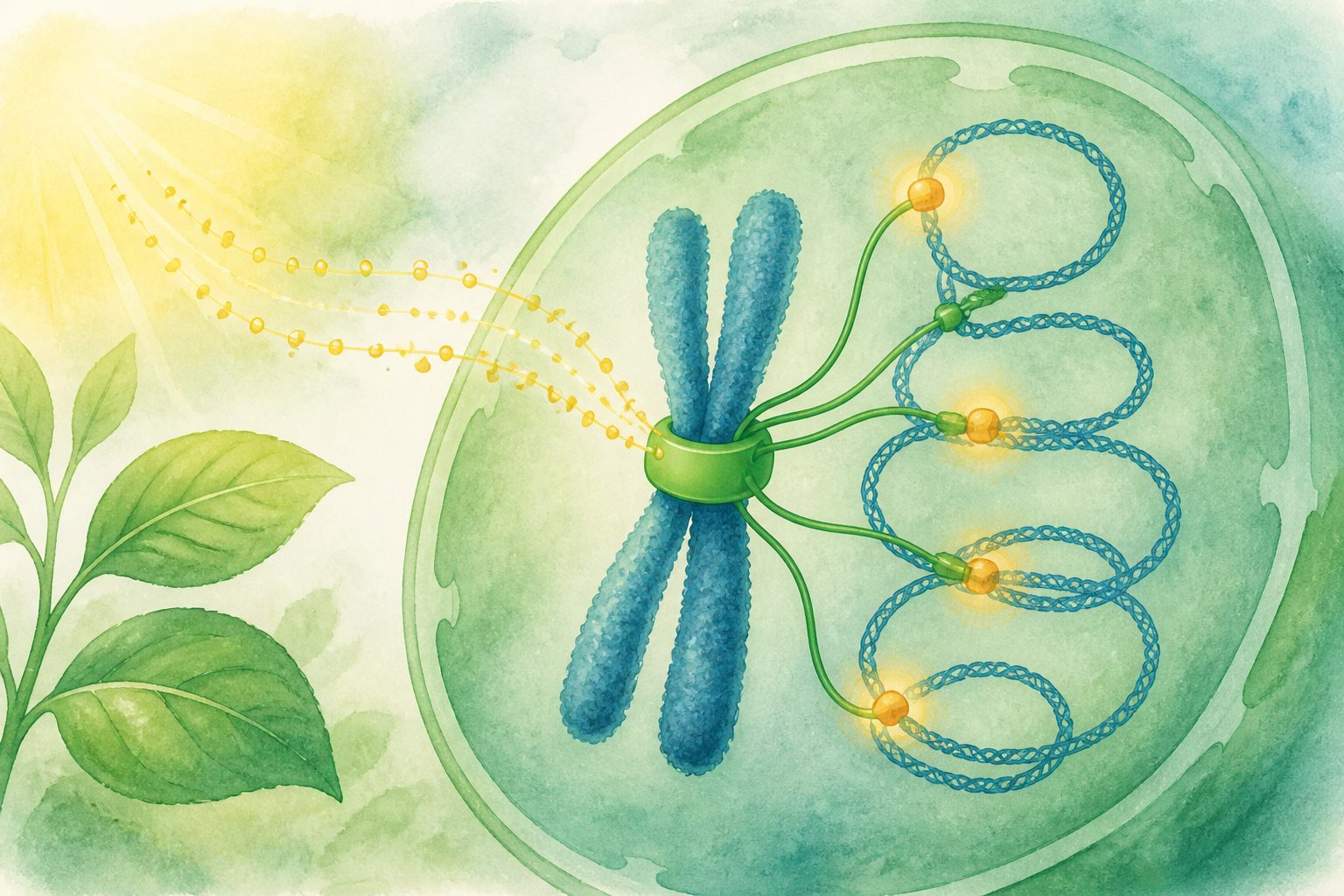
The protein complex cohesin controls both gene activation and a pause that helps transcription continue smoothly.
Cohesin helps organize DNA in three dimensions, including contacts between gene control regions and promoters. The study found that it supports the recruitment of RNA polymerase II, the machinery that copies genes into RNA, by helping maintain active promoter states. Cohesin also briefly associates with the transcription machinery during a pause before RNA production continues.
Kinetic modelling suggests these effects can partly offset each other when cohesin is lost: reduced recruitment is balanced by faster pause release, producing relatively small changes in steady-state gene activity. However, cohesin depletion impaired robust transcriptional induction in response to external stimuli. The findings also suggest that the pause gives the machinery time to assemble a productive elongation complex, helping transcription proceed continuously once it resumes.
How cohesin controls transcription
The study identifies multiple roles for cohesin in transcription. It promotes RNA polymerase II recruitment by supporting communication between enhancers and promoters and by maintaining active promoter chromatin states. At the pause–release transition, cohesin delays the release of paused polymerase by temporarily associating with the transcription machinery.
According to the kinetic modelling, the reduced polymerase recruitment and faster pause release caused by cohesin loss can compensate for one another, helping explain why steady-state gene expression changes only modestly across genes. In contrast, removing cohesin weakened robust gene activation after external stimulation. The study further indicates that sufficient pausing supports assembly of the elongation machinery and more processive transcription, meaning transcription that continues efficiently along a gene.
Why the pause matters
The findings help explain why changes to cohesin can have limited effects on baseline gene activity while still disrupting how genes respond to signals. They also provide a mechanism linking cohesin’s roles in chromosome organization and transcriptional control.
This mechanistic picture may help inform understanding of conditions associated with cohesin dysfunction, including cancers and cohesinopathies. The abstract does not show that the findings directly lead to a treatment or explain the effects of cohesin changes in patients.
Evidence and caveats
The work combines experimental evidence about cohesin, promoter recruitment and pause release with kinetic modelling of transcription. The abstract supports a mechanistic interpretation, but it does not provide the sample sizes, biological systems, external stimuli or detailed experimental methods, so the scope of the findings cannot be assessed from the abstract alone.
The modelling suggests how opposing transcriptional effects could produce modest changes in steady-state expression, but models depend on their assumptions. The study establishes mechanisms described in the research system; the abstract does not establish how broadly they apply across organisms, tissues or cohesin-related diseases.
// Source
Nature Communications · 2026 · DOI: 10.1038/s41467-026-76738-3
Authors: Shoin Tei, Masashige Bando, Toyonori Sakata, Atsunori Yoshimura, Toyoaki Natsume, Masato T. Kanemaki, Takashi Sutani, Katsuhiko Shirahige
Institutions: Karolinska Institutet, The University of Tokyo, The Graduate University for Advanced Studies, SOKENDAI, National Institute of Genetics, Research Organization of Information and Systems