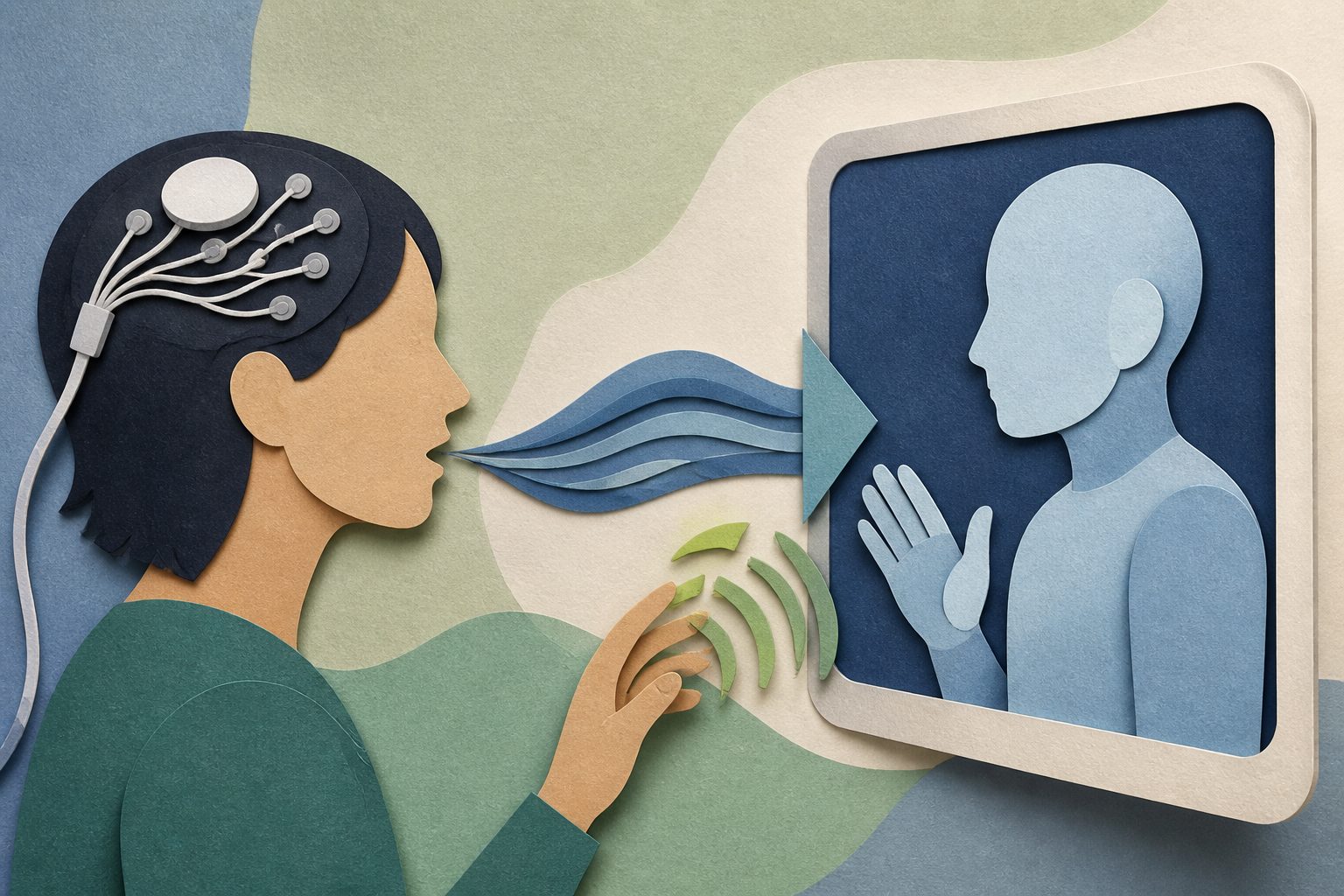
Researchers recorded brain signals with one high-density electrocorticography implant while three participants with paralysis attempted upper-limb and orofacial movements. These signals could be decoded reliably when the movements were performed separately.
The team then used separate speech and gesture decoders to let participants control a personalized virtual avatar. Participants could attempt speech and gestures simultaneously or in isolation, and training the decoders on both types of data improved performance across these situations.