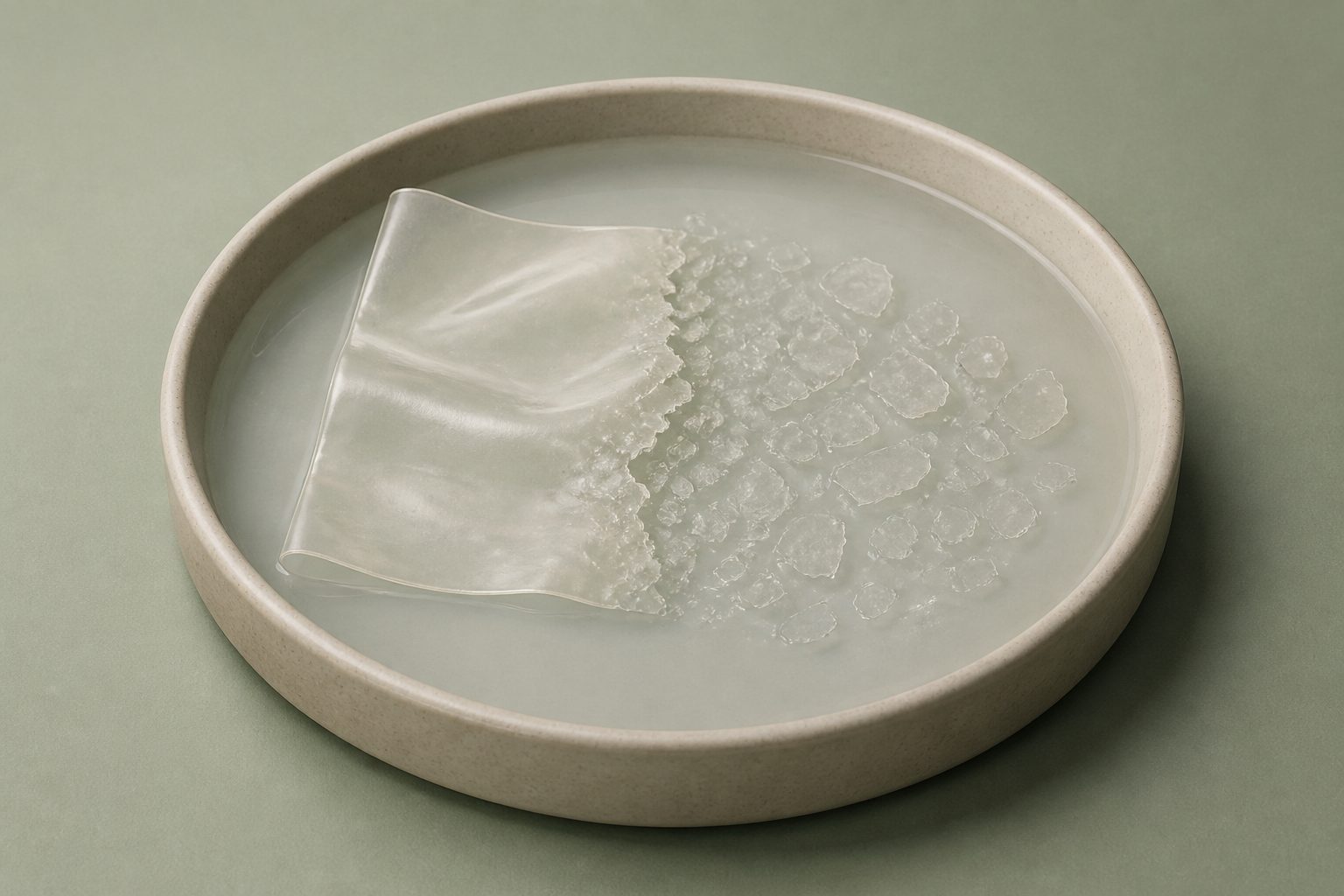
The film contained 10% cetyltrimethylammonium bromide, and microwave heating reduced its treatment time in a 1% sodium hydroxide solution from six hours to two minutes.
Polylactic acid, or PLA, is often processed at the end of its life in industrial composting systems. In this study, researchers tested PLA films containing 10% cetyltrimethylammonium bromide in a 1% aqueous sodium hydroxide solution, a dilute alkaline treatment compatible with household handling.
Microwave heating accelerated depolymerization from six hours to two minutes. The main products were lactic acid and sodium lactate, and activated carbon adsorbed residual cetyltrimethylammonium bromide. Oxygen-uptake tests also indicated faster initial microbial activity for the treated products than for cellulose under the tested conditions.
What the film produced
The researchers found that PLA films containing 10% cetyltrimethylammonium bromide could be depolymerized in a 1% aqueous sodium hydroxide solution. Microwave heating reduced the treatment time from six hours to two minutes. Gel permeation chromatography and differential scanning calorimetry tracked changes in molecular weight and thermal behavior during the early stages of treatment.
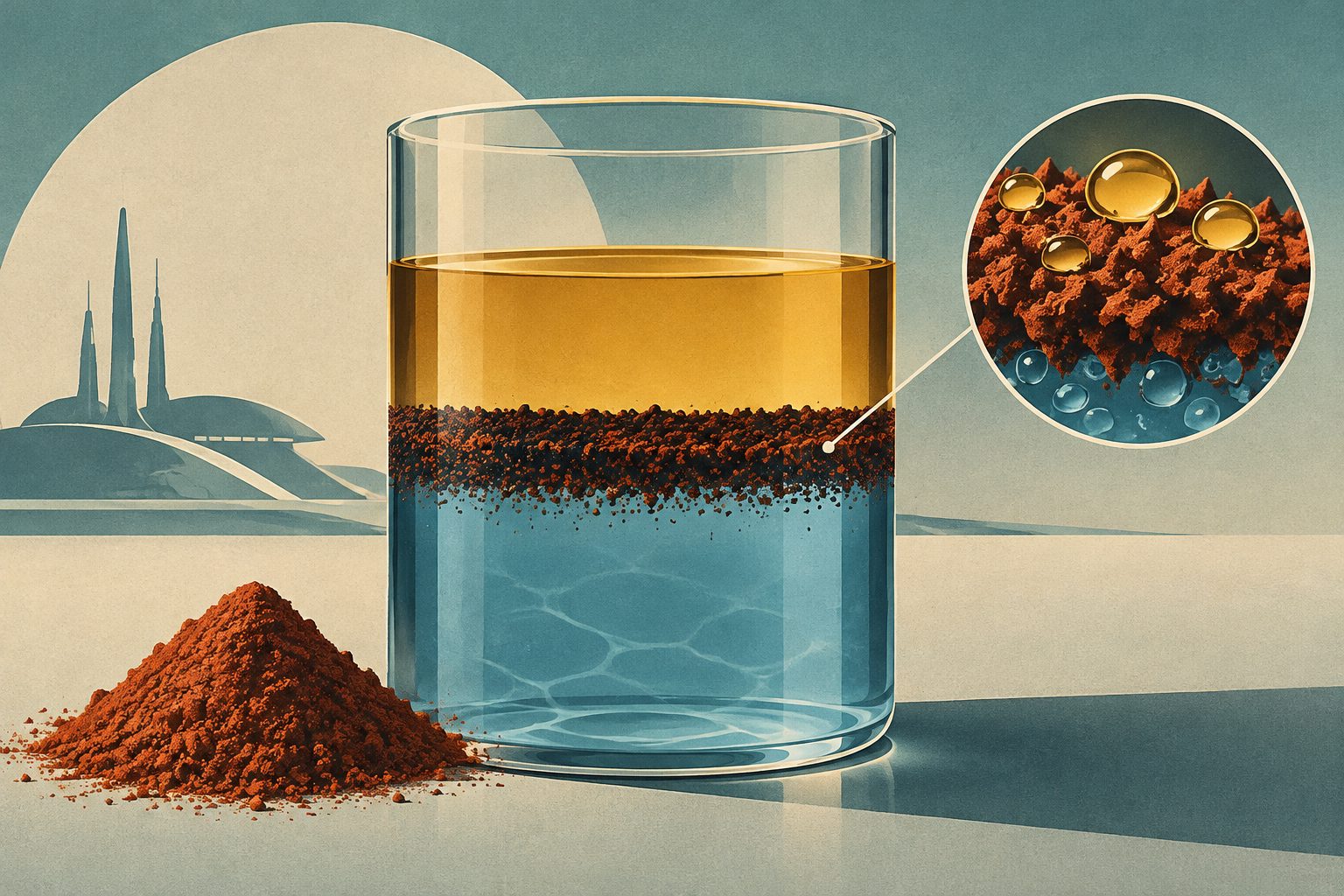
Nuclear magnetic resonance spectroscopy identified lactic acid and sodium lactate as the main degradation products. Activated carbon effectively adsorbed residual cetyltrimethylammonium bromide after depolymerization. Biochemical oxygen demand tests at 25 and 50 °C showed a faster initial oxygen-uptake rate for the activated-carbon-treated products than for cellulose, consistent with microbial assimilation of lactic-acid-based monomers.
Why household handling matters
PLA is generally expected to degrade fully only in industrial composting systems, which limits options for managing it outside those facilities. This proof-of-concept study shows that a PLA composite film can be rapidly depolymerized in a dilute alkaline solution, with microwave heating sharply reducing the treatment time.
The work also addresses the film additive: activated carbon removed residual cetyltrimethylammonium bromide after treatment. The findings provide a framework for studying household-compatible processing while recognizing that the alkaline treatment, microwave heating and activated-carbon step would need practical assessment before any wider use.
Evidence and caveats
The study is a laboratory proof-of-concept using PLA films containing 10% cetyltrimethylammonium bromide. Researchers characterized the material and products with gel permeation chromatography, differential scanning calorimetry and nuclear magnetic resonance spectroscopy, and used biochemical oxygen demand tests to assess early oxygen uptake.
The abstract does not report tests at household scale, treatment of other PLA products, recovery or reuse of the products, or the environmental safety of the complete process. The oxygen-uptake results are consistent with microbial assimilation of lactic-acid-based monomers, but they do not by themselves establish complete environmental degradation. The study also does not show that untreated household waste can be safely managed using this method.
// Source
Scientific Reports · 2026 · DOI: 10.1038/s41598-026-69194-y
Authors: Ji Young Park, Tai Gyu Lee
Institutions: Yonsei University, Marine Biodiversity Institute of Korea