
The researchers combined polylactic acid with cellulose nanocrystals and polyethylene glycol to make a heat-responsive shape-memory composite. They tested different amounts and two types of polyethylene glycol, finding that higher polyethylene glycol content generally lowered the temperature at which the material activated.
Engineering & Technology1 month ago
A 3D-printed plastic gripper changes shape near body temperature
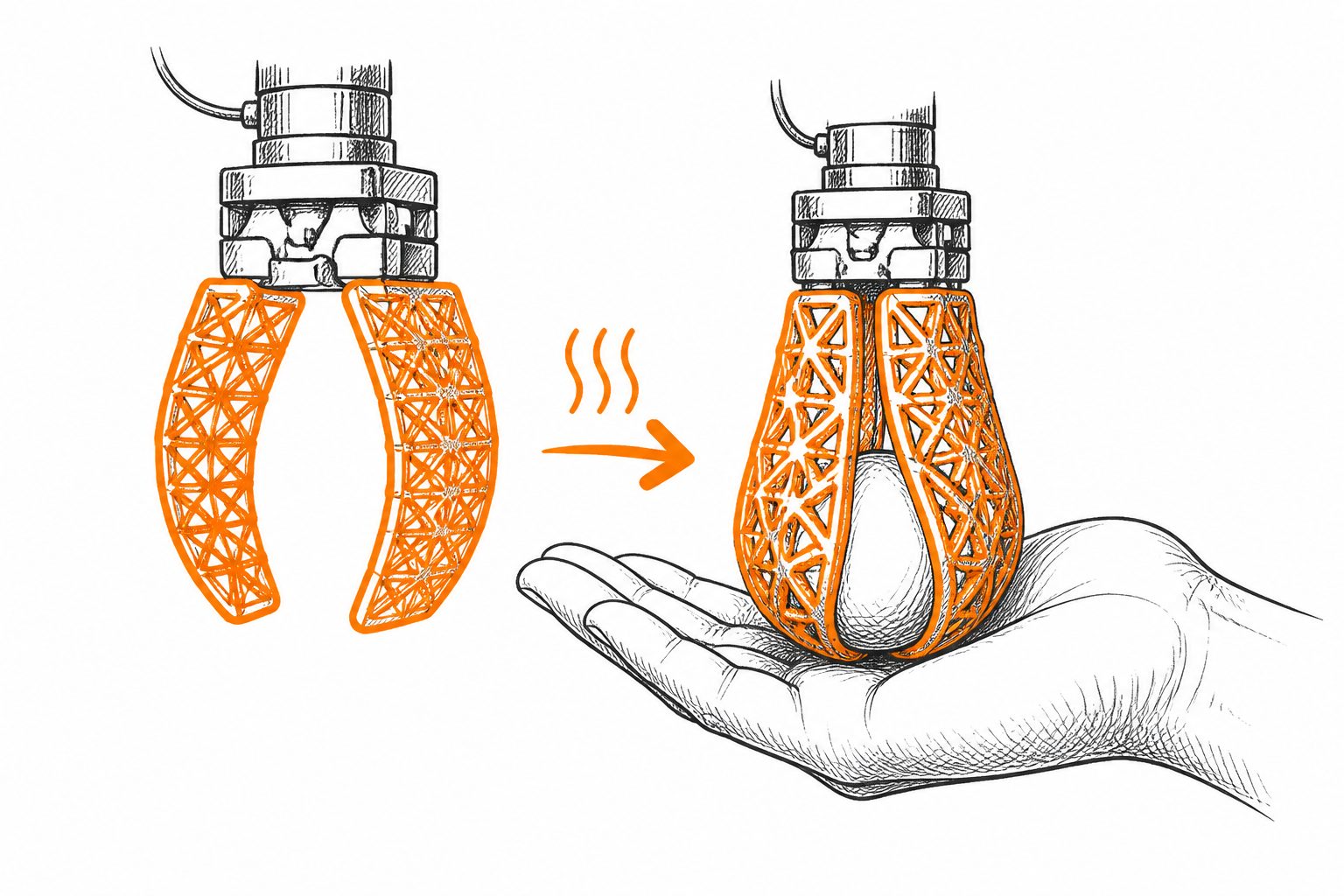
A composite made from polylactic acid, cellulose nanocrystals and polyethylene glycol recovered its shape through repeated heating cycles.
How the gripper responds
The best balance of mechanical and shape-memory performance came from a composite containing 10 wt% PEG 4000, along with the same cellulose nanocrystal content used across the tests. A gripper 3D-printed from this composite activated at 40.5 °C and showed shape-fixity and shape-recovery ratios of about 93% and 94%, respectively. In repeated tests, it retained about 98% of its original shape-recovery ratio after the 15th cycle.
Why the temperature matters
The gripper's activation temperature is close to physiological temperatures, meaning heat in that range could trigger its shape change in future device designs. The use of polylactic acid and cellulose nanocrystals also supports the researchers' aim of developing biodegradable, heat-responsive 4D-printed devices for biomedical applications.
Tests and open questions
The findings come from laboratory tests of heat-pressed composite samples and a 3D-printed gripper. The abstract does not report tests in living organisms, practical biomedical use, or the material's biodegradation rate. It also does not establish how the gripper would perform outside the reported heating cycles and test conditions.
// Source
Next Materials · 2026 · DOI: 10.1016/j.nxmate.2026.103448
Authors: U.G.E. Umayanga, Gayan A. Appuhamillage, Sankalya S. Ambagaspitiya, T.A.R.W.M.M.C.G. Bandara, Gayan A. Abeygunawardane
Institutions: University of Moratuwa, University of Sri Jayewardenepura, Uva Wellassa University


