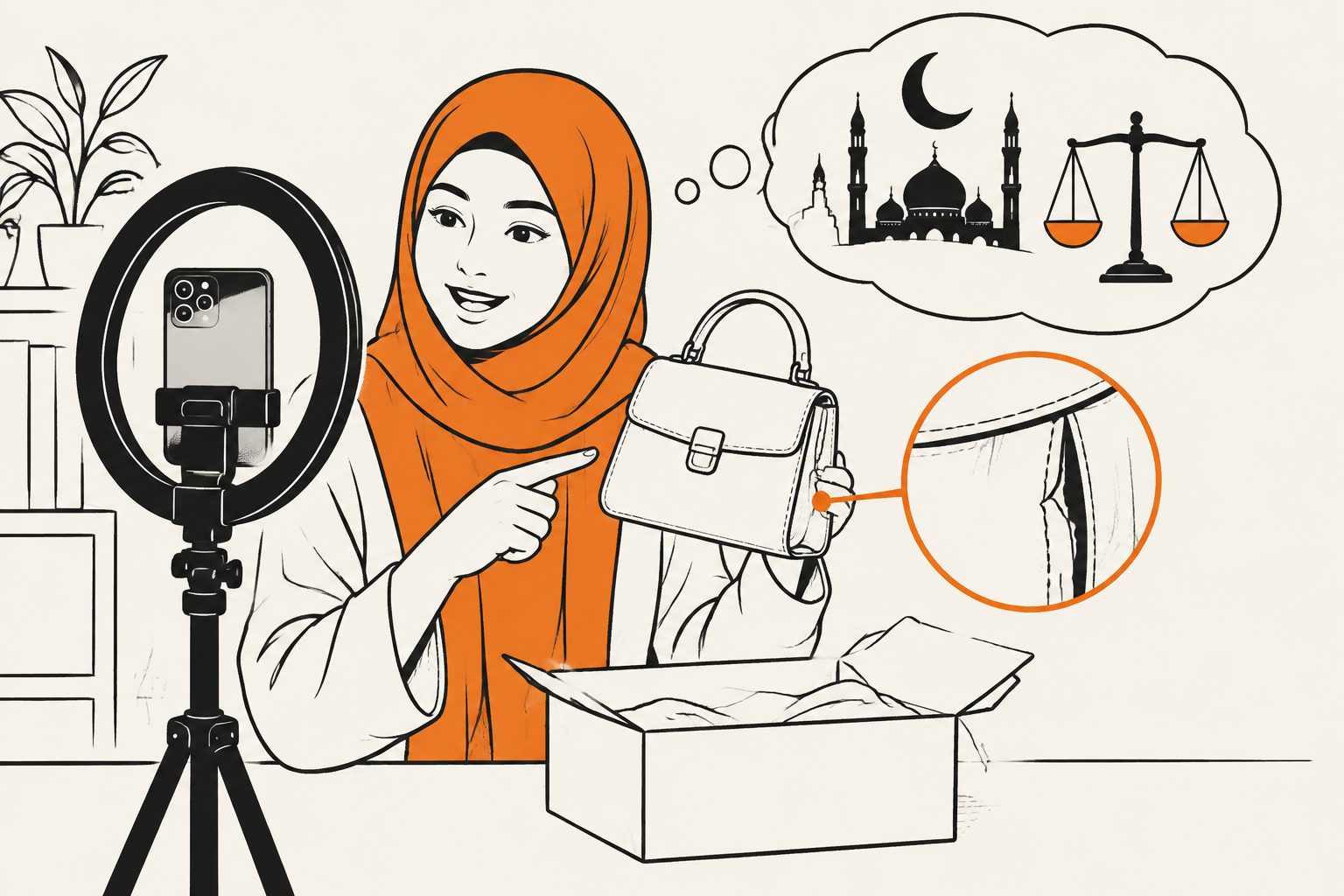
Interviews suggest affiliate marketing can fit Islamic business ethics, but only when influencers give consumers clear and honest product information.
The study used semi-structured interviews with four TikTok influencers, three consumers who had bought products through affiliate links and two Islamic business ethics experts. Researchers compared the three groups’ views using source triangulation, a method of checking findings across different sources.
Influencers generally said they tried to base promotions on personal experience and avoid exaggeration. However, some acknowledged leaving out product flaws. Consumers said clear, accurate information helps them trust recommendations, while experts said missing important details can create gharar, or uncertainty, and deliberately misleading information may amount to tadlis, or fraud.
When product flaws stay hidden
The central issue was a conflict between influencers’ commercial relationships with sellers and their responsibility to consumers. Influencers generally tried to avoid exaggerated claims and based promotions on their experiences with products, but the disclosure of shortcomings was inconsistent. The study says some influencers withheld flaws to protect relationships with product owners or collaborations.
Consumers considered transparency, clarity and agreement between promotional claims and a product’s actual condition important for trust. The experts said that failing to disclose important information can create gharar, meaning uncertainty or ambiguity about what consumers are buying. If information is intentionally misleading, they said it may constitute tadlis, or fraud. The study did not treat affiliate marketing itself as incompatible with Islamic business ethics; instead, it focused on how influencers provide information and recommendations.
Evidence and study limits
This was a descriptive qualitative study based on semi-structured interviews with nine purposively selected participants: four influencers, three consumers and two Islamic business ethics experts. Researchers analyzed the interviews by reducing and organizing the data, drawing conclusions and comparing perspectives across the three participant groups.
The study was designed to understand experiences and viewpoints, not to measure relationships statistically. Its small, selected group of participants cannot establish how common these practices are among TikTok influencers generally. The conclusions describe the perspectives and conditions examined in these interviews.
// Source
Al-Sharf Jurnal Ekonomi Islam · 2026 · DOI: 10.56114/al-sharf.v7i3.13813
Authors: Intan Nur Aini, Ummu Kulsum, Mohammad Hamim Sultoni
Institutions: Universitas Islam Negeri Madura