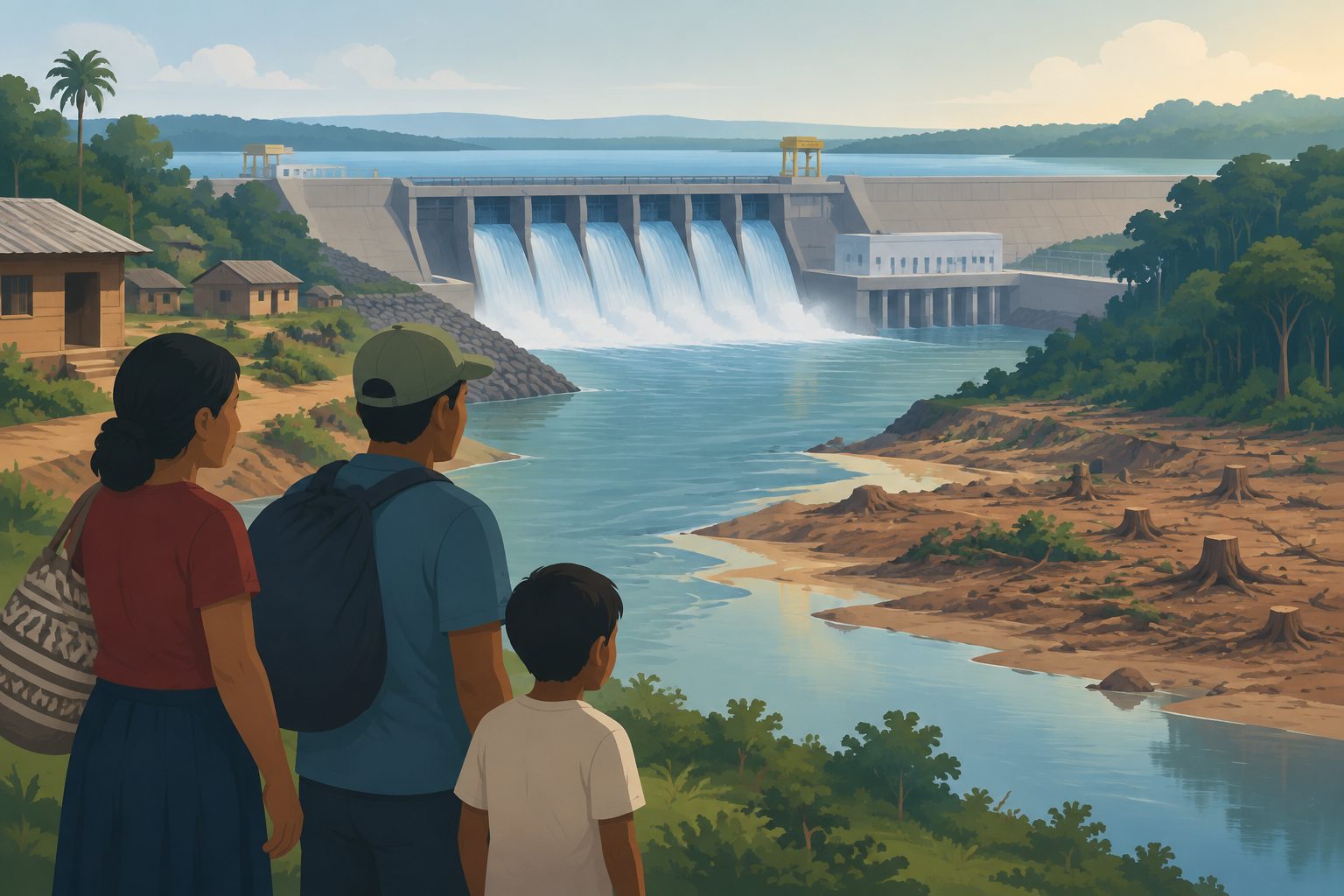
Interviews and document analysis linked the Brazilian dam to reduced fishing, displacement and social disruption alongside jobs and economic gains.
Researchers combined a review of 189 articles, analysis of environmental assessment documents and 32 interviews with community members, researchers, institutional representatives, journalists, nongovernmental organizations and social movements. They used text analysis to examine how different groups described the dam’s effects and benefits.
The study reports reduced fishing and river access, altered social conditions, violence, pressure on local infrastructure and disruption of communities, including Indigenous groups. It also identified job creation, economic strengthening and contributions to Brazil’s energy security, but found that interviewees viewed these benefits as unevenly distributed and said local costs persisted over time.
What stakeholders reported
The interviews described a mixed record for Belo Monte. Stakeholders reported reduced fishing, changes in river conditions, loss of aquatic biodiversity, deforestation, displacement, higher living costs, inadequate or poorly managed compensation, increased violence and social disintegration. The study also identified job creation, economic activity and infrastructure improvements, as well as the dam’s contribution to Brazil’s energy security.
According to the analysis, economic gains were seen as benefiting large business owners and landowners more than local populations. Interviewees said early increases in employment and income were followed by socioeconomic instability and environmental damage. The researchers also reported that some impacts were not anticipated in the project’s environmental assessment, and that Indigenous and other traditional communities were not sufficiently included in decision-making.
Stakeholders proposed ecosystem restoration, stronger social support, improved compensation, environmental and social monitoring, and a management committee to oversee the plant’s impacts. They also emphasized more meaningful community participation in planning and energy decisions.
Why the trade-offs matter
The study shows why assessing a large renewable-energy project requires more than counting electricity production or economic gains. Belo Monte is presented as a case in which national energy and development benefits coexisted with substantial local environmental and social costs.
The findings support calls for environmental licensing and compensation measures that better account for affected communities, particularly Indigenous and traditional groups. They also suggest that participatory planning and ongoing monitoring could help address conflicts and improve acceptance of future energy projects. The article notes that energy choices should consider the environmental and social costs of both hydropower and possible alternatives.
Evidence and caveats
This is a qualitative assessment, not a statistical estimate of Belo Monte’s impacts. It combines a review of 189 articles, environmental assessment documents and 32 semi-structured interviews, with textual analysis used to identify recurring themes across stakeholder accounts.
The evidence therefore reflects participants’ perceptions and the researchers’ analysis of documents and published studies. It does not quantify the size or frequency of the reported effects, and the interview findings cannot by themselves establish how representative they are of every affected community or prove that the dam caused each reported outcome.