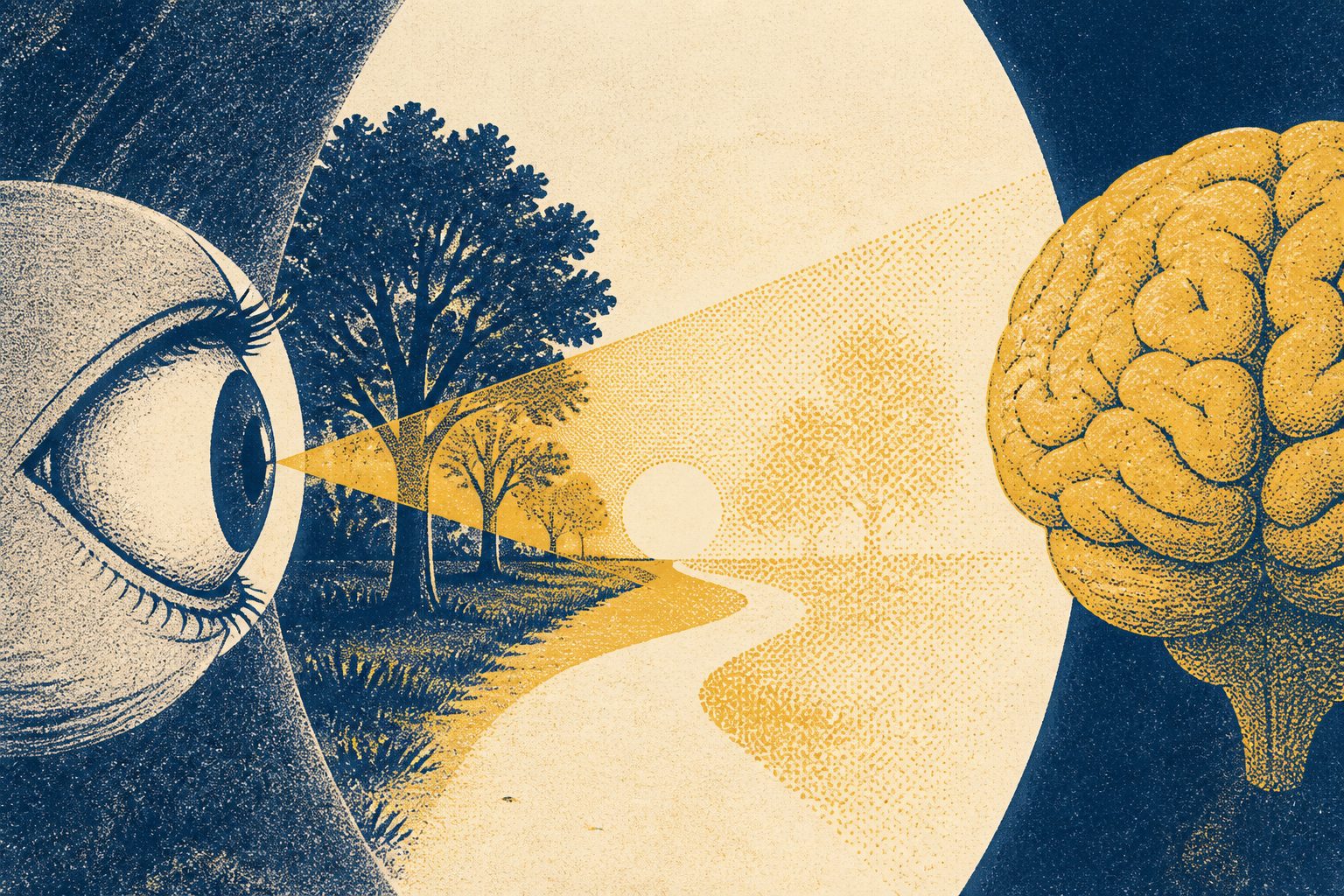
A computer model suggests the eye’s first stage of vision prepares the brain for visual scenes about 100 milliseconds ahead.
Researchers built a model of the retina that processes visual information as patterns of nerve-cell spikes. They trained it on natural movies under limits intended to resemble the retina’s energy constraints, comparing a model that encoded the present with one that predicted upcoming scenes.
The prediction-focused model produced retina-like response features, including sensitivity to timing, anticipation of motion, different responses to different kinds of movement and activity when an expected stimulus was omitted. It also predicted responses of retinal ganglion cells—the retina’s output cells—to natural images and movies across animal species.
How the retina model predicted
When optimized to predict visual scenes about 100 milliseconds ahead, the model developed response patterns resembling those seen in the retina. These included receptive fields, which describe how cells respond to different parts of an image, arranged in mosaic-like patterns; timing-based signals; anticipation of moving objects; different tuning for different types of motion; and responses when an expected stimulus was left out.
The prediction-focused model also accurately predicted how retinal ganglion cells from different animal species responded to natural images and movies. Together, the results suggest that the retina may be organized not only to compress incoming visual information, but also to provide the brain with information about what is likely to appear next.