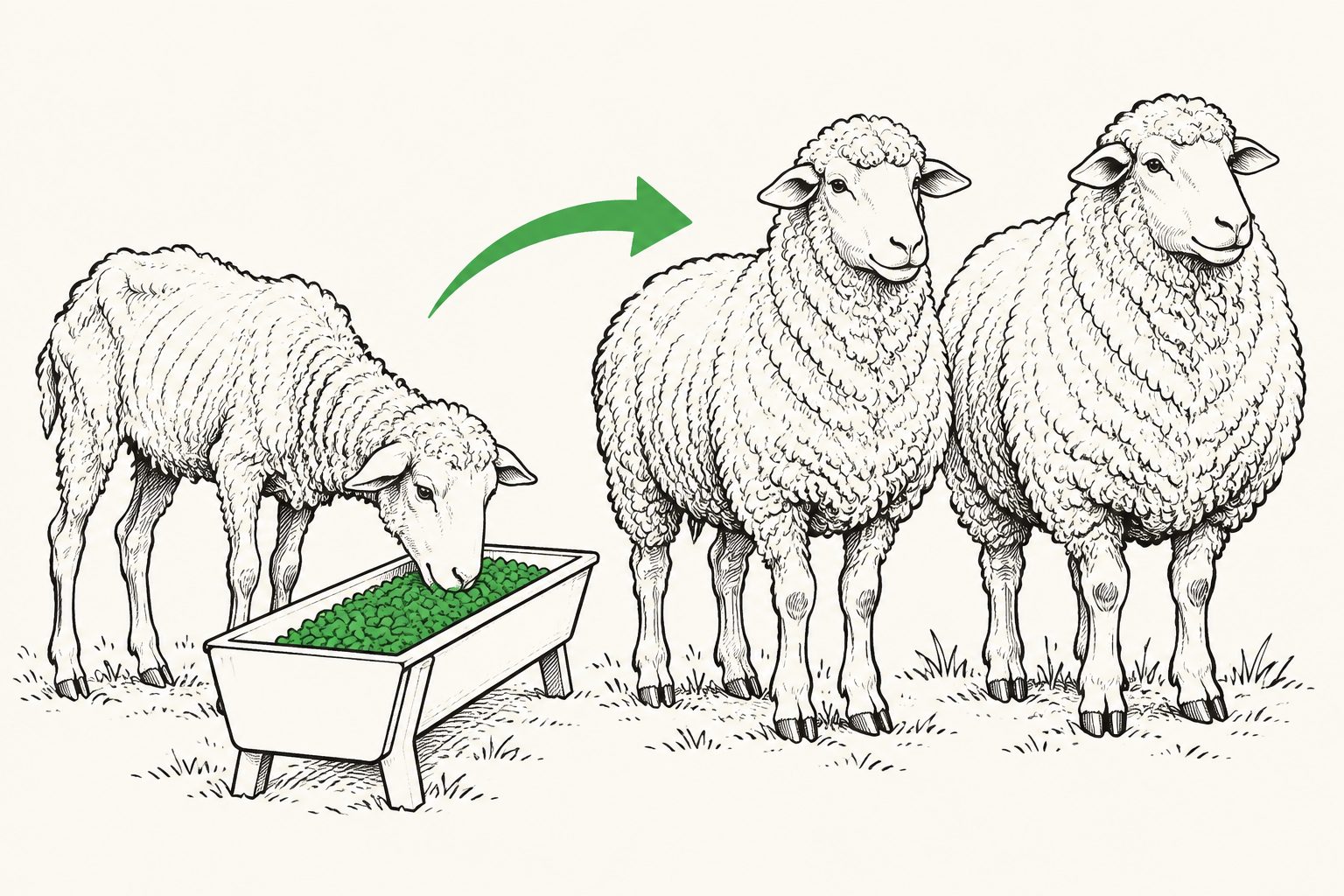
Fourteen weeks of extra feed and frequent parasite treatment increased later bodyweight and wool production.
Researchers followed 332 Merino weaners in Australia for seven months. The sheep were divided into a low-growth group, a high-growth group and a mixed control group one week after weaning at three months of age. For 14 weeks, the low-growth group received about 200 grams of supplementary feed per day and parasite treatment every two weeks, while the other groups received standard management.
During treatment, the low-growth sheep gained weight at 70.5 grams per day on average and reached a higher final bodyweight. After all groups were managed together, their growth rate fell, but they kept their weight advantage. At nine months, they also produced a heavier greasy fleece, averaging 1.67 kilograms.
Evidence and caveats
This was a seven-month animal experiment involving 332 Merino weaners at the CSIRO FD McMaster Laboratory in New South Wales, Australia. The low-growth sheep were selected based on their pre-weaning growth, so the study was not a comparison in which all animals were randomly assigned to treatment. The intervention combined extra feed and frequent parasite treatment, meaning the study cannot show how much each component contributed separately. Conditions were unusually dry, with rainfall well below average, and the researchers say the findings should be tested in more favourable seasons. The frequent drenching used in the experiment was not recommended as a routine practice because of the risk of developing resistance to parasite treatments. The study also found lower staple strength in the treated sheep.