Study finds blood inflammation markers did not reliably predict antifungal resistance in vaginal yeast infections
In 163 adults with culture-confirmed vulvovaginal candidiasis, researchers saw no independent link between plasma inflammatory biomarkers and susceptibility results.
Low evidenceHuman study
Medical disclaimer: This article summarizes research findings and is for informational purposes only. It is not medical advice.
Editorial illustration — not from the study.
Vaginal yeast infections (vulvovaginal candidiasis, VVC) are common, and antifungal resistance can complicate care. The researchers asked whether blood-based inflammatory biomarkers reflect antifungal susceptibility patterns for Candida albicans in localized VVC.
They compared plasma inflammatory marker levels between groups defined by antifungal susceptibility using laboratory susceptibility testing based on CLSI guidelines. They also looked for statistical associations between marker levels and measures of antifungal activity (such as MIC values) and tested whether any marker independently predicted susceptibility.
The question examined
Whether circulating inflammatory biomarkers in plasma reflect antifungal susceptibility patterns of Candida albicans in localized vulvovaginal candidiasis. Design: retrospective observational cohort study. Population: 163 adult women with culture-confirmed VVC recruited from University of Tabuk hospitals in Tabuk, Saudi Arabia. Measurements: plasma inflammatory markers quantified by ELISA; antifungal susceptibility determined using CLSI guidelines. Analyses included Mann–Whitney U tests for group comparisons, Spearman correlations for associations with MIC/MFC-related measures, and logistic regression for independent predictors.
Key observations
After Bonferroni adjustment for multiple comparisons, there were no significant differences in circulating inflammatory markers between antifungal-resistant and susceptible isolates for any agent. One exception was reported for ketoconazole: resistance was associated with lower TGF-β (p = 0.008), but this did not remain significant in adjusted models. Spearman correlations showed only weak relationships between biomarkers and antifungal MIC 90, MIC 50, and MFC values. Logistic regression found no biomarker as an independent predictor of susceptibility for any drug (all p > 0.05).
Where this may apply
These findings may be most applicable to adults with culture-confirmed vulvovaginal candidiasis caused by Candida albicans in settings similar to the study population (hospital recruitment in Tabuk, Saudi Arabia). They do not establish what happens in different geographic areas, in different Candida species, or in people who are not culture-confirmed, and they do not show that biomarkers cannot be useful in other conditions. The study is informational and does not provide guidance on individual patient decisions.
Why this matters
If blood inflammatory biomarkers do not track antifungal susceptibility in localized VVC, they may have limited usefulness as predictors of resistance in this setting. The study’s main relevance is for understanding whether systemic (blood) signals could replace direct laboratory susceptibility testing—here, the results support that they did not do so reliably in this dataset.
Limitations & evidence assessment
Key limitations include the retrospective observational design and reliance on electronic record extraction for demographic and clinical data. The sample size was 163 women, which may limit the ability to detect subtle biomarker–resistance relationships. The abstract reports that associations were weak and that no biomarkers independently predicted susceptibility after regression, but it does not provide details such as which specific biomarkers were measured, how many antifungal agents were tested, or how many isolates were resistant versus susceptible. Results may also be affected by multiple-testing adjustment (Bonferroni), and only culture-confirmed VVC from a single hospital network was included, which may limit generalizability.
Why this evidence level: This is a retrospective observational cohort study of 163 adults with culture-confirmed vulvovaginal candidiasis, which limits conclusions about prediction of antifungal resistance. The abstract reports no independent biomarker predictors after regression and only weak correlations, further reducing evidence strength for clinical use of biomarkers.
Evidence levels are editorial estimates derived from study metadata — they are not clinical appraisals.
This systematic review examined randomized human trials of concurrent chemotherapy and radiation for locally advanced head and neck, cervical, esophageal, and non-small-cell lung cancers. Across the included trials, combined treatment was reported to provide better overall survival than radiation alone, but it also caused more severe short-term side effects. The review did not provide enough information in its abstract to show how many trials or patients were included.
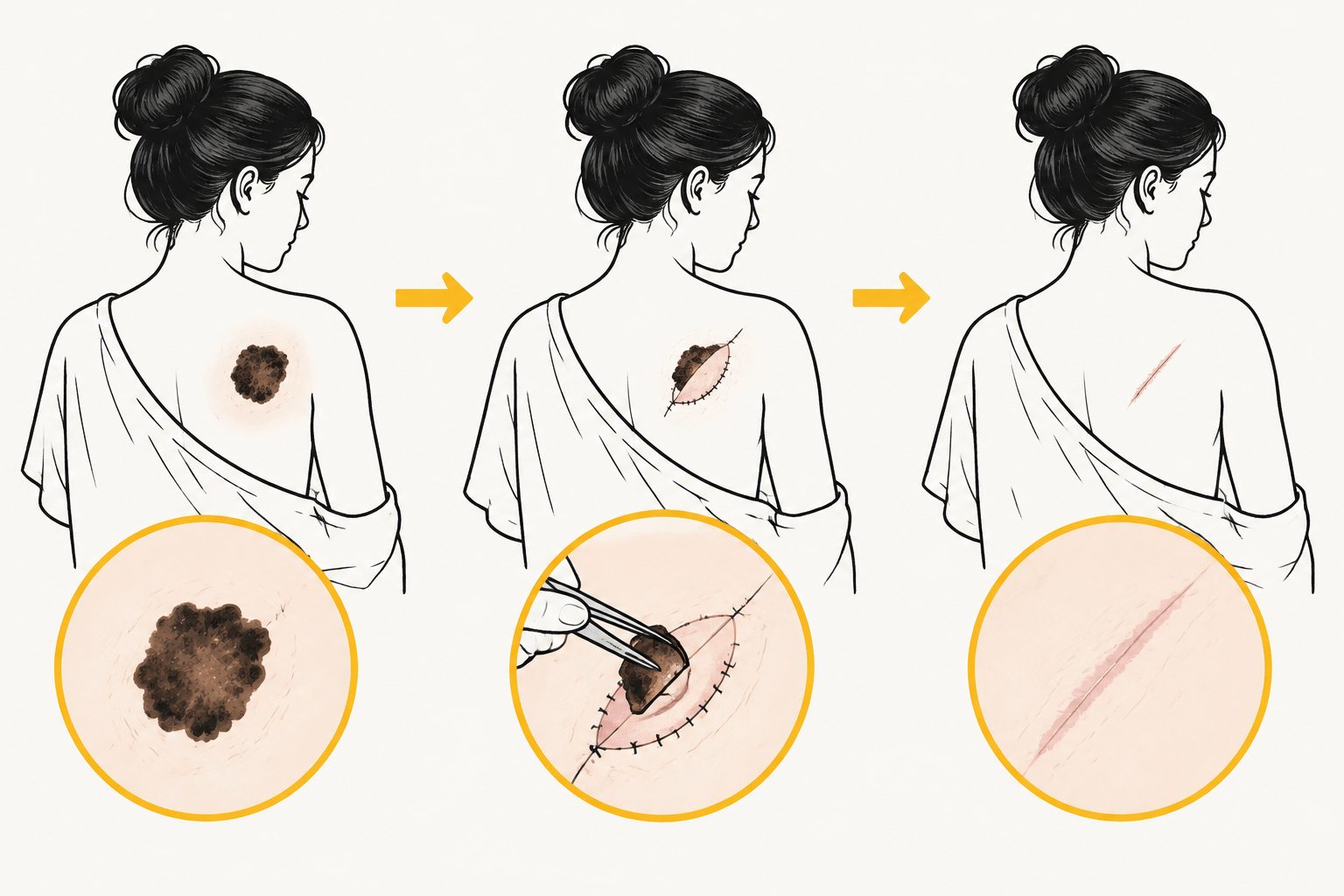
Researchers pooled results from seven human studies comparing multiple-staged with single-stage removal and reconstruction of congenital melanocytic nevi, sometimes called congenital moles. Staged surgery was associated with fewer major wound complications and recurrences, as well as slightly shorter and narrower scars, but the studies did not find a clear difference in cosmetic or overall patient satisfaction.
A cluster-randomized human study in 210 adults with recently detected stage 1 hypertension in Uzbekistan compared salt-sensitivity testing followed by assigned medication choices with conventional management. After 12 weeks, more participants in the testing-guided group reached the study's blood pressure target, although the study was small, short, and conducted in only three primary care centers.