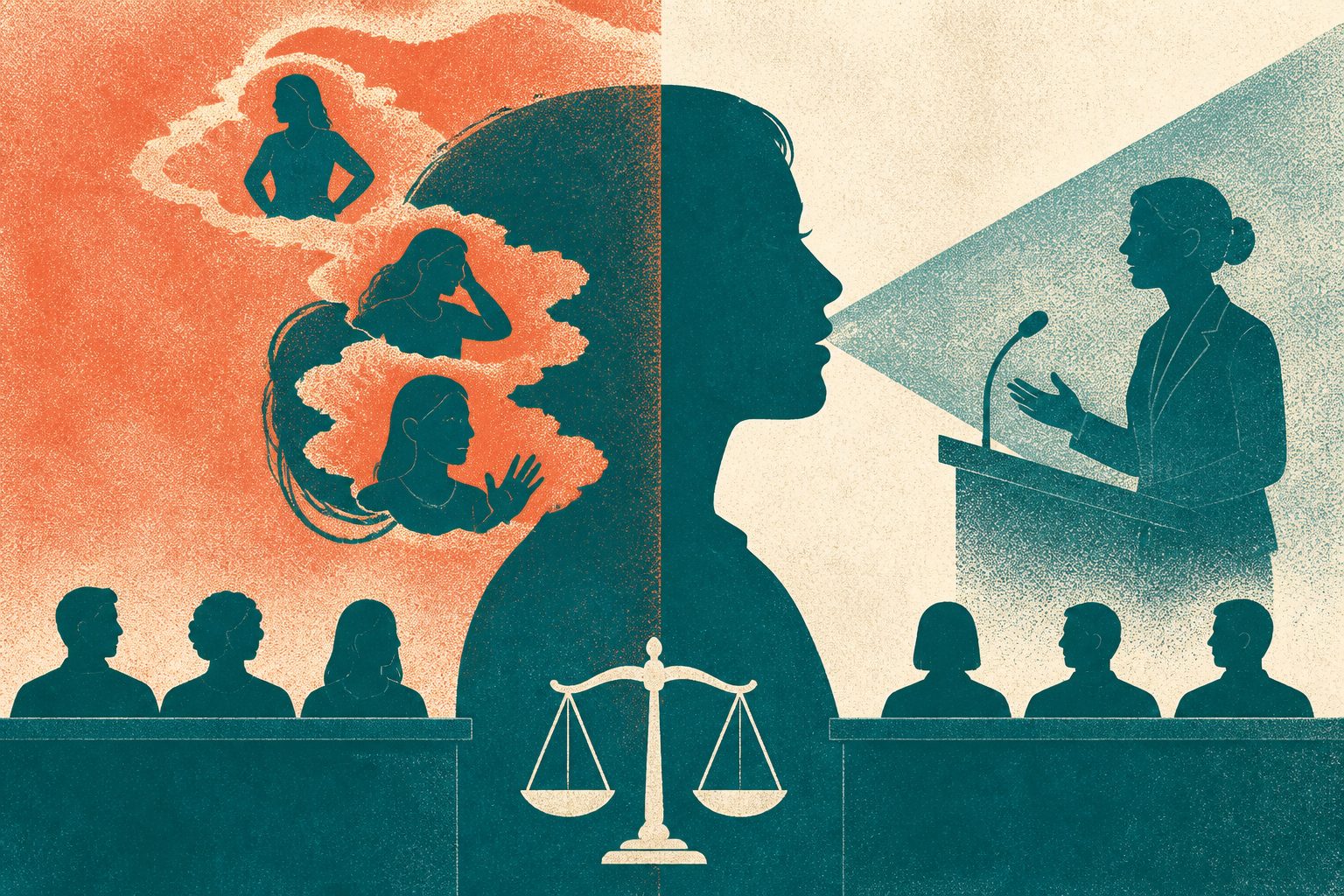
A legal and psychology analysis argues that juries may interpret trial evidence through stereotypes about how rape victims should behave.
The study combines legal analysis with research on psychology, perception and stereotypes. It examines how evidence presented at rape trials can affect the way complainants are viewed, including when details are not formally introduced as character evidence.
Its conclusion is that trying to exclude every piece of evidence that might be interpreted negatively could conflict with a defendant’s right to a fair trial. Instead, the study recommends bringing expert evidence into court to address rape myths and victim stereotypes and to explain how they can shape judgments about character and credibility.
How stereotypes enter trials
The analysis finds that evidence can influence perceptions of a complainant’s character even when it is not openly presented as character evidence. It argues that, when evidence is interpreted through rape myths, details such as a complainant inviting an accused person to an apartment after a date may be used to diminish the complainant’s credibility.
The study links this risk to psychological processes involved in interpreting other people, including prejudice, the tendency to explain behaviour as reflecting a person’s character, and assumptions about whether someone is likely to behave in a particular way. After examining evidence law and protections for complainants in England and Wales, it recommends expert evidence that directly addresses common rape myths and victim stereotypes.
What the study can show
This is a legal and psycho-legal analysis based on desk research using primary and secondary sources, including legislation, case law, academic commentary and psychological research. It examines how evidence and legal rules may be perceived and used in rape trials, rather than testing jurors directly.
The excerpts do not report a new jury experiment, trial observation dataset or statistical estimate of the effect of expert evidence. The recommendation is therefore a reasoned proposal drawn from the research reviewed in the work; the excerpts do not show whether introducing such evidence would change jury decisions in practice.
// Source
Research Portal (Queen's University Belfast) · 2026 · DOI: 10.17034/32631297
Authors: Erin Dougherty